


BOUNDARY WATERS — Lightning is believed to be the cause of three wildfires reported over the weekend in the Boundary Waters Canoe Area Wilderness.
The U.S. Forest Service reported the largest of the three is about 11 miles east of Crane Lake and was first detected Saturday, June 7, during a routine fire patrol flight.
It covers about 10 acres, and helicopters were used to make water bucket drops on Sunday to set up safe access for wildland firefighters. The fire was observed to be creeping and smoldering with light winds.
A few nearby wilderness campsites may be closed for safety but there are no other closures in the Boundary Waters. There is, however, currently a ban on campfires within the wilderness area because of dry conditions.
A 1-acre fire at the east end of Lac La Croix near the Canadian border also required a small fire crew, and a quarter-acre fire caused by a tree struck by lightning about 12 miles away from Tower was being monitored.
Birch Bay Fire caused by chain saw
The Forest Service also reported the cause of the Birch Bay Fire — first reported June 1, northwest of Ely — was determined by a Minnesota Department of Natural Resources investigator.


The 30-acre fire likely originated from a chain saw during work by Forest Service personnel to reduce fuel and prepare for a prescribed burn. Chain saws can easily ignite wildland fuels with hot engines, scorching exhaust, or sparks from chain strikes. Even brief contact with these fine fuels can trigger a fast moving wildfire, the news release stated.
“The Birch Bay Fire has had an impact on local communities, visitors, and natural resources,” stated Drew Stroberg, acting forest supervisor of the Superior National Forest. “We are committed to transparency regarding the findings of this investigation and to reviewing the incident to identify lessons learned that can help inform future operations.”
At the time of the fire’s ignition, crews were working within the Geraldine Prescribed Fire project area, conducting chain saw operations to prepare and maintain control lines for the future prescribed fire. Using chain saws to prepare lines is common to ensure safe access for firefighters, reduce the amount of fuel material near the control lines, and to ensure the control lines are secure for holding the prescribed fire. No other prescribed fire burning activities were underway.
The Forest Service requires chain saw operators to complete training and certification requirements and follow national safety standards. Chain saws used on National Forest System lands must meet equipment standards, including the use of functioning spark arresters and other safety features.
-
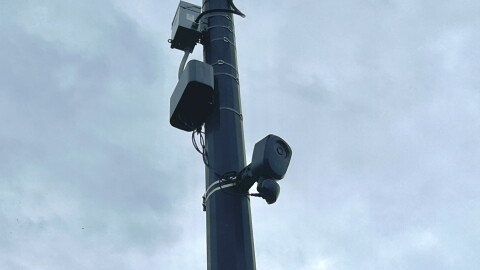 Emma Krab/KAXEAll county cameras have been removed as of Thursday, Sept. 10, 2026. Cameras under city jurisdiction may remain.
 -
 Lorie Shaull/KAXEThe Minnesota Pollution Control Agency is surveying people's fish-eating habits to help limit contaminants in water bodies and make fish safer to eat.
 -
 Emma Krab/KAXEThe tax used to fund civic center improvements will end Dec. 31, 2026.
 -
 Plus: Zebra mussels found at two lakes on the Leech Lake Band of Ojibwe Reservation; Pollution Control Agency seeks participants for fish consumption survey.
 -
 Leech Lake Band of Ojibwe staff also found starry stonewort in Six Mile Lake, near the city of Cass Lake.
 -
 Larissa Donovan/KAXEThe Bemidji Planning Board voted 6-1 to prohibit new developments of data centers greater than 10,000 square feet during its meeting Sept. 14, 2026.
 -
Plus: DNR cancels mineral lease for Twin Metals; and ICE's immigration crackdown last winter may have ripple effects for farm labor during harvest season.
-
 Contributed/Twin Metals Minnesota via MinnPostThe action comes weeks after executive action by Gov. Tim Walz halted the mining company's efforts to establish a copper-nickel mine in the Rainy River Headwaters Watershed.
 -
 Larissa Donovan/KAXEThe Bureau of Indian Affairs announced it was assuming operations of family and children services in Red Lake following a raid on Sept. 10, 2026.
 -
 Contributed/Adobe Stock via Minnesota News ConnectionAn estimated 15,000–20,000 seasonal agricultural workers arrive for work in Minnesota during the peak harvesting season, according to the National institutes of Health.


