



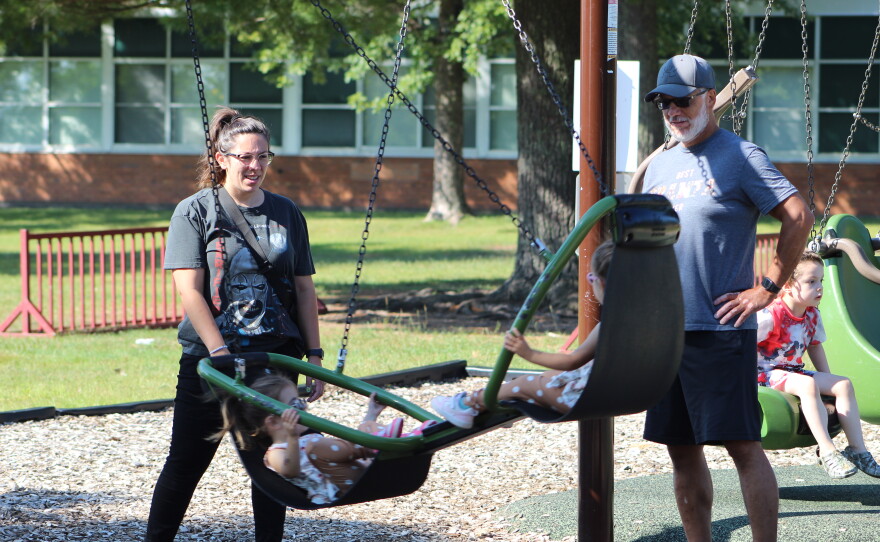
On a sunny late summer morning, Dave Benz and his daughter, Sabrina Weberg, helped his twin granddaughters, Maya and Lucy, toddle around the playground.
The girls will turn 3 in a few days and are only willing to start climbing around with a little coaxing and a helping hand from Mom or Grandpa.
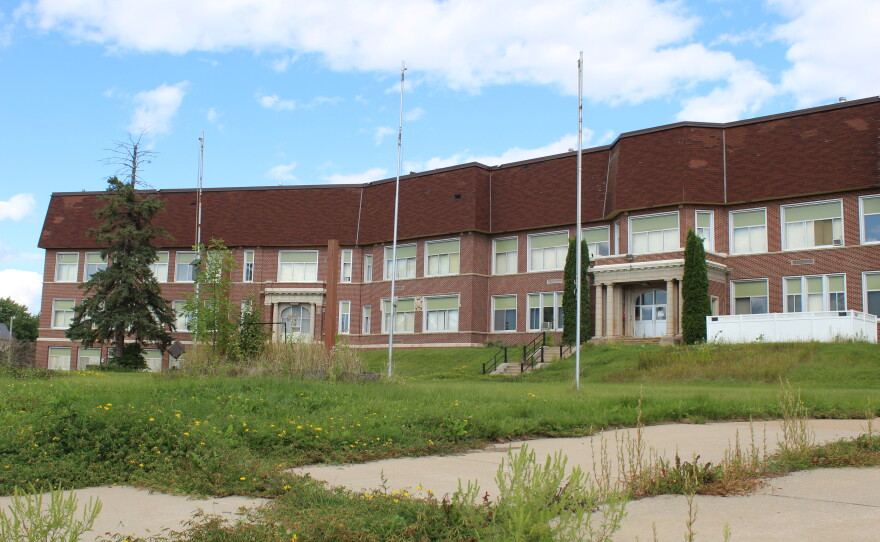
The playground is next to Hibbing's Greenhaven Elementary School. Out in front of the school sits a large yellow “For Sale” sign.
"Yeah, it was a sad one," Benz said.
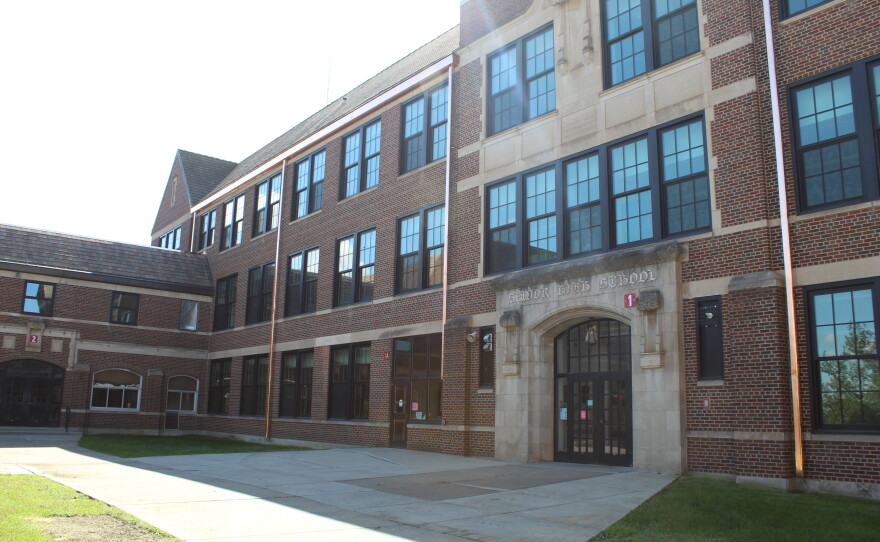
Facing a $2 million deficit, the Hibbing School Board voted in March to close Greenhaven.
School districts across Minnesota are struggling. Enrollment, which drives funding, is going down and costs are going up.
This isn't a new problem.
In the 1990s, rural schools were feeling the same pressure. Minnesota lost one-fifth of its school districts, all in rural areas, with farming communities taking the biggest hit. Over 150 districts — faced with declining enrollment, shaky finances and incentivized by the state Legislature — chose consolidation. In most cases, at least one school building closed as the districts consolidated campuses.
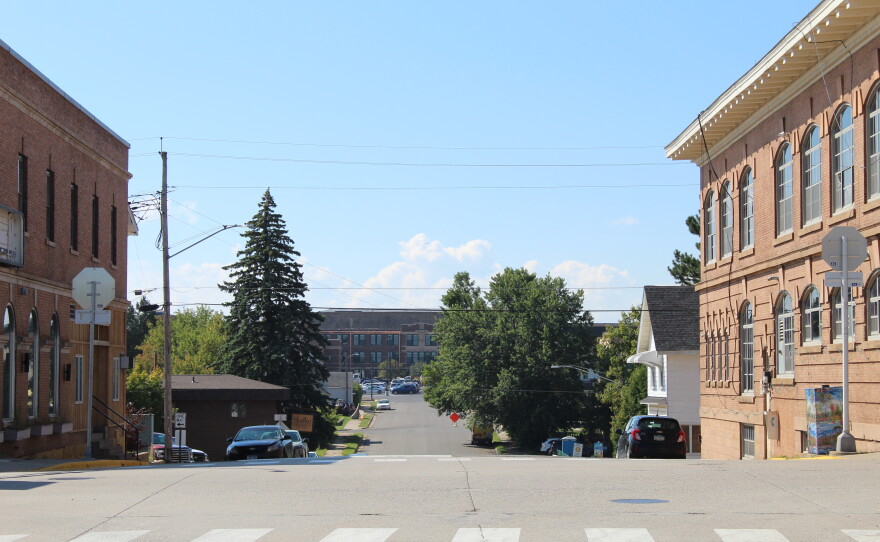
Nothing has been formally proposed, but Hibbing and its neighbor Chisholm have been collaborating more and more, and the word consolidation has come up.


"It might have to happen in order to grow and be stronger," Benz said.
But he would prefer the Hibbing school stay open, if that were to happen.
"I'm from here, so I'm a little biased there," he said.
In rural communities, schools and personal identities are closely intertwined. When a community loses its school, residents can feel like they are losing part of themselves.
The rate of consolidation has slowed considerably. In the last decade, seven school districts have done so.
But the same issues that brought the last wave of consolidation are flaring up once again, and as school districts are forced to increasingly collaborate — or even consolidate — communities are forced to reckon with how their identities must change for the betterment of future generations.

Paul Peltier lived through the education shake-up. He went to class in four different schools before graduating from Grand Rapids High School.
"We felt like we were bounced around. But we were just Balsam boys," he said. "And that's what happens when you live 30 miles away from a school."
As a former educator, he understands schools close for all sorts of reasons.
"But for us, in our school, when I was little, that was a point of contention," he said, "and it's something that I remember to this day, in my current work: that communities and families anchor themselves in their school, and schools owe it to them to make sure they are custodians and stewards of that identity."
Moving forward and looking back
Since 2023, Peltier has led the Range Association of Municipalities and Schools, a quasi-governmental nonprofit that represents the Iron Range. Peltier is running for Rock Ridge School Board. He gave an interview as the RAMS director.
The Range's culture is distinct from the rest of Northern Minnesota because of its history of mining and immigration. There, identity is a word that carries a lot of weight.
That may be why the already contentious and emotional issue of school consolidation is felt so deeply.
On open house day at Rock Ridge High School, the commons echoed with chatter as students met their teachers before moving on to take yearbook pictures and wander the halls.
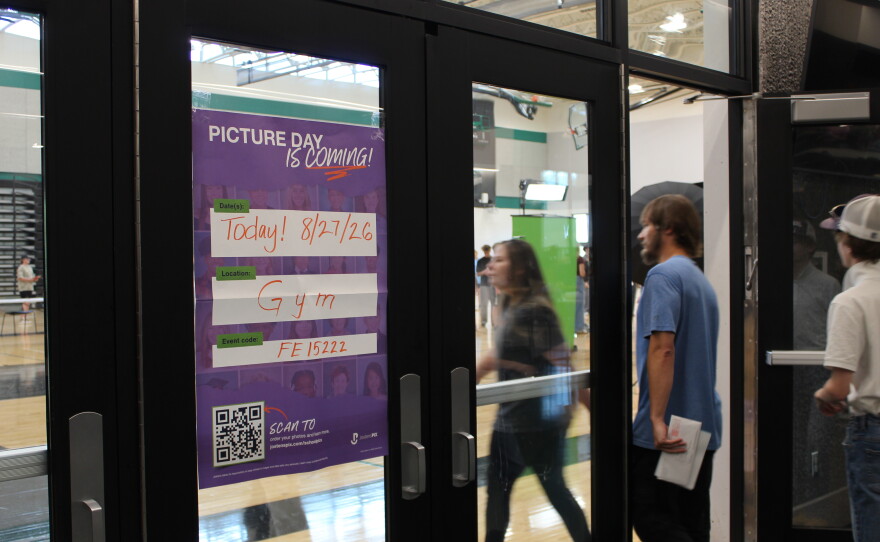
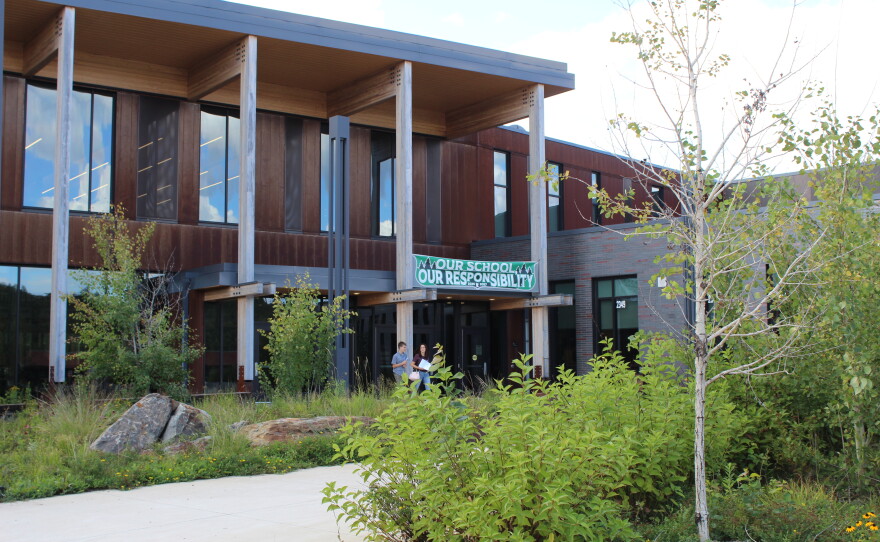
It's the fourth year of classes at the beautiful, modern campus, built after neighboring districts Virginia and Eveleth-Gilbert combined to become Rock Ridge.
"We have a grand piano in the cafeteria. Nobody else does that," Superintendent Noel Schmidt said as he started his tour.
He moved on to the woods and metals shops, featuring a 3-ton crane, just one component of the district's career academy model.
"If you're a rural school, this is what you have to do," he said, looking over the shop space.

It's a common refrain throughout the tour: build collaborative education spaces, don't blow money on big lockers, think outside the box, get donations from the community (Rock Ridge raised over $3 million, Schmidt said).
School Board Chair John Uhan said the consolidation was a "no brainer."
"The curriculum catalog is way better than what Eveleth-Gilbert was able to offer," he said. "And then athletically, it's been also much more successful. The facilities are great.
"I just think the opportunities in the academy is just really, really much more than we would have been able to offer by ourselves as a stand-alone district."
Uhan was on the Eveleth-Gilbert School Board before the districts consolidated. In the last year as Eveleth-Gilbert, he said the incoming kindergarten class was only 29 kids. A century-old boiler needed major repairs. Roofs needed replacing.
"It was looking awfully dire," he said. " ... Eveleth-Gilbert would've been in huge trouble."
But not everyone is a fan of Rock Ridge.
"Worst f-word school in Minnesota," said one parent, standing at the edge of the high school commons, in a rant replete with expletives. " ... The place sucks d***."
Naysayers were the loudest group, but Schmidt estimated they only represented about 20% of the community. The parent, who declined to share his name, thinks it's still closer to 50/50.
The parent grew up in Gilbert. When the districts consolidated, a new elementary and the high school were built on the boundary between Virginia and Eveleth. There are still two elementaries in Virginia. Gilbert was left with an empty lot where its elementary stood for a century.

His partner, who is not from the area, said there are good things about Rock Ridge, and it is nice to have a new school; but it was cool their kids got to go to the old elementary, too, before it was torn down.
That's another piece of advice from Schmidt: Don't leave the old buildings standing because they aren't cost-effective to repurpose.
As Virginia's superintendent, Schmidt led the relentless charge for the consolidation, an effort that took several years and some 150 community meetings.
"I had one advantage: I did not grow up here," he said. " ... It just took a little different viewpoint on how things are going."
Uhan did grow up here. He graduated from Eveleth-Gilbert. He lives two blocks from where the school used to stand in Eveleth. Tearing down the old schools gave the towns more space for development, he said, and they gained a lot more than they lost.

"We got a very proud history, and people like hanging on to that, I guess," he said. "I like embracing the new."
As the small towns that popped up around mines 100 years ago die off, Uhan said they'll need to consolidate. He knows it's an unpopular opinion, and he knows that change means hard decisions.
"You lose sleep over it. It keeps you up at night," he said. "Eventually, you move on."
'Somebody is going to lose an identity'
The Eveleth Community Center feels like a time capsule. Or maybe two time capsules.
A black-and-gold rug on the floor welcomes you to Eveleth-Gilbert High School, "Home of the Golden Bears." A maroon Eveleth High School varsity jacket hangs in a trophy case full of memorabilia.
The community center opened in March in the only part of Eveleth-Gilbert schools left standing: a '90s addition with a gym and music classrooms.
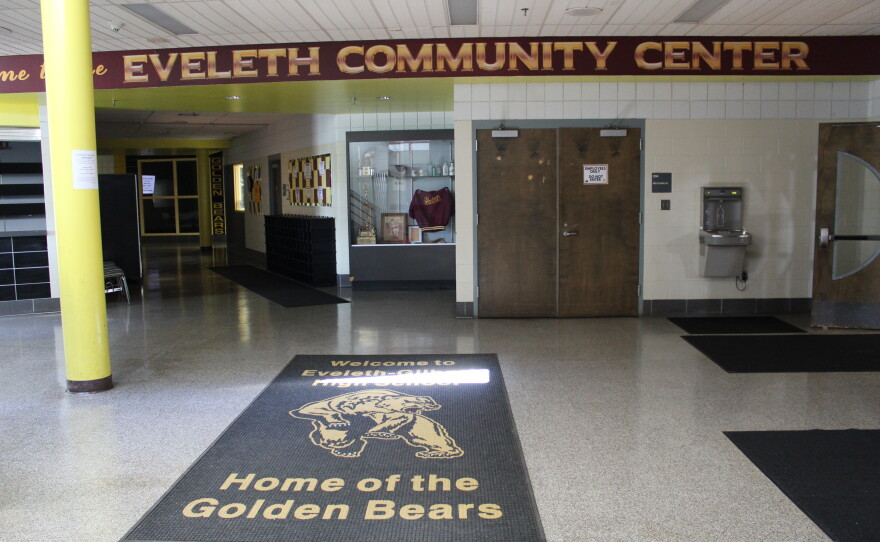
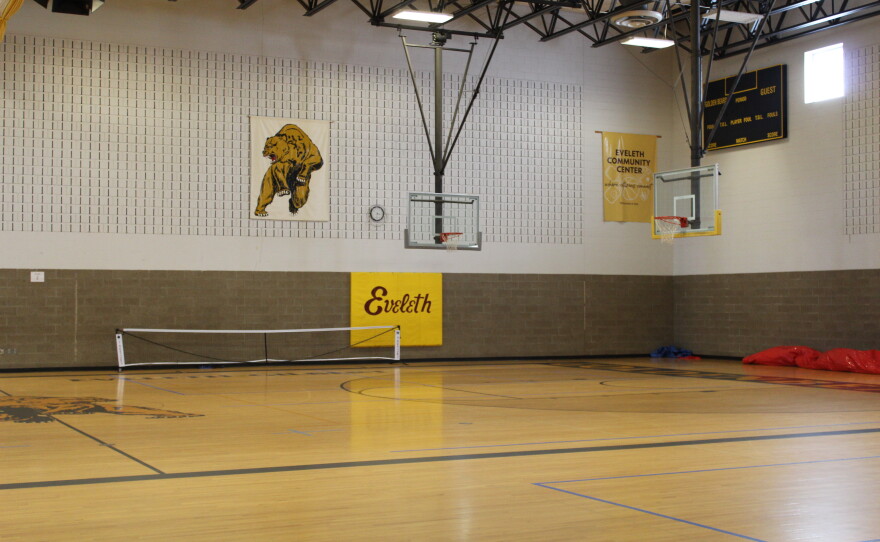
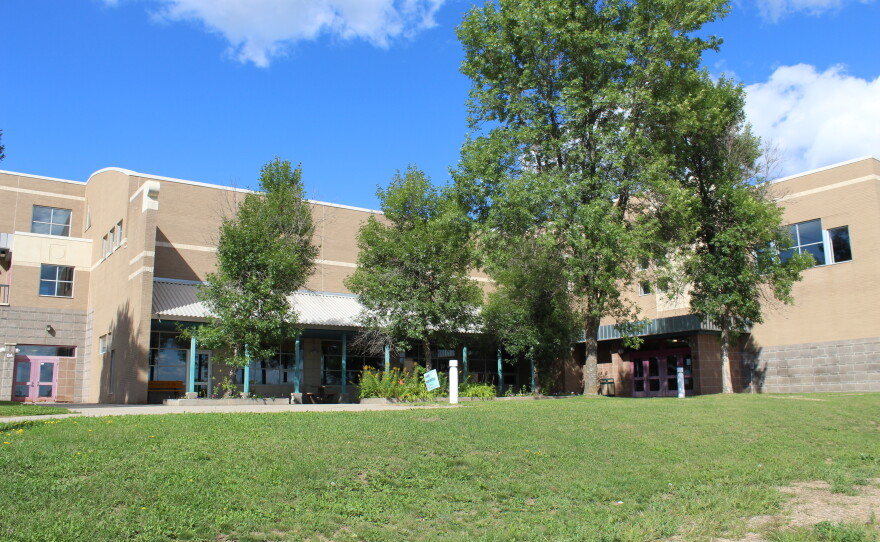
People can rent space on the first floor for birthday parties, graduation parties and memorials. There's line dancing and roller-skating nights. The city bought bouncy houses to blow up in the gym.

"We have pretty much made it into our own space," Mayor Adam Roen said.
Roen didn't say how he voted on the consolidation. He acknowledged the opportunities it created for students, but he also admitted he wasn't in love with the idea of Rock Ridge.
"But it's here now; we have to make the best of it," he said. "I feel like the biggest downside that we feel in Eveleth is we don't have our school district building right in the heart of it."
Minnesota Rural Education Association Executive Director Aaron Fischer said schools are a big economic driver. Staff live and work in the community, and people spend money when they come into town for sports.
"When you have a football game and that neighboring town comes in, it's your chance as a community to showcase what you have," he said.
Roen laments that without the school, people don't have a reason to come into Eveleth. Kids can't walk to school. But more than that, everyone in Eveleth walked the same hallways, and people carry that with them for years.
"When you take the school district out, I think you take a piece of that identity away. I don't think you take it all. You can create your own," Roen said, wearing a black-and-gold Eveleth hat and a maroon-and-gold community center shirt. "That's exactly what Eveleth is doing now.
" ... We can't forget about our history. We need to build on it. But we have to move forward to a new future."

Steve Giorgi said consolidation is a swear word.
"People know that they're going to lose out," he said. "Somebody is going to lose an identity."
Giorgi led the Range Association of Municipalities and Schools before Peltier. He worked closely with Schmidt on the Rock Ridge consolidation, and he was a school board member at Mountain Iron in the '80s and a major player in the Mountain Iron-Buhl consolidation.
"Initially, there was a lot of animus between the communities," he said of MIB's merger. "And not necessarily the students — the parents."
There's no easy route to consolidation and the closing of schools, Giorgi said, but it's a financial reality. He said the leaders and elected officials closer to the issue know that and try to work in the best interest of the students.

"How do you get from this emotional past to the reality that what the kids need is different?" Schmidt said. "That is a very tough job to do."
'Death by a thousand paper cuts'
Over the last 30 years, each of the seven school districts in Carlton County has probably been part of some sort of consolidation discussion.
But it wasn't until this year that one made it across the finish line: Carlton-Wrenshall became Minnesota's newest consolidated school district, narrowly surviving a community vote that aimed to prevent it.
"Obviously, we would like to keep our schools in our communities. There's a lot of pride with those schools," said Fischer, who spent most of his education career in the area before taking over the Minnesota Rural Education Association in July. "So, to consolidate means you've taken a big step, and it shows to me two communities really willing to put kids first."
Education funding is notoriously complex, and there’s no simple answer as to why school districts feel like they’re in a “pressure cooker,” as Peltier described it.

Revenue hasn't kept up with inflation. State funding continues to lag with no end in sight, and new rules have brought additional costs but no new money. And another reason:
"In Greater Minnesota, especially in northeastern Minnesota, we have fewer people here," Peltier said.
State funding is primarily tied to enrollment. Fischer said at a certain point, there aren't enough students to pay for the basics.
"We always think of teachers and programs, which is the most important thing, always," he said. "But you also have to have enough students to have a superintendent and principals and an activities director. You need custodians. You need office support staff. You need a business manager. Every small district has these needs."
Increasingly, school districts are sharing these services to cut down on costs. There are sports co-ops, of course, which Peltier said seems small but is big in terms of identity.
In Itasca County, schools share business services, early childhood and special education. Mountain Iron-Buhl and St. Louis County Schools share a superintendent. The city and school district in Chisholm are combining efforts for a new public works building and bus garage.
Collaboration used to be financially incentivized by the Legislature, Peltier said. So did consolidation, though much of that was repealed or is no longer funded.
"I think in times when the state has budgetary issues, and they have less to give to schools, and you have declining enrollment on top of that, it does start forcing you into more difficult decisions like consolidation," Fischer said.
There's a lot of uncertainty in the state budget outlook, and many education funding issues that need addressing.
Peltier's biggest concern is that legislators are fatigued, having heard from schools over and over again.
"No one seems to care. There is a level of apathy at the state level that they don't even think about us," he said.

Eveleth-Gilbert and Virginia were experiencing a slow "death by a thousand paper cuts," Schmidt said. They consolidated before the worst came.
"My biggest concern is that rural schools won't move fast enough," he said. " ... If we wait for an external factor to cause the consolidation, the improvement of education for our rural kids, we're done for."
Even after consolidating, Rock Ridge is still facing the same funding challenges and declining enrollment as other schools.
"But that doesn't mean you give up on the kids you have," he said.
This reporting is part of a collaboration with the Institute for Nonprofit News' Rural News Network and Big Local News at Stanford University, with data journalist Cherry Salazar’s analysis helping anchor the reporting. Six nonprofit newsrooms were involved: BenitoLink, KAXE, Mat-Su Sentinel, Mississippi Today, Oxford Free Press and The Texas Tribune. Support from the Walton Family Foundation made this project possible.


