



Cohasset Elementary School
North Shore Community School near Duluth
“Hello from North Shore Community School on the north shore of Lake Superior. This is the Phenology Report for the week of Oct. 24, 2026. My name is Sam, and I am your phenologist for this week!
“On Saturday, Oct. 24, there was 10 hours and 32 minutes of daylight. This was a decrease of 21 minutes compared to the previous Saturday. On Sunday, Oct. 25, there was a full moon. On Thursday, Oct. 29, Ms. Pierson-Evans noticed frost on her windshield after school. This was the first time that had happened this fall. On Friday, Oct. 30, Mrs. Rolfe could see her breath, for the first time this year when she was out for her morning walk. She checked the temperature and it was 30 degrees outside. Daylight saving time ends this Sunday, Nov. 1, at 2:00 a.m. when clocks 'fall back' one hour to 1 a.m.
“As of Wednesday, Oct. 28, all of Mrs. Rolfe’s milkweed pods had opened, and some were still releasing their seeds. On Thursday, Oct. 29, 2026 Rain saw one black-eyed Susan near her oak tree while she was studying her group's tree, and she didn’t see any others. Also on this day, Owen saw a buck in his neighbor’s yard and a doe in his backyard.
“On Saturday night, Oct. 24, Ms. Jackson spotted a large skunk in her driveway. It looked very well-fed. Skunks feed on insects, grubs, mice, eggs, and fallen fruit. Skunks continue to be very active this time of year. They do not truly hibernate, but they do search for a protective underground den (or dig their own) before or during cold winter months.
“On Sunday, Oct. 25, I saw three redtail hawks in a thermal. On Sunday, Oct. 25, Ms. Urban saw four Golden Eagles, one Rough-legged Hawk, and one Goshawk migrating at Hawk Ridge. She also saw lots of Red-tailed Hawks and Bald Eagles. On Tuesday, Oct. 27, Ms. Urban saw four American Pipits look for food in the grass by the playground.
“Monday, Oct. 26, Mrs. Rolfe saw a black fly in the classroom. It is the first one she has seen in a long while. Also on Monday Ms. Gallagher’s class saw a spider by Old Veteran- they think it is a fishing spider, it was big and had hair on its body.
“This concludes the Phenology Report. Have a great week and be observant!”
Bay View Elementary near Duluth
“Good morning, my name is Gracie and my name is Brantley and this is our report for the week of Oct. 26, 2026 from Bay View Elementary School.
“I was walking in the woods and I saw a weird looking plant? It still had green leaves. I learned that the shrub is called buckthorn. I did some research and found out we can have common or European buckthorn. Both species are non-native, invasive buckthorn species found in Minnesota. These buckthorn species were first brought here from Europe as a popular hedging material. They crowd out native plants and displace the native shrubs and small trees in the mid-layer of the forest where many species of birds nest. The shrub is easy to spot this time of year and we have plenty of it in our school forest.
“During outdoor education class I noticed a rotting piece of wood that was blue. I learned online that it is most likely a fungus making the wood that color. A cousin to the mushroom, this fungus likes to feed on dead wood. As the fungus feeds, it releases a chemical that stains the wood cells blue. The blue color is usually hidden inside the wood and it is only seen since the wood had been broken.
“This concludes our report from the western edge of the forested Duluth hillside. Look closely. Be Curious. Wonder often.”
Long Lake Conservation Center near Palisade
This report is brought to you by Kali, Selene, Paige and the students from Modern Montessori.
“During our trip from Oct. 26-28, the low temp was 33 degrees and the high was 47. We had on and off rain that added up to almost half an inch.
“The earthworms liked the rain and we saw lots of them in the puddles and on the paths. A pair of Trumpeter Swans are back on the lake. Beavers remain very active with many fresh chews spotted. During canoeing class, Penny saw a beaver actually chewing a tree. Pretty cool.
“The tamaracks in the bog and along the boggy shores of Long Lake are fully golden and shedding their needles. All but a few oak leaves have fallen, making the colorful tamaracks stand out.
“Kali and her mom love chipmunks and squirrels and said that they enjoyed a variety of up-close encounters. Aiden said he saw a squirrel shaking its butt.
“We saw a fishing spider that Kali thought looked like it was waving. Other observations included a Pileated Woodpecker, a rabbit and a frog. We decided to name the frog but couldn’t settle on a name. Our choices are Spot, Tiny, Fubbles, Mr. Stretchy Legs and Wibbits.
“It’s a great time to explore nature and we want to remind everyone to unplug, get outside and LIVE CONNECTED!”
This report is brought to you by Dominic and Kirstyn from St. Joseph’s School in Rosemount and Andy and Winnie from St. Odilia’s in Shoreview.
“During our trip from Oct. 28-30, the low temp was 28 degrees and the high was 61. During our trip to the bog, the temperature in the forest was 60, but inside the bog was 58. It’s cooler because of water evaporation and the insulation of the moss.
“We got to see the bobcat! It climbed up a tree, hunting a squirrel, but eventually gave up and ran into the marsh. Everyone got a good look at it. It’s pretty small, so we think it’s a juvenile on its own for the first time and looking for an area to call its own. Bobcat kittens disperse from their mothers at about one year, and this typically happens in or around Oct., so this makes sense. Maybe this Bobcat is going to call Long Lake home.
“Our group found a half empty hornet’s nest, a jelly mushroom, a beaver in the lake, and a Pileated Woodpecker.
“This time of year, sometimes it’s what is not around anymore that’s noteworthy. During our trip, we didn’t see a single garter snake - not even near the hibernaculum. Maybe they’ve hunkered down for the winter.
“Near the bog, we noticed lots of new aspen trees in the area where the forest was cleared last year. Their leaves are bright yellow, but are starting to turn black. Now that most of the leaves have fallen, it’s easy to spot the buckthorn because their leaves are still green.
“It’s a great time to explore nature and we want to remind everyone to unplug, get outside and LIVE CONNECTED!”
Little Falls Middle School
“This is Shey and Makayla reporting from Little Falls Middle School. This is our phenology report for the week of Nov. 1.
“We have noticed that some of our lilacs are blooming again; this is the third straight year we have seen this.
“A classmate spotted an otter in the woods, quite a ways from any water, and was a little puzzled by it.
“The Fox Sparrows have arrived in Little Falls and are frequently seen feeding with juncos under our feeders.
“One student found a cecropia moth cocoon on the ground and is keeping it in her garage over the winter to see if it will hatch next spring.
“We are still hearing owls calling. We have heard more Great Horned Owls, but most of our sightings have been Barred Owls.
“The whitetail bucks have been seen working on scrapes and fighting with each other.
“A familiar sight for us has been the wooly bear caterpillar, as they are searching for food and spending more time on warm surfaces.
“The fruit of the highbush cranberry are ripe and ready to be picked, but if you plan on making jelly, add lots of sugar to sweeten the taste.
“On sunny fall afternoons we have seen ballooning spiders as they drift across our backyards, as well as wooly alder aphids.
“There are a few large orbweaver spiders that classmates have been keeping an eye on each day.
“The Northern Flickers are still hanging around Little Falls in small groups.
“The robins have left our crabapples and have starting feeding on mountain ash berries.
“That is our report for this week, until next week, keep exploring, keep discovering, and keep connecting with the great outdoors.”
Conservation Minnesota phenology workshop in Minneapolis
What have you seen out there? Let us know: email us at comments@kaxe.org or text us at 218-326-1234.
For more phenology, subscribe to our Season Watch Newsletter and podcast or visit the Season Watch Facebook page.
-
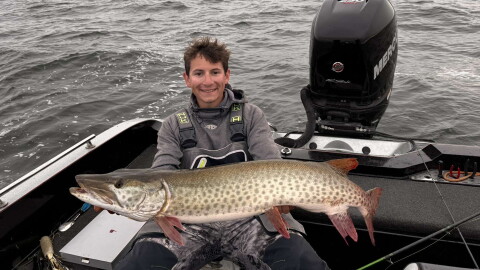 Contributed/Bemidji State UniversityAn ongoing Bemidji State University research project seeks to learn whether new fishing technology could be putting Leech Lake’s muskies at risk.
-
 Contributed/Adobe Stock Image via Minnesota News ConnectionThe National Wildlife Federation recognizes October as "Leave the Leaves Month," when homeowners are encouraged to move some of the leaves they have cleared into garden beds.
-
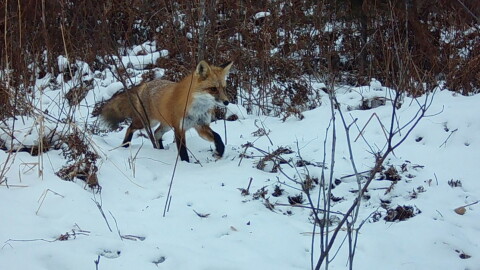 Grace Malinowski, program coordinator, discusses the Offal Wildlife Watching Project. The Community Science series is produced by Mark Jacobs.
-
 The disease, which causes internal bleeding and sudden death, was confirmed Sept. 9, 2026. It does not affect humans.
-
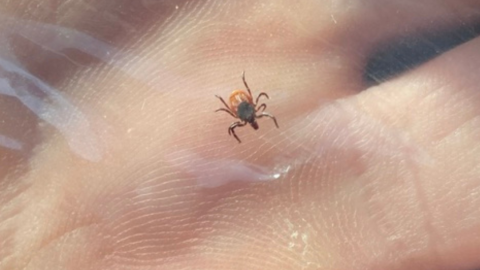 ContributedDozens of ticks as part of a study with the Marshfield Clinic Research Institute were submitted from the Bemidji area.
-
 Christopher Smith, conservation committee chair for the Minnesota Herpetological Society, discusses how salamanders use dead and dying trees. The series is produced by Mark Jacobs.


