


GRAND RAPIDS — The Minnesota Department of Agriculture confirmed emerald ash borer in Itasca County for the first time on Wednesday, July 23.
A homeowner on Pokegama Lake south of Grand Rapids reported a suspected infestation of the invasive pest, which a forest health specialist from the state Department of Natural Resources later confirmed. There are now 59 out of 87 Minnesota counties with emerald ash borer.
The agriculture department enacted an emergency quarantine for southeastern part of Itasca County, which will limit the movement of firewood and ash tree materials out of the area. The exact boundaries for quarantines statewide can be found on the state's interactive map.
Ash logs, tree waste, chips and mulch, as well as all firewood, are not allowed in or out of quarantined areas without a certificate from the Department of Agriculture. These materials are not allowed in or out of the state without providing written approval and proper documentation to the state agriculture commissioner.


Emerald ash borer larvae kill ash trees by tunneling under the bark and feeding on the part of the tree that moves nutrients up and down the trunk. The invasive species was first discovered in Minnesota in 2009.
Signs of infestation in ash trees include the bark splitting open and revealing S-shaped trails underneath due to tunneling. Woodpecker holes may also be a sign, given that woodpeckers like to eat the larvae.
The ag department will host a virtual informational meeting for Itasca County residents and tree care professionals 10 a.m. Tuesday, July 29, featuring a brief presentation followed by a question-and-answer session. Registration for the meeting can be found on the department's website.
Residents and tree care professionals will also have the opportunity to give input on the proposal to add the county's emergency quarantine to the state's formal quarantine. The state is accepting comments through Sept. 5 and recommends formally adopting the quarantine on Sept. 8.
The public can make comments during the virtual meeting or by contacting MDA director Mark Abrahamson at mark.abrahamson@state.mn.us.
-
 Contributed/Kristine JonasThe Minnesota Department of Agriculture announced its first Food to Farm Security Grant recipients on Sept. 28, 2026. The new grant provides funds to distribute local produce to communities for free.
 -
 Property Watch is designed to keep property owners informed and offer a head start to combat fraud.
 -
 The disease, which causes internal bleeding and sudden death, was confirmed Sept. 9, 2026. It does not affect humans.
 -
 ContributedA statement of probable cause charges an officer at the Northwest Regional Correctional Center in Crookston with two counts of felony sexual assault.
 -
 Contributed/Courtesy Photo via Minnesota ReformerRepublican Ron Schutz owns more than $1.74 million of individual stocks, including in companies being sued by Minnesota.
 -
 Lorie Shaull/KAXEThe Detroit Lakes School Board rescinded its July 2026 action that prompted an ACLU lawsuit as it prepares to amend its policy on non-school materials.
 -
 Lorie Shaull/KAXEThe healthcare companies announced the merger on Sept. 29, 2026. The combined company would include 22 hospitals and over 135 clinics in Minnesota, North Dakota and Wisconsin.
 -
 Lorie Shaull/KAXEThe Mesabi Metallics plant, which will source iron from the company's mine in Nashwauk, may begin producing steel as early as 2030.
 -
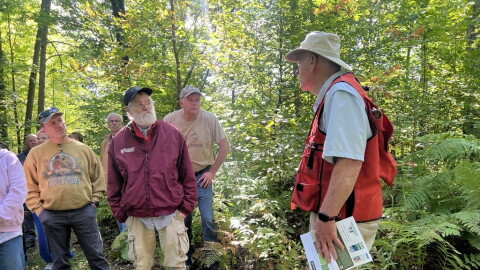 Stella Mayerhoff/KAXE / Report for AmericaRetired DNR forester Gary Anderson gave a walking tour of his forest property as part of a Cass Soil and Water Conservation District habitat management event.
 -
 Lorie Shaull/KAXEMichael L. LaFlex was convicted of first-degree premeditated murder by a Crow Wing County jury in 2024. He shot Bryce Brogle at a Merrifield storage facility in 2022.


