


ROSEAU — The Roseau River Wildlife Management Area is closed to motorized vehicles this summer.
The Minnesota Department of Natural Resources announced the 27-mile wildlife drive through the area was canceled due to a key section of a dike in disrepair. The self-guided tour was originally set to open Saturday, July 19.
The area is closed to vehicles, but the DNR still welcomes and encourages people to walk and bike through the area. The dike is still structurally sound, but it is too narrow for cars to drive on, said Tom Enright, the area wildlife manager at the Roseau River area.

“Even our vehicles have to go all the way around for our area management at the moment,” he said.


The Roseau River area spans 75,000 acres of wetland, forests, grasslands and farmland habitats, most of which is fairly inaccessible, Enright said. When they are able to open the area to the public, the community is able to enjoy Minnesota’s nature.
“We think it’s important to open it up so that people can get back into the core of the wildlife management area and see the species that are using it and the habitats that are less accessible,” he said.
The dike was built in the 1950s out of whatever material was available, and combined with the mixed-in peat, it is not built to today’s standards, Enright said. As the poor materials weathered the climate, the dike started to slump a couple of feet.
The DNR will have information on suggested repairs within a month, Enright said. He said he does not know when the dike will be fixed. Hopes are for a fix by sometime in October, though he said there are no guarantees.

The dike will be open by next summer, though it may not be repaired in time for the spring wildlife drive, Enright said. Construction will happen in spring at the latest, he said.
The Roseau River area is part of the Pine to Prairie Birding Trail and is home to roughly 150 bird species, including a variety of water birds and a few rare species such as yellow rails and horned grebes. Visitors may come across black bears, deer, beavers, otters, minks, red foxes, wolves and moose as well.

The area also offers northern pike fishing in its pools throughout the year, typically along the dike roads or near water control structures. Though the dike roads are closed to motorists, visitors can still bike to Pool 1 West or Pool 2 from parking areas. Motorboats of no more than 10 horsepower can also access the pools, but only during the waterfowl hunting season.
Updates about reopening the wildlife drive will be available on the Roseau River area website, which also has a bird list, maps and other resources.
-
 Contributed/M StateThe closure announcement comes as the Minnesota State system announces plans to "right size" its operations over 50 campuses amid financial challenges.
 -
 Larissa Donovan/KAXEA public open house will be announced before the new Beltrami County Adult Corrections Center opens in May 2027.
 -
 Screenshot/Minnesota Department of Natural ResourcesThe agency announced its decision to require supplemental environmental review Oct. 8, 2026, for the copper-nickel project planned between Babbitt and Hoyt Lakes.
 -
 Contributed/Sora Shimazaki via PexelsVincent Bellomo, 76, was sentenced in September 2026. He originally faced six felonies after investigators found he had large sums in his savings accounts while he was applying for benefits.
 -
 Megan Buffington/KAXEDeputy Aaron Ammerman, who is running for Cass County sheriff, filed the complaint against Sheriff Bryan Welk in January. An investigation was closed with no apparent action.
 -
 Contributed/Trina Swanson for CongressWhile Democrats running for the U.S. House have an advantage this year, Stauber has positioned himself well in the Iron Range district.
 -
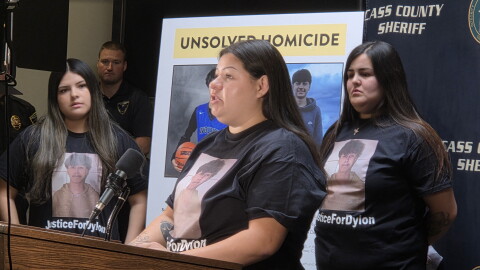 Larissa Donovan/KAXEThe family of Dylon Oothoudt, the Leech Lake Band of Ojibwe and the Cass County Sheriff's Office hosted a press conference Oct. 7, 2026, as the homicide investigation continues.
 -
 Matt C/UnsplashThe rechargeable batteries are used in nearly every home and are generally safe but can be dangerous.
 -
 Maria Hileman/KAXEThe Grand Rapids Police Department is investigating a prank call about a fabricated shooting at Old Central School on Oct. 6, 2026.
 -
 Canva ProThe highway had been closed since May for construction.


