-
 Christopher Smith, conservation committee chair for the Minnesota Herpetological Society, discusses how salamanders use dead and dying trees. The series is produced by Mark Jacobs.
 -
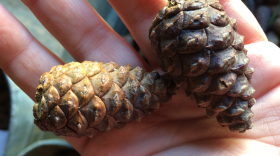 Cones from the state tree are expected to be particularly prolific this year.
 -
 The Department of Natural Resources reported forest tent caterpillars have damaged the leaves of 60,000 acres of foliage around Aitkin County in 2026.
 -
 Jonathan Schilling, a mycologist with the U of MN, discusses wood-eating fungi. The dead and dying trees series is produced by Mark Jacobs.
 -
 The St. Louis County Land & Minerals' forestry division oversaw the planting of red and white pine seedlings over about 48 acres of tax-forfeited land that had burned.
 -
 Radovich will serve the Council as the forest products industry representative. The 17-member body aims to coordinate diverse forest interests in managing the state's timber stands.
 -
 They are also the only native Minnesota birds in the "perching duck" tribe, which is distinguished by their long, clawed toes — perfect for perching in trees.
 -
 Fresh wounds on Minnesota's oak trees in warmer seasons increase the risk of spreading oak wilt, an invasive fungal disease deadly to all the state's oak species.
 -
 The stated goal of the series is to help landowners create healthy, resilient forests, even after severe weather events.
 -
 State and federal agencies are partnering for a biological control effort to slow the spread of invasive emerald ash borer in the Chippewa National Forest.

© 2026
For assistance accessing the Online Public File for KAXE or KBXE, please contact: Steve Neu, IT Engineer, at 800-662-5799.
For assistance accessing the Online Public File for KAXE or KBXE, please contact: Steve Neu, IT Engineer, at 800-662-5799.

Play Live Radio
Next Up:
0:00
0:00
Available On Air Stations


