



Long Lake Conservation Center near Palisade
This report is brought to you by Livia, Lukas and the students from Madison Elementary School in Blaine.
“During our trip to Long Lake Conservation Center on June 1-2, the high temperature was 80 degrees and the low was 38.
“Our group saw some unusual things, including a dead garter snake that was somehow tied in a knot. Weird. We also saw large clumps of forest tent caterpillars in the thickets. When they moved, they looked like they were dancing. Weird. We found a frog deep in the bog, a place where frogs don’t normally go. Weird.
“We saw a lot of normal things as well, including a baby snapping turtle, tadpoles, chipmunks, deer, muskrats, a painted turtle, lots of dragonfly exoskeletons in the water, wild calla blooming by the dock and sundew emerging in the bog.
“We have some sad news to report. The loon eggs were eaten by an unknown predator overnight on Monday - just a few days short of hatching. A plump and healthy looking otter was seen hunting near the nest the next day. We wonder if the loons will try again this summer.
“You never know what weird and interesting things you’ll see when you explore nature, and we want to remind everyone to unplug, get outside and LIVE CONNECTED!”
Belwin Outdoor Science
Nicholas Schwartz
Don Leaon


"Broad-handed Leafcutter Bees (Megachile latimanus) are solitary nesting bees. Females (see photos) select a nest site, build the nest, forage for pollen and nectar, provision the nest, and lay the eggs enabling next year’s generation. They are cavity nesters that construct their nests in pre-existing cavities (natural or human-made).
"Males (see photos) do not take part in any aspect of nest construction. Males typically emerge from their overwintering nest before females and wait for an opportunity to mate when females emerge shortly thereafter. Their adult life is short, only a couple of weeks.
"Female Broad-handed Leafcutter Bees have well developed mandibles (jaws) with appropriately sharp teeth enabling them to harvest leaves and/or petals (see photo) to be used in construction of their nests. Circular cuttings are used to seal the ends of individual cells within the nest; oblong cuttings are used to form the length of the cells. Many of the leaves and petals collected have anti-microbial properties that will offer protection to their offspring.
"Before sealing individual cells, she will collect pollen and nectar from any of a wide range of flowers (a “generalist” forager). The pollen she collects is stored on hairs beneath her abdomen: nectar collected is stored in her “crop”, found in her abdomen. Upon her return to the nest, she will mix the pollen and nectar in a cell and then lay an egg on the mixture and seal the cell. She will repeat this process each day for about four weeks, the extant of her adult life.
"When the larva emerges from the egg it will begin to feed on the provisions provided. It will develop through four or five stages (instars) and then create a cocoon where it will overwinter, completing its metamorphosis in the spring and finally emerging as an adult.
"In Minnesota, Broad-handed Leafcutter Bees (Megachile latimanus) are active from May through October, with the best chances to see them in July, August, and September. Look for them wherever flowers are blooming."
Listeners
What have you seen out there? Let us know: email us at comments@kaxe.org or text us at 218-326-1234.
For more phenology, subscribe to our Season Watch Newsletter and podcast or visit the Season Watch Facebook page.
Funding for this project was provided by the Minnesota Environment and Natural Resources Trust Fund as recommended by the Legislative-Citizen Commission on Minnesota Resources (LCCMR).
-
 Lorie Shaull/KAXEPeriods of reduced air quality due to wildfire smoke are expected for the rest of the warm season as fires continue to burn in Northern Minnesota and Canada.
 -
 Contributed/Bridget Bennett / MinnPost / CatchLight Local / Report for AmericaAs wildfires burn, they release a mixture of toxic compounds like heavy metals, mercury and carcinogenic chemicals that form from burning organic matter.
 -
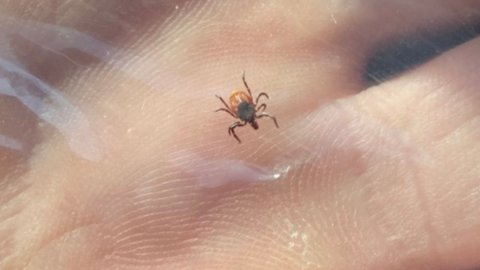 Epidemiologist Elizabeth Schiffman joined the KAXE Morning Show to talk ticks after a death from a rare tick disease in the Brainerd lakes area. There are many rare diseases and types of ticks in Minnesota.
 -
 Forty-six lakes, rivers, streams and wetlands were added, including Big Stony Lake near Park Rapids, Emily Lake in Crow Wing County and Birch Lake in Hackensack.
 -
 Lorie Shaull/KAXEMinnesota Pollution Control Agency meteorologist Ryan Lueck explains how the PCA measures air quality and puts the record-breaking smoke event into context.
 -
 Contributed/Koochiching Soil and Water Conservation DistrictThe plan will guide the implementation of voluntary conservation projects and programs in the northeastern Minnesota watershed over the next decade.


