



North Shore Community School near Duluth
“Hello from North Shore Community School on the north shore of Lake Superior. This is the phenology report for the week of May 23, 2026. My name is Gavin, and I am your phenologist for this week!
“On Sunday, May 24, there was pea-sized hail! Friday, May 29, has a projected high temperature of 75 degrees.
“On Tuesday, May 26, the preschoolers saw lots of flowering dewberry , shinleaf and bloodroot plants. Mrs. Rolfe’s plum, crabapple and apple trees are all flowering as of this week. Wednesday, May 29, Lars, Vivian and Willis saw wooly blue and downy yellow violets.
“On Saturday, May 23, Gavin saw a Red-headed Woodpecker, a Scarlet Tanager, an Indigo Bunting, a Cape May Warbler, and a Chestnut-sided Warbler by the bird feeders at his house. On Tuesday, May 26, Ms. Urban heard an Alder Flycatcher singing at her house. Then at school she saw the bluebirds were back, inspecting a nest box at school. On May 24, Iljia saw her first hummingbird this year at her house searching for flowers by her window.
“Tuesday, May 26, Mrs. Rolfe’s neighbor had a fawn in their yard. Also on Tuesday, Sadie saw a fox in her yard. That was the first time she has ever seen a fox in her yard. On Wednesday, May 27, Willis saw a squirrel building a nest at his bus stop. Thursday, May 28, Ilo saw a bobcat while he was riding his bike near his house on Ski Hill road.
“On Monday, May 25, Ms. Urban saw a monarch butterfly. Thursday, May 28, Ian saw a purplish copper male butterfly. May 28, Rozalyn, Ian, Lydia, and Iljia saw a zebra back spider by Chickadee Landing.
“On Wednesday, May 27, Ms. Jackson’s Lars, Vivian and Willis saw a wood frog and a leopard frog. On Thursday, May 28, Gavin saw a bull frog bySchmidt Creek.
“This concludes our last phenology report for the 2025-2026 school year. Have a great summer, and be observant!”
Long Lake Conservation Center near Palisade
This report is brought to you by Mico, Ali, Tatti and the students from New Century Academy in Hutchinson.
“Summer arrived during our trip to Long Lake Conservation Center from May 25-27, with a high temperature of 92 degrees and a low of 47. The last 90 degree day was July 4 of last year.
“Nature seemed to like the heat with a report of the season’s first monarch butterflies. Hummingbirds have arrived in good numbers and many bumblebees were spotted. Skye chased a bumblebee and nearly caught it.
“In the lake, we found the first baby snapping turtle of the year. Schnee and Ali saw a big beaver running from the woods toward the water.
“In the woods, Mico saw an egg with a spider in it, and a robin's egg shell on the ground. We also spotted deer, squirrels, a red fox with a white tail, a chipmunk that Brooke named Simon, and, unfortunately, soooooooooooo many tickets. One person counted ten ticks on her at one time.
“On a positive note, Mico found many agates. Schnee’s Merlin App identified the following birds: Tree Swallow, Chipping Sparrow, Northern Yellow Flycatcher, Yellow-throated Vireo, Indigo Bunting, Pine Warbler, Black-capped Chickadee, Ovenbird, Swamp Sparrow, Red-eyed Vireo, Least Flycatcher, Chestnut-sided Warbler, Northern Yellow Warbler, Hairy Woodpecker and bluebird.
“We had a great time exploring nature and we want to remind everyone to unplug, get outside and LIVE CONNECTED!”
This report is brought to you by Henry and the students from St. Andrew Catholic School in Elk River, and Finn, Sam and the students from St. Paul School of Northern Lights.
“During our trip to Long Lake Conservation Center from May 27-29, the high temperature was 85 degrees and a low of 46.
“Lots is happening in nature right now. During our hike around the lake, we saw the first fawn of the year, heard grouse drumming, and saw the turkey on its nest of seven eggs. We found a very large dead painted turtle with American carrion beetles on it, watched adult and juvenile beavers swimming, heard lots of peewees and warblers, and saw purple and yellow wood violets in bloom.
“It might be peak tick season. Long Lake naturalist Marla picked off a total of more than 30 during and after the hike.
“Our group experienced a few first-of-the-year sightings, including dragonflies, American Robin chicks, and Pink lady’s slippers are up in the bog. The lady’s slippers aren’t quite blooming, but are close.
“The Common Loons are still on their nest and being very protective of their eggs. They’ve been on their nest for more than two weeks. The gestation period of a loon is 27 days, so we could see loonlets as early as late next week.
“Red columbine, wild geranium and jacob’s ladders are all in bloom, lots of forest tent caterpillars are around, and muskrats continue to be very active. Our group found a small nest of garter snakes sunning themselves near our dorm, and it’s raining catkins and pollen thanks to the male oak trees.
“In the bog, leatherleaf, labrador tea and cotton grass are blooming.
“We had a great time exploring nature and we want to remind everyone to unplug, get outside and LIVE CONNECTED!”
This report is brought to you by Aaliyah, Brooklyn and the students from Ramsey Elementary School.
“During our trip to Long Lake Conservation Center from May 29-31, the high temperature was 90 degrees and a low of 44.
“One of the highlights of our trip was seeing a brand new fawn. Most of us got to see him running. He was so new that his legs were wobbly when he ran.
“We also loved seeing lots of monarch butterflies and hummingbirds. Jordyn saw a bumblebee on her friend’s shirt. Ahmed heard the loud and beautiful song of the Ovenbirds in the forest, Everly spotted a woodpecker and we saw rabbits, a loon on its nest, really cute chipmunks, a beaver, and a groundhog near the entrance of its hole. Our group enjoyed eating the flowers and nectar of the wild columbine.
“We had a variety of interesting discoveries during Lake Bottom Organisms class. We found a baby catfish and learned the hard way that even though they are little, they can still sting. We found a baby Northern Pike and Alexander found a crawfish that had eggs.
“Harris noticed small buds on the pine trees and learned they are the beginning of new pine cones. Nora found a chipmunk skeleton and is taking the skull home. There are a lot of Forest tent caterpillars…so many in fact that we can hear their poop falling onto the leaves below. It sounded like it was raining poop.
“It’s a great time to explore nature and we want to remind everyone to unplug, get outside and LIVE CONNECTED!”
Little Falls Middle School
“This isMr. Kaddatz’s sixth-graders reporting from Little Falls Middle School. This is our phenology report for the week of May 31.
“We have had numerous sightings of Tennessee Warblers this week, along with a
Common Yellowthroat, which brought our school year bird count up to 125.
“We had an unusual sight of a Ruby-throated Hummingbird high on a treetop stretching its wings out.
“We are finding lots of young Painted Turtles as they make their way to ponds.
“Yellow rocket is definitely our most common weed right now, as the tall flowers have taken over most ditches and roadways.
“A classmate found a house centipede in her home. They are a bit creepy to see, but do eat a lot of other small pests in our houses.
“We have found a couple of large sphinx moths this week.
“A student found a large webbing from forest tent caterpillars. We know they are due for a big population year soon, hopefully it is not this summer.
“The Gray Catbirds are still singing loudly in the morning and evenings.
“We have seen both male and female Redstarts this week, but our warblers are definitely getting harder to spot with the leaf growth on the trees.
“The showy white flowers on the elderberry trees are in display right now.
“We have had a couple different sightings of bold jumping spiders this week.
“The wild columbine is blooming right now, and some people have enjoyed snacking on the tips of the nectar tubes.
“The red oak catkins lined our sidewalks after the rainy weather last week.
“The yellow lady’s slippers are blooming right now in ditches and in the woods.
“That is our report for this week, until next week, keep exploring, keep discovering, and keep connecting with the great outdoors.”
Linwood Elementary School in Wyoming, Minnesota
"Greetings from the fourth-grade phenology team in the Linwood School Forest. This is Merrit, Isabella and Alexa reporting on our observations from the week ending May 29.
“This week we observed that the tips of our spruce trees have grown bright green needles. These look like new growth and feel very soft compared to the older needles.
“We also observed that our pagoda dogwood has grown flowers. These flowers are light yellow and look almost like a star cluster. We remembered that John Latimer showed us that these leaves could be split last fall.
“We also saw a giant red and black moth in front of our school. We learned that it is a cecropia moth and it’s one of the largest moths in North America.
“In the forest, we saw that many of our oak trees have green growths the size of a grape. We think there is an acorn inside, but will keep our eyes on them over the summer.
“That is all from the Linwood School Forest, and remember: There’s no place like Linwood!”
Rockford Middle School

“Hello, this is Ruby, Hannah, Makenzie, Everleigh, Maddie, and Keira from Ms. K’s sixth-grade class at Rockford Middle School. We are reporting on the week of Monday, May 25.
“Our temperatures ranged from highs in the 90’s and lows in the 60’s. We’ve had some beautiful sunny days that feel like summer.
“We have been seeing millions of baby bunnies and deer lately. We have also been sighting lots of bumblebees and wasps. Ruby saw a bumblebee almost the size of her hand while landscaping. Makenzie saw a mother duck with her babies crossing the road. Our school prairie is in bloom with yarrows, golden alexanders, white campion, ground-ivy, field penny cress and some milkweed with monarch eggs. There are lots of frogs around.
“When we have been outside at school it has been really hot. We have seen tons of Red-winged Blackbirds, robins, and chickadees. Loons are back in Minnesota. Most of our dandelions are in puff ball and seed dispersal.
“Mrs. K shared some pictures of yellow lady slippers, trillium, and wild geranium in bloom at Captain Lake from this last weekend. A lot of kids have reported about gnats being out. People are planting their gardens. Maddie has also reported that she has been seeing lots of turtles in roads, and Hannah has seen them tanning themselves on some rocks in lakes and ponds. Some strawberries are also in bloom with little white flowers producing delicious fruit and the strawberries are red as rubies.
“This is Ruby, Hannah, Makenzie, Everleigh, Maddie, and Keira reporting from Rockford, Minnesota. This is our last report for this spring. There will be a new group of sixth graders reporting this fall. Thanks for listening. Bye!”
Prairie Creek Community School in Northfield
Listener talkbacks
What have you seen out there? Let us know: email us at comments@kaxe.org or text us at 218-326-1234.
For more phenology, subscribe to our Season Watch Newsletter and podcast or visit the Season Watch Facebook page.
Funding for this project was provided by the Minnesota Environment and Natural Resources Trust Fund as recommended by the Legislative-Citizen Commission on Minnesota Resources (LCCMR).
-
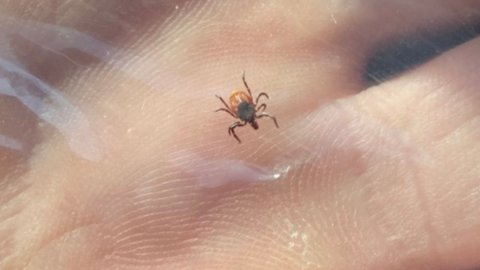 Epidemiologist Elizabeth Schiffman joined the KAXE Morning Show to talk ticks after a death from a rare tick disease in the Brainerd lakes area. There are many rare diseases and types of ticks in Minnesota.
 -
 Forty-six lakes, rivers, streams and wetlands were added, including Big Stony Lake near Park Rapids, Emily Lake in Crow Wing County and Birch Lake in Hackensack.
 -
 Lorie Shaull/KAXEMinnesota Pollution Control Agency meteorologist Ryan Lueck explains how the PCA measures air quality and puts the record-breaking smoke event into context.
 -
 Contributed/Koochiching Soil and Water Conservation DistrictThe plan will guide the implementation of voluntary conservation projects and programs in the northeastern Minnesota watershed over the next decade.
 -
 Heather Holm, pollinator conservationist and award-winning author, discusses how you can protect pollinators while also cutting down on your yardwork.
 -
 Contributed/Minnesota Department of Natural ResourcesThe intent of the ban is to reduce the risk of chronic wasting disease spread, following detections of CWD in wild deer in new areas of the state last year.


