


Brace yourselves, Minnesotans: Wintry weather isn’t over yet.
Back-to-back, messy winter storms are forecast to blanket or ice up much of Northern Minnesota with significant snow as April begins. Travel impacts are likely with both systems, with heavy and wet snow, freezing rain and mixed precipitation all possible.
South and east of the heaviest snow, areas of freezing rain are possible. Exact areas of freezing rain and ice accumulations will be very dependent on surface temperatures and how much rain or sleet mixes in. Some sleet may mix in on the border of snow and freezing rain.
A large winter system will impact the region beginning Wednesday evening, April 1, through Thursday night. The highest snowfall rates of around one-quarter to a half-inch per hour are expected during the daytime Thursday. But with temperatures hovering near freezing, snow may struggle to accumulate on some surfaces, especially on roads and sidewalks.

Those on the North Shore of Lake Superior are likely to see the highest snow totals, with forecast snow totals at 4-7 inches in Duluth, 5-7 inches in Two Harbors and 5-8 inches in Silver Bay. Strong northeasterly winds off Lake Superior will lead to blowing snow and gales on the lake.
Walker residents might see 4-8 inches and Grand Rapids 4-6 inches, while those in Bigfork, Aitkin and Crane Lake are in the 3- to 6-inch range. Brainerd is on the lower end, with 3 to 5 inches possible.
Mixed precipitation near the I-35 corridor will likely cut into snow totals and snow rates.
Gusty northeast winds likely with the systems Thursday through Sunday. The strongest winds expected Thursday, with gusts of 25-40mph, possibly locally higher close to Lake Superior. The winds may lead to areas of blowing snow when combined with higher snowfall rates.

In the northwest, 3-6 inches of accumulation are expected along and south of Highway 200, from Cooperstown, North Dakota, to Ada. Wadena, Detroit Lakes, Park Rapids and Bemidji also fall within this range, according to the Grand Forks office.
A second storm will impact the region Friday into Saturday, with another round of heavy, wet snow, freezing rain, and mixed precipitation all possible. There’s still uncertainty around this storm, the weather service said, so people should keep an eye on the forecast as it develops.
As of Wednesday, cities including Ely, Cook, Bigfork, Virginia, Hibbing, Grand Rapids and Walker are all expected to see at least 4 inches of additional snow in the second storm, with a greater than 50% chance of 6-8 inches.
Heavy snowfall is expected to fall off quickly along a sharp gradient from northern Crow Wing County to the Twin Ports, with ice accumulations expected across Crow Wing, Aitkin, Carlton and southern St. Louis counties.

Some locations in west-central Minnesota may only experience a brief lull in snowfall between Thursday night and Friday morning. Snowfall accumulations will depend significantly on the time of day, when the greatest snowfall rates occur, and how much rain mixes in.
In north-central and northeastern Minnesota, snow is most likely to start Friday afternoon/evening, so this storm will have the heaviest snowfall rates Friday night. Winds may gust to 20-30 mph when snow falls, leading to some blowing and drifting, particularly near Lake Superior.
South and east of the heaviest snow, areas of freezing rain are likely. Exact areas of freezing rain and ice accumulations will be very dependent on precise storm track and surface temperatures.
-
 Larissa Donovan/KAXERelatives confirmed that 17-year-old Dylon Oothoudt of Walker was the male found dead Sept. 13, 2026, in a Cass Lake yard. An autopsy ruled the death a homicide by gunshot wound.
 -
 Contributed/Brainerd Fire Department FacebookThe National Weather Service and public safety officials will be able to use data collected by the Climavision radar installed Sept. 15, 2026, to inform weather warnings.
 -
 Plus: MN Court of Appeals to host oral arguments at Pequot Lakes High School.
 -
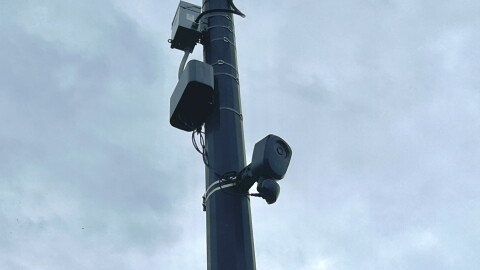 Emma Krab/KAXEAll county cameras have been removed as of Thursday, Sept. 10, 2026. Cameras under city jurisdiction may remain.
 -
 Lorie Shaull/KAXEThe Minnesota Pollution Control Agency is surveying people's fish-eating habits to help limit contaminants in water bodies and make fish safer to eat.
 -
 Emma Krab/KAXEThe tax used to fund civic center improvements will end Dec. 31, 2026.
 -
Plus: Zebra mussels found at two lakes on the Leech Lake Band of Ojibwe Reservation; Pollution Control Agency seeks participants for fish consumption survey.
-
 Leech Lake Band of Ojibwe staff also found starry stonewort in Six Mile Lake, near the city of Cass Lake.
 -
 Larissa Donovan/KAXEThe Bemidji Planning Board voted 6-1 to prohibit new developments of data centers greater than 10,000 square feet during its meeting Sept. 14, 2026.
 -
Plus: DNR cancels mineral lease for Twin Metals; and ICE's immigration crackdown last winter may have ripple effects for farm labor during harvest season.


