


ELY — The Horse River Fire in the Boundary Waters Canoe Area Wilderness is now 100% contained.
The National Incident Management Organization reported all crews and firefighting equipment were removed from the area. Crews paddled the 7 miles out of the BWCAW to the landing at the paved highway on Echo Trail.
Management of the 13-acre fire was transferred back to the Superior National Forest.
Meanwhile, about 200 fire personnel continue to work on the Jenkins Creek Fire. That fire is about 94% contained.
Fire lines are improving with the help of tools for mulching and vegetation removal.
Thunderstorms grounded drone flights on Sunday, so there was no new information on hot spots as of Monday morning.
-
 Plus: Meat processing facility in Staples opens
 -
 Contributed/Deborah Rose / Minnesota Department of Natural ResourcesThirty-three communities received nearly $5 million in funding, including Virginia, Hill City and other Northern Minnesota cities. A new DNR grant closes Sept. 14, 2026.
 -
 Megan Buffington/KAXELocal livestock producers face limited options for meat processing and slaughter amid market consolidation and workforce shortages.
 -
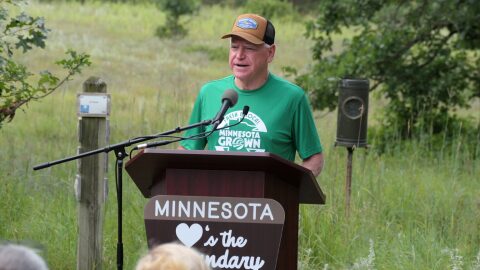 Contributed/Max Nesterak / Minnesota ReformerWalz is instructing the DNR not to grant permits. This move bears a strong risk of litigation over Twin Metals, which wants to extract copper, nickel, cobalt and other valuable metals from underground veins.
 -
And: Glen's Army Navy in Grand Rapids to close after 80 years.
-
 Emma Krab/KAXEGlen’s Army Navy Store in Grand Rapids, founded in 1946, began liquidating its inventory Monday, Aug. 17, 2026, after 80 years in business.
 -
 Contributed/Nicole Neri / Minnesota ReformerThe U.S. Department of Justice sued Minnesota Secretary of State Steve Simon over his refusal to hand over the voter registration list, which includes voters’ names, birthdates, addresses and partial Social Security numbers.
 -
 Larissa Donovan/KAXEIn an email to KAXE, the FBI provided statements on the active investigations into recent incidents on the Red Lake Nation.
 -
 Red Lake and four other Northern Minnesota counties are classified as legal deserts, with fewer than one practicing attorney per 1,000 residents.
 -
Red Lake and four other Northern Minnesota counties are classified as legal deserts, with fewer than one practicing attorney per 1,000 residents.


