



Belwin Outdoor Science
Chelsey from Brainerd
Zayda from Grand Rapids
Phenology Investigations in Minnesota Schools workshop in Spicer
Caledonia High School in Houston County
"Good Morning,
“Although it's not technically summer according to the calendar, it sure feels like summer here! Over the past week, we had extreme humidity that pushed feels like temperatures into the 90s and close to 100.
“My neighborhood robin is on her second nest of the season already with the spring fledglings fending for themselves.
“In town our Chimney Swifts and Common Nighthawks have returned, making lots of chatter throughout the day. I believe the Common Nighthawks are nesting on the flat-topped roofs of the downtown area.
“On the prairie bluffs, pale spiked lobelia is in full bloom and Coreopsis is just beginning to put on its show. The needle grass (porcupine grass) has set seed along with prairie violets and Oxalis. Pasqueflowers and prairie smoke have already seeded.
“Some of the first tiny acorns are forming on the white oaks. Still waiting to see if it will be a mast year or not.
“I have also seen some of the first woodpecker fledglings of the year. Hairy and Downy Woodpeckers had been feeding young in their tree cavities. Common Grackles are also feeding fledgling young.
“Purple Martins along the river have found their colonial roost boxes and have become very active.
“We have also seen Timber Rattlesnakes shed this week.
“Let me know if you have any questions, or if there are any specific sightings you're hoping to get from down here.
“Hope you have a great weekend!”
Long Lake Conservation Center in Palisade
“This is the phenology report from Long Lake Conservation Center for June 6-13.
“The high temperature was 85 degrees with a low of 50. Several snapping turtles were seen looking for places to lay eggs along the road to LLCC and on campus.
“After a failed nesting, the two loons are back on the lake together. They are very curious when the Canada goose family is on the shore of the lake, swimming in close to see what is going on.
“Fawns have been ‘spotted’ toddling around in the forest and curled up on the forest floor.
“In the bog, the sundew and cinnamon ferns are up. Blooming in the bog are the Labrador tea and pitcher plants, and there are a few blue flag iris and pink lady’s slippers still holding on.
“Also in bloom are the blackberry bushes, yellow pond lilies and wild roses.
“The ticks have slowed a bit while the chalk-fronted corporal dragonflies and deer flies have increased in number.
“We found wooly aphids on an alder sapling and have noticed many bubbly cocoons of the spittlebugs.
“It is a great time to explore nature and we want to remind everyone to unplug, get outside and LIVE CONNECTED!"
Listeners
What have you seen out there? Let us know: email us at comments@kaxe.org or text us at 218-326-1234.
For more phenology, subscribe to our Season Watch Newsletter and podcast or visit the Season Watch Facebook page.
Funding for this project was provided by the Minnesota Environment and Natural Resources Trust Fund as recommended by the Legislative-Citizen Commission on Minnesota Resources (LCCMR).
-
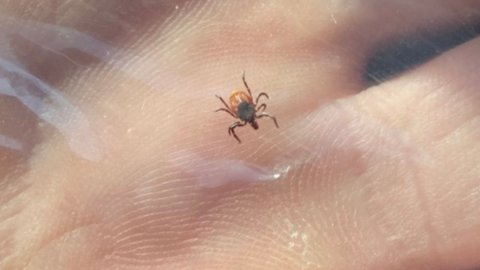 ContributedDozens of ticks as part of a study with the Marshfield Clinic Research Institute were submitted from the Bemidji area.
 -
 Christopher Smith, conservation committee chair for the Minnesota Herpetological Society, discusses how salamanders use dead and dying trees. The series is produced by Mark Jacobs.
 -
 Lorie Shaull/KAXEThe Minnesota Pollution Control Agency is surveying people's fish-eating habits to help limit contaminants in water bodies and make fish safer to eat.
 -
 Contributed/Daniel DewaldCisco and other cold water fish died by the thousands in the large, shallow lake as water temperatures soared to an average of 77 degrees in late July and early August 2026.
 -
 Contributed/Adobe Stock via Minnesota News ConnectionPublic health experts said states can better prepare for future illness outbreaks by keeping a sharp eye on climate change.
 -
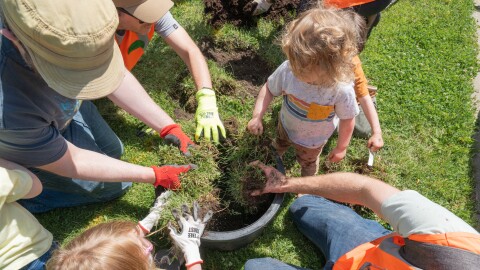 Contributed/Deborah Rose / Minnesota Department of Natural ResourcesThirty-three communities received nearly $5 million in funding, including Virginia, Hill City and other Northern Minnesota cities. A new DNR grant closes Sept. 14, 2026.


