



Agreeing to protect the Mississippi
Mayors from numerous states and tribal leaders from Northern Minnesota gathered in Bemidji last week, Sept. 12-14, to announce a first-of-its kind partnership to protect the Mighty Mississippi.
Here's how these partners intend to take action.

Hit and run
The Minnesota State Patrol is asking for the public’s help finding a driver after a pedestrian was killed in a hit-and-run in Deer River.
The crash happened between 3 and 5 a.m. Sunday, Sept. 17, near Highway 2.
The state patrol says the vehicle left the scene, but because of a dense fog at the time and the driver might not know they hit someone.
The victim was identified as 61-year-old Clement John Nason of Deer River.
Anyone with information is asked to call the state patrol’s investigator at 218-735-3729.
Tax crimes
The head of a Pequot Lakes dog rescue organization and her husband are facing multiple felonies for filing false income tax returns and failing to pay their taxes.
The Crow Wing County Attorney's Office filed charges against Shannon Steele and her husband Russel Steele for fraudulent filings or incorrect payments during tax years 2017 through 2021.
According to the complaints, Shannon Steele was the only person with access to Northern Lakes Rescue's bank accounts and financial records.
She allegedly withdrew thousands of dollars from the nonprofit's accounts for personal expenses such as appliances, video games, airfare, groceries and jet ski rentals.
Collectively, the couple avoided paying taxes on more than $300,000 in taxable income, the charges say.
Each tax-related felony charge carries a maximum penalty of five years in prison, a $10,000 fine, or both.
Shannon Steele also faces a probation violation hearing as part of a previous theft by check conviction.
In that case, while working at a painting business in Garrison, Steele wrote checks to herself totaling $62,000 and charged more than $16,000 in unauthorized purchases to company credit cards.
-
 And: Questions about investigation go unanswered at Cass County sheriff candidate forum.
 -
Plus: Essentia Health, nurses' union reach labor agreement for Deer River hospital; DNR finds "gaps" in review for Hermantown data center; and the fall color finder map is now live.
-
Plus: The Mesabi Trail is complete after 30 years
-
Emma Krab interviewed LiUNA Local 1097 business manager Shawn Braford about the state of labor in 2026.

Jobs in the clean energy sector
Federal data show much of the U.S. is seeing job growth for the clean energy sector, and Minnesota is no exception, as new regional numbers confirm the state is adding more workers to the field.
The organization Clean Energy Economy Minnesota is out with a new report, noting around the state, jobs supporting resources such as solar energy or electric vehicles grew overall by nearly 3.5% last year. Nearly 60,000 Minnesotans work in the clean energy sector.
Amelia Cerling Hennes, managing director of the group, said the encouraging trend is not just confined to certain parts of the state.
"The clean energy sector is benefiting economies all across the state," Cerling Hennes reported. "About one in three clean energy jobs are located in Greater Minnesota."
She cited some regional hot spots, such as St. Cloud, which is the fastest-growing area outside the Twin Cities. Statewide, there was a 10% growth in jobs supporting the transition to electric vehicles. Industry sources acknowledge challenges, with 82% of clean-energy employers citing difficulties in filling open positions, prompting renewed calls for more investments in job-training programs.
Becky Wacker, director of energy services sales for the energy solutions firm Trane, said like many other firms, they are adding to their Minnesota staff. She pointed out there are many types of roles within clean energy, and Trane is trying to help those interested make an easier transition.
"We've got some early talent development programs to help train those young professionals as they're coming into our business," Wacker explained. "Whether it's recent college graduates or technicians or those looking to be out in the field."
Both Wacker and Hennes emphasized because of the demand for services and projects, clean energy can serve as a career, as opposed to a temporary vocation. More broadly, industry leaders are calling on Congress to protect funding — from policies such as the Inflation Reduction Act — for additional clean-energy development and the jobs created. Concerns are mounting under demands from House Republicans to cut spending.
-
 The new 3-year contract includes wage increases for around 40 nurses serving the Deer River hospital and clinic.
 -
 The project uses aeration and a gravity filter to treat iron and manganese.
 -
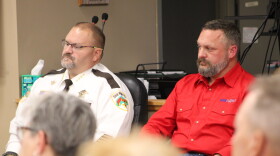 A misconduct complaint and investigation into Cass County Sheriff Bryan Welk were not addressed at a Sept. 8, 2026, forum. His opponent, Deputy Aaron Ammerman, said the office is “fractured from within.”
 -
 Authorities state they believe one adult and four pets died in a Wadena County mobile home fire on Sept. 7, 2026.
 -
 Cones from the state tree are expected to be particularly prolific this year.
 -
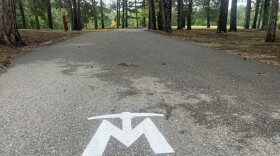 The trail spans from the Mississippi River in Grand Rapids to the Boundary Waters Canoe Area Wilderness in Ely.
 -
 Police say the incident at the annual Obaashing Labor Day Celebration was isolated, and there is no threat to the public.
 -
 Aging with Alzheimer’s and dementia in rural communities can be especially hard.
 -
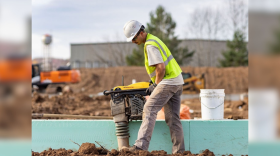 Emma Krab interviewed LiUNA Local 1097 business manager Shawn Braford about the state of labor in 2026 ahead of Labor Day.
 -
 Plus: Marble getes funds to install water filters for manganese and iron; ag department accepts comments on socioeconomic impacts of large dairies, and it's a prolific pinecone season.


