


ST. PAUL — Tens of thousands gathered at the Capitol in St. Paul Saturday, March 28, as part of the national “No Kings” day of protest, with speakers and singers decrying the Trump administration’s authoritarian policies and ambitions.
Gov. Tim Walz took the stage dressed in flannel on a blustery day, armed with fierce rhetoric. He attacked President Trump and applauded Minnesotans for standing up to the administration during Operation Metro Surge, the incursion of 3,000 federal immigration officers here that led to the death of two American citizens and the trampling of the constitutional rights of countless immigrants and citizens alike.
“When the wannabe dictator sent his untrained aggressive thugs to Minnesota, it was you who stood up for our neighbors,” Walz said. “Don’t ever mistake our kindness for weakness,” he added, before introducing Bruce Springsteen.
"Singing through the bloody mist/
We’ll take our stand for this land/
And the stranger in our midst/
Here in our home they killed and roamed/
In the winter of ’26."Lyrics of "The Streets of Minneapolis" by Bruce Springsteen
The legendary singer belted out his new protest song, “The Streets of Minneapolis.”
U.S. Sen. Bernie Sanders, who has been the left’s most vital spokesman for decades, told the massive crowd that he’d been mulling American history in the past year: “In 1789, they said loudly and boldly to the world that in this new nation of America, we don’t want kings.”
After reading the opening phrase of the Declaration of Independence, the Vermont socialist added: “Our message is exactly the same: No more kings. We will not allow this country to descend into authoritarianism or oligarchy. In America, we the people will rule.”
Sanders returned to his most familiar subject, wealth inequality, and also railed against the war in Iran, counting off the estimated deaths of Americans, Iranians, Israelis and Lebanese.
U.S. Rep. Ilhan Omar of Minnesota’s 5th Congressional District and Jane Fonda followed Sanders. Lt. Gov. Peggy Flanagan, a candidate for U.S. Senate, also spoke.

Joan Baez, Maggie Rogers and Tom Morello sang Bob Dylan’s protest song “The Times They Are A-Changin,'” which Baez said she first sang in Grenada, Mississippi, where she joined Martin Luther King Jr. in 1966 to protest mob violence against Black children attending newly desegregated schools. Baez and Rogers then sang the Civil Rights-era anthem “Ain’t Gonna Let Nobody Turn Me Around” with the Twin Cities Singing Resistance and Brass Solidarity, a band founded in 2021 in response to the murder of George Floyd. The two sang both songs in Washington, D.C. at a gathering the day prior denouncing the Trump administration’s censorship.
Organizers expected more than 3,000 No Kings demonstrations across the country. Minnesota’s Capitol protest was the nation’s flagship event, coming after the North Star State dealt Trump a significant political defeat when backlash from the killing of two citizens and resistance from demonstrators wore down his mass deportation effort here and drove down his poll numbers on immigration, which had been his strongest issue.
As Sanders said, “When historians write about this dangerous moment in American history, when they write about courage and sacrifice, the people of Minnesota will deserve a special chapter. In the face of unprecedented occupation, this community fought back and won.”

Despite the famous and locally famous people on the stage, regular Minnesotans were often the movement’s most compelling spokespeople, however.
“It’s great to see everybody out because it gives me hope,” said Gretchen Nesset, 59, at Saint Paul College, where a march to the Capitol kicked off around noon. Nesset is a high school teacher and said some of her students stayed home because of fear of the Trump administration’s incursion of immigration agents here. Kids are coming back to school now, Nesset said, “But there’s still so much fear.”
Kathy Rainey, 79, was with her church friend, Jody Chrastek, 68.
“For democracy to continue we have to lift our voices,” Rainey said. “And I need to lift my voice and stand, and to stand against what is unconstitutional and in danger of bringing our democracy down.”
Chrastek added: “I see America drifting in the same way Germany did,” referring to the Third Reich.
Bob Meis, 68, is a retired lawyer who moved to Minneapolis from Iowa in September. He became emotional when he talked about why he attended the No Kings protest, saying he’s angry and worried about his grandson who is in the Marines and may be deployed to Trump’s Iran War.
“It helps knowing how many people are here. I wish there was more we could do,” he said.
Niizhoode DeNasha said he’s an Iraq War veteran who came to “stand up for the Constitution. I enlisted 20 years ago almost now, and I really believe in the Constitution, and I think rights are being trampled. I’m hear to stand up for people as a veteran.”

DeNasha was with fellow veterans near the front of the stage.
Hours before the rally Saturday, streets were clogged, buses packed and parking scarce well more than a mile away as throngs — dressed in layers and carrying homemade signs with messages like “No War” and “When did empathy and compassion become radical?” — streamed toward the Capitol.
The thousands chanted: “No kings. No ICE. No war.”
Organizers of the event estimated that 200,000 people gathered, making it the largest protest in Minnesota history.
The first No Kings protest was on June 14, the same day that Rep. Melissa Hortman and her husband, Mark, were killed in a political assassination. Organizers say 80,000 Minnesotans attended that No Kings rally. A second No Kings rally in downtown Minneapolis took place in October.
In January, tens of thousands of Minnesotans marched in frigid temperatures in downtown Minneapolis to protest U.S. Immigration and Customs Enforcement. Federal agents shot and killed Pretti the next day, spurring more demonstrations as well as an apparent shift in the federal government’s immigration strategy.
Minnesota Reformer is part of States Newsroom, a nonprofit news network supported by grants and a coalition of donors as a 501c(3) public charity. Minnesota Reformer maintains editorial independence. Contact Editor J. Patrick Coolican for questions: info@minnesotareformer.com.
-
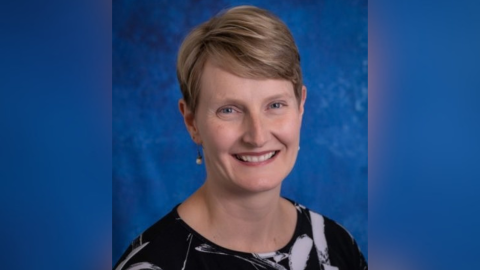 ContributedDr. Dania Kamp, who practices at the Gateway Family Health Clinic, is the 160th president of the professional organization representing physicians, residents and medical students.
 -
 Contributed/Adobe Stock via Minnesota News ConnectionAs demand for electricity soars, industry observers said increasing capacity on the power grid for sources like wind and solar is just one of many crucial needs.
 -
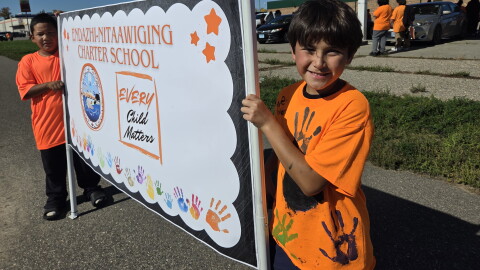 Larissa Donovan/KAXERed Lake's charter school was one of many to commemorate Orange Shirt Day in honor and remembrance of children impacted by the residential school system.
 -
 Contributed/Kristine JonasThe Minnesota Department of Agriculture announced its first Food to Farm Security Grant recipients on Sept. 28, 2026. The new grant provides funds to distribute local produce to communities for free.
 -
 Property Watch is designed to keep property owners informed and offer a head start to combat fraud.
 -
 The disease, which causes internal bleeding and sudden death, was confirmed Sept. 9, 2026. It does not affect humans.
 -
 Plus: Minnesota Department of Agriculture awards Farm to Food Security Grants
 -
 ContributedA statement of probable cause charges an officer at the Northwest Regional Correctional Center in Crookston with two counts of felony sexual assault.
 -
 Contributed/Courtesy Photo via Minnesota ReformerRepublican Ron Schutz owns more than $1.74 million of individual stocks, including in companies being sued by Minnesota.
 -
Essentia Health announces merger; Detroit Lake school board introduces 'viewpoint neutrality' policyPlus: Lost hunters rescued near Hibbing.


