OUTING — Gary Anderson walked through the forest near Outing, west of Roosevelt Lake. A crowd followed him along a winding path through aspens, pines and oaks.
You’d be hard-pressed to find a better guide for a tour of this forest.
These are Anderson’s woods.
“It started in 1975, so it's been 50 years since I've started managing it,” Anderson said.
He led the tour along his nearly 40 acres on Saturday, Sep. 12. His land is home to six distinct microecosystems. These include marsh habitat, open areas with upland grasses, red and white oak, white pine and two age classes of aspens.
Anderson offers a prime example of what’s possible when you manage your land. The forest’s rich diversity is a result of his expertise, thanks to years of forestry experience.

“I worked for the DNR [Minnesota Department of Natural Resources] as a forester for 37 years, then I retired. But I really enjoy working with private landowners and working with the woods,” Anderson said. “It's just very gratifying work. Just to be able to see the results of the work that you've done.”
His forest is also crisscrossed by both walking and cross-country skiing trails. Last winter, he skied 130 miles on his own property.
But you don’t need to be an expert to make the most of your woodland domain.
The Cass Soil and Water Conservation District, or SWCD, offers these woodland walks to show people that they can do this, too. The district has resources to help those looking to get started, including guidance from experts and financial support for forest management work.


“You just need to pick up the phone and call your local SWCD, and they can walk you through it from the very beginning,” said Dana Gutzmann, conservation manager for the district.
She said the benefits go beyond forest protection. Keeping forests healthy also means cleaner lakes.
Although the idea of leaving forests to grow naturally may seem appealing, the choice to not manage land can lead to habitat loss. Fortunately, there are resources to help and Anderson’s tour offered an example of what long-term forest management can do.
Along the tour, Anderson shared details about the history of his forest and its microecosystems.
Walking through his marsh habitat, he pointed out his aptly named Donut Pond. A ditch runs in a circle with an island of dirt and plants in the center. He had it dug out in 1981. It’s since been home to wood ducks and other kinds of wildlife.
That is, until around five years ago. Anderson said water returns sometimes in the spring after rain, but it dries up again.
“Because of the drought, it’s all dried up. It used to have 5 feet of water in the area,” Anderson said. “Hopefully it’ll come back.”
“I think it will,” a member of the crowd chimed in.
As the tour continued, Anderson stopped the group along the way to point out the different tree species.
“It’s probably at least 100 years old,” he said, pointing to an ironwood tree. “They’re really slow growing. It’s called ironwood because its wood is really hard. It’ll dull a chain saw.”

“Wow!” someone in the crowd responded.
“Huh,” said another.
“Geez!”
At another stop, Anderson explained the benefit of bud capping, a low-cost method of protecting pine seedlings from snacking deer. In a demonstration for the group, he carefully folded a piece of paper over the top of the young tree and used a stapler to affix it in place. He said it doesn’t always work — some deer will simply pull the paper off with their teeth.
The tour also included insights from Eamonn Thurmond, a Minnesota public lands conservation forester for the American Bird Conservancy. He offered details about the many ways in which managed forests support bird species.
He pointed out that Anderson’s forest has two aspen habitats, one on each side of the trail where the group was stopped. Gesturing to one side, he explained that one habitat is regrowth: young trees that provide ideal habitat for golden-winged warbler fledglings.

“But this is only one part of their life cycle, because when the chicks fledge from that nest, the parents move the brood away from this habitat and into our more mature forest over here,” Thurmond said, gesturing to the other side of the trail.
Across the trail was a habitat of those mature trees the older warblers need.
“You need both. You need a mature hardwood component, and you need a younger hardwood component for this one bird,” Thurmond said. “This just shows that when we're managing forests, we need a dynamic mosaic of habitats out there, and Gary's property here really exemplifies that very nicely.”
After the tour, people started to talk about what they’d learned and ask follow-up questions.


Diane and Chris Blake were among the attendees. They own 90 acres of land west of Emily and have already reaped some of the financial benefits that come with managing forests, including timber sales.
“So that was a really nice surprise. We got like, woo, $14,000 we didn't even know about,” Chris Blake said. “And you're also feeling really good about creating more habitat and creating more diversity for the animals and stuff. It feels great.”
They attended to learn more about what they can do with their land.
“We’re getting to see what it looks like after somebody does it for 50 years,” Chris Blake said. “ ... It’s got all the different species of birds and the different kinds of trees and the different kinds of environments. It's just amazing. It’s so cool.”
They said they’re going to meet with the Crow Wing SWCD to plan what’s next.
“We want to dredge a pond, and probably put in more trails now, too, if that's a possibility. And I don't know. We kind of got to go look at it now,” Emily Blake said.
“It kind of leaves a legacy when I'm gone. There'll be trees that I've planted there, and there'll be — all the stuff that I've managed for is going to stay here.”Gary Anderson, retired DNR forester
As for Anderson, he’s spent the last 50 years thinking about the next 50.
“It kind of leaves a legacy when I'm gone. There'll be trees that I've planted there, and there'll be — all the stuff that I've managed for is going to stay here,” Anderson said.
He said he wants to put it in a conservation easement so the land can never be developed.
If all goes according to plan, future generations of warblers, deer, wood ducks, thrashers, foxes and other animals will flourish in Anderson’s forest. And in the forests of those who follow in his footsteps.
Stella Mayerhoff is a Report for America corps member, covering Minnesota’s headwaters region for KAXE in Grand Rapids, Minnesota. Report for America places talented journalists in local newsrooms to report on under-covered issues and regions.
-
 Contributed/Illustration by Christopher Larson / Photo by Liz Fish, Little Movie CompanyMinnesota James Beard Award-winning author and chef Amy Thielen along with KAXE Director of Content and Ham Radio sidekick Heidi Holtan divulge their mistakes in the garden and the kitchen this fall.
 -
 Contributed/Steve Hirsh and Nathan HansonMusicians Steve Hirsh and Nathan Hanson perform on the drums and saxophone in concert 7 p.m. Sept. 25, 2026, at Headwaters School of Music and Arts in Bemidji.
 -
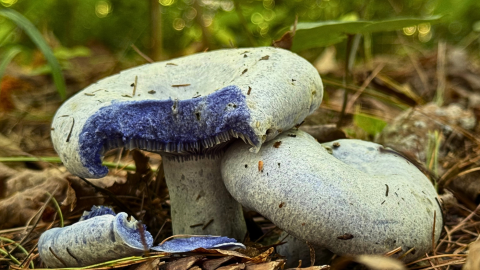 KAXE/Charlie MitchellCo-hosts Heidi Holtan and Charlie Mitchell converse about mushrooms, angry squirrels, and go off on tangents.Send us a voice memo through Speak Pipe!
 -
 Events this week include a Bemidji Symphony Orchestra concert and a school board candidate forum in Grand Rapids.
 -
 Contributed/Lakeland PBSThe Bemidji Pioneer, Brainerd Dispatch and Park Rapids Enterprise are among the media partners participating in the Northern Minnesota candidate debate series.
 -
 Contributed/Hennepin CountyJustin Eichorn’s sentencing comes a year-and-a-half after his arrest as part of an undercover law enforcement sting operation during the 2025 legislative session.
 -
 Larissa Donovan/KAXEAlumni and community members are welcome to join in as Bemidji High School and Bemidji State University celebrate overlapping homecomings through Sept. 27, 2026.
 -
 Maria Hileman/KAXEKAXE's weekly list of concerts near you features Jordan Messerole, Bruce Archer, Nathan Neuman, Knife Emoji, Tattletale, and Christopher David Hanson.
 -
 During the week of Sept. 22, 2026, we enjoy reports of funky fungi, darting dragonflies and an abundance of migratory birds. Staff phenologist John Latimer responds.
 -
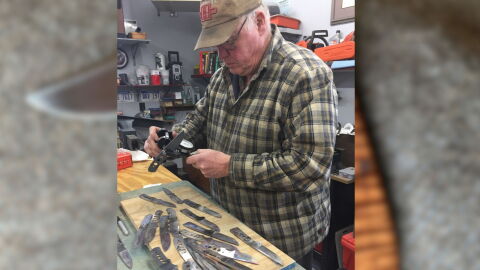 Contributed/Curtis OlsonBemidji knifemaker Curtis Olson joins "Area Voices" to discuss how he got into making knives and the process it takes to make them.