



East Rapids Elementary in Grand Rapids
Long Lake Conservation Center near Palisade
This report is brought to you by Becca, Cody and the students from Rippleside Elementary in Aitkin, and James, Cheyenne and the students from McGregor Elementary.
“During our trip from Oct. 12-14, the low temp was 40 degrees and the high was 52.
“A beaver and a Great Blue Heron were seen along the lakeshore. The swans have not been seen for a week.
“We estimate that 50% of the leaves have fallen. We learned that many kinds of moths and butterflies overwinter in the fallen leaves. On a hike we found several curled leaves with cocoons inside. The insects use the leaves for camouflage, protection and warmth. Leaf litter is important for winter survival to several other critters also, like woolly bear caterpillars, bumblebee queens, firefly larvae, toads and salamanders. Several torn open wasp nests were found.
“In the bog, the tamaracks are golden and losing their needles, and the moss and pitcher plants in the bog have turned dark red.
“Woodpeckers are very busy in the trees and at the feeders. Hairy, Downy, Pileated and Red-bellied Woodpeckers were observed.
“A bear cub was reported near campus, but we didn’t get to see it.
“It was a hoot to learn the Barred Owl call.
“On a non-nature related note, many of us think it’s great sleeping weather. It’s a great time to sleep, but an even better time to explore nature. We want to remind everyone to unplug, get outside and LIVE CONNECTED!”
Little Falls Middle School
“This is Asher and Mason reporting from Little Falls Middle School. This is our phenology report for the week of Oct. 18.
“We have had multiple sightings of swans moving around in small groups of four to five.
“A classmate had a sighting of some type of darner dragonfly, but did not think it was a green darner.
“The most common mushroom we are finding are puffballs, and there are several that are dried and producing spores.
“There have been a few different observations of large flocks of smaller birds. We assume they are either Red-winged Blackbirds or starlings.
“Mr. Kaddatz twice saw medium sized, fast-flying birds around sundown as he was driving. He was guessing they might be woodcock?
“There is a silver maple tree whose leaves are covered in small black bladder galls. These wart-like galls are caused by a mite during the summer.
“We are starting to see more and more baldfaced hornet hives as the leaves that have been hiding them fall from trees.
“There was some of the blue fruit of wild sarsaparilla at Lindbergh State Park.
“There are still a few sunflowers that have flowers, but there are fewer and fewer pollinators around.
“A student noticed some spider egg sacs stuck to a basement window.
“We are seeing a lot of different species of jumping spiders these days.
“The robins have shown up to our fruit trees outside the classroom, but we have not seen any Cedar Waxwings this year.
“This is the first time that there are noticeable leaves piling up in our yards, especially from any ash or sugar maples.
“That is our report for this week, until next week, keep exploring, keep discovering, and keep connecting with the great outdoors.”
What have you seen out there? Let us know: email us at comments@kaxe.org or text us at 218-326-1234.
For more phenology, subscribe to our Season Watch Newsletter and podcast or visit the Season Watch Facebook page.
-
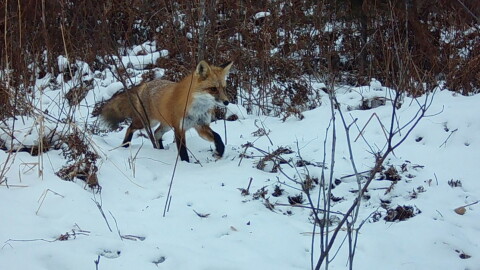 Grace Malinowski, program coordinator, discusses the Offal Wildlife Watching Project. The Community Science series is produced by Mark Jacobs.
-
 The disease, which causes internal bleeding and sudden death, was confirmed Sept. 9, 2026. It does not affect humans.
-
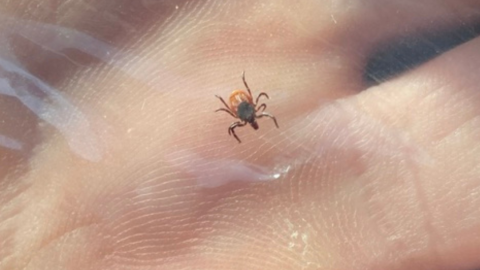 ContributedDozens of ticks as part of a study with the Marshfield Clinic Research Institute were submitted from the Bemidji area.
-
 Christopher Smith, conservation committee chair for the Minnesota Herpetological Society, discusses how salamanders use dead and dying trees. The series is produced by Mark Jacobs.
-
 Lorie Shaull/KAXEThe Minnesota Pollution Control Agency is surveying people's fish-eating habits to help limit contaminants in water bodies and make fish safer to eat.
-
 Contributed/Daniel DewaldCisco and other cold water fish died by the thousands in the large, shallow lake as water temperatures soared to an average of 77 degrees in late July and early August 2026.


