



Sugar Lake Lodge near Grand Rapids
Long Lake Conservation Center near Palisade
This report is brought to you by Spencer, Elizabeth, Brooke, Meisha and Alondra from Class Act at Minnesota North Itasca in Grand Rapids. They are future teachers.
“During our trip to Long Lake Conservation Center we visited the bog. Along the way we saw big jack-o-lantern mushrooms and noticed the ferns in the sun are starting to turn yellow and die off. The common milkweeds now have pods. In the bog, the tawny cotton grass and pitcher plants are still blooming.
“We saw several funnel weaver webs and spiders, including a barn funnel weaver. Many mosquitos but few deer flies were noted. We also saw an admiral butterfly and new blooms still coming on the wild bergamot or bee balm. Blue wood aster and large leaf aster are in full bloom as is the goldenrod.
“Oak apple galls are falling; they are round, spongy growths found on many species of oaks. They are caused by small gall wasps that inject their eggs into the oak forcing the tree to grow a home and provide a food source for the larvae.
“The Long Lake water level is down 5.64 inches from last month and is currently 6.72 inches lower than at this time last year. Half of the lake is covered in lily pads, more than we typically see, and we noticed that many of the lily pads were covered in waterlily aphids. The broadleaf arrowhead is blooming, the otter was out for a swim and we spotted many green frogs on the lakeshore and one leopard frog up on the path.
“Some large ant hills look like something has been digging in them. Last night we heard an owl in the woods, maybe a Great Gray?!
“We had a great time exploring nature and we want to remind everyone to unplug, get outside and LIVE CONNECTED!”
This report is brought to you by Madelyn, Kenen and the campers from Minnesota Outdoor Queer Adventures.
“During our camp at Long Lake Conservation Center from August 19-23, we noticed the very first signs of autumn, including a low temperature on Saturday of 42 degrees.
“Acorns have begun to drop in good numbers. Mixed in with the acorns, we found dozens of oak galls - also known as oak apples. We learned that these are caused when gall wasps inject their eggs into the buds and leaves of oak trees during early spring. The Ojibwe use the red liquid in the ball for dyes and art.
“In the bog, we saw lots of sundews in bloom, complete with glistening droplets. The season’s first bog cranberries made a tasty snack. The loons and Trumpeter Swans have departed from Long Lake for the season, likely rafting up with others on bigger nearby lakes.
“In other notes, the coyotes we heard calling on the far side of the lake, a large, healthy doe stopped by the Dining Hall to join us during breakfast, and we’re still seeing a few monarchs and even found a monarch caterpillar.
“The standouts from our bird walk were lots of juvenile bluebirds, two Ruffed Grouse, and two Red-tailed Hawks. There was a Great Blue Heron on the lake all day on Friday, but hasn’t been seen since.
“The transition to fall has begun, but there’s still summer great exploring to be done. We want to remind everyone to unplug, get outside and LIVE CONNECTED!”
Roots and Wings Forest School in New York Mills

Listener talkbacks
What have you seen out there? Let us know: email us at comments@kaxe.org or text us at 218-326-1234.
For more phenology, subscribe to our Season Watch Newsletter and podcast or visit the Season Watch Facebook page.
-
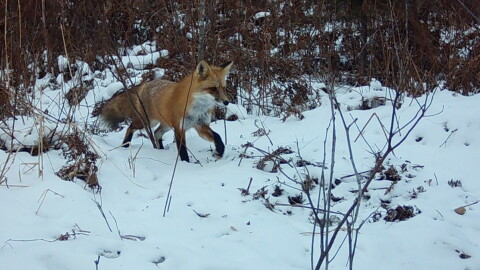 Grace Malinowski, program coordinator, discusses the Offal Wildlife Watching Project. The Community Science series is produced by Mark Jacobs.
 -
 The disease, which causes internal bleeding and sudden death, was confirmed Sept. 9, 2026. It does not affect humans.
 -
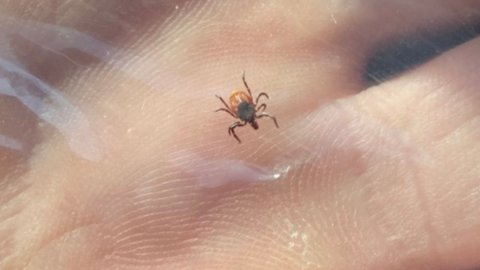 ContributedDozens of ticks as part of a study with the Marshfield Clinic Research Institute were submitted from the Bemidji area.
 -
 Christopher Smith, conservation committee chair for the Minnesota Herpetological Society, discusses how salamanders use dead and dying trees. The series is produced by Mark Jacobs.
 -
 Lorie Shaull/KAXEThe Minnesota Pollution Control Agency is surveying people's fish-eating habits to help limit contaminants in water bodies and make fish safer to eat.
 -
 Contributed/Daniel DewaldCisco and other cold water fish died by the thousands in the large, shallow lake as water temperatures soared to an average of 77 degrees in late July and early August 2026.


