



Long Lake Conservation Center near Palisade
This report is brought to you by Helen, Bella, Macy and the campers from Astronomy Camp at Long Lake from July 31 - August 3, 2026.
“During Astronomy Camp at Long Lake Conservation Center from July 31-Aug. 3, the temps were a pleasant high of 83 degrees with a low of 54.
“Some haze from the wildfires blew in, turning the waxing gibbous moon a brilliant red. It didn’t help stargazing, but it sure was beautiful. Other extra-terrestrial sightings included clear views of the Milky Way, the Big and Little Dipper, Cassiopea, Orion, a double star, and sun spots we saw through a hydrogen alpha solar telescope.
“Through the Minnesota Astronomical Society’s 25- and 30-inch Dobsonian telescopes, we saw the Lagoon Nebula, Ring Nebula, Dumbbell Nebula, Swan Nebula, the Whirlpool Galaxy and the Hercules Cluster. Thanks to the Minnesota Astronomical Society for sharing the universe with us.
“In terrestrial sightings, we saw a large adult snapping turtle in the lake, and enjoyed hearing the loons calling at night. We saw a cicada, Downy Woodpecker, woodchuck, chipmunks, dragonflies, a garter snake, a bumblebee asleep on a flower, a tiny frog, a katydid, and a hummingbird moth. We also saw a fawn and a doe. The fawn was about a third the size of the doe and still had clearly visible spots.
“We had a great week of camp and we want to remind everyone to unplug, get outside, LOOK UP, and LIVE CONNECTED!”
Sugar Lake Lodge in Grand Rapids
Listener talkbacks
What have you seen out there? Let us know: email us at comments@kaxe.org or text us at 218-326-1234.
For more phenology, subscribe to our Season Watch Newsletter and podcast or visit the Season Watch Facebook page.
-
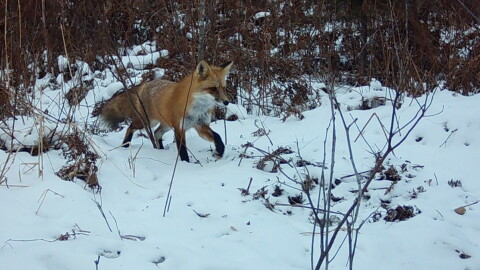 Grace Malinowski, program coordinator, discusses the Offal Wildlife Watching Project. The Community Science series is produced by Mark Jacobs.
 -
 The disease, which causes internal bleeding and sudden death, was confirmed Sept. 9, 2026. It does not affect humans.
 -
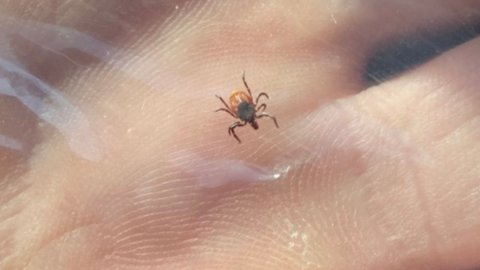 ContributedDozens of ticks as part of a study with the Marshfield Clinic Research Institute were submitted from the Bemidji area.
 -
 Christopher Smith, conservation committee chair for the Minnesota Herpetological Society, discusses how salamanders use dead and dying trees. The series is produced by Mark Jacobs.
 -
 Lorie Shaull/KAXEThe Minnesota Pollution Control Agency is surveying people's fish-eating habits to help limit contaminants in water bodies and make fish safer to eat.
 -
 Contributed/Daniel DewaldCisco and other cold water fish died by the thousands in the large, shallow lake as water temperatures soared to an average of 77 degrees in late July and early August 2026.


