



Long Lake Conservation Center in Palisade
This report is brought to you by Ella, Dawson and the camp rockers from Camp Nature Rocks.
“Hi, this is Ella and Dawson from Camp Nature Rocks at Long Lake Conservation Center, July 14-18. The temps for our camp week were a high of 95 degrees. The low was 57 degrees. The wildfire smoke rolled in at 10 a.m. on Wednesday.
“Here are our observations for this week. There are a bazillion tent moths, one army worm, and dragonflies are laying eggs on the water..
“We saw a Blue Jay, a painted turtle sunning on a log, otters swimming in the lake, a pair of Common Loons, several white-tailed deer, adults and lots of baby bunnies, a mom robin feeding her baby that was the same size as her, three fox kits, a Virginia ctenucha moth on a common milkweed bloom, and the hophornbeam trees are fruiting.
“We had a great week of camp and we want to remind everyone that Nature Rocks! So unplug, get outside and LIVE CONNECTED!”
Roots and Wings Forest School in New York Mills
Julia in Bemidji
Ian in Minneapolis
Chad in Little Falls
Michael Demars
What have you seen out there? Let us know: email us at comments@kaxe.org or text us at 218-326-1234.
For more phenology, subscribe to our Season Watch Newsletter and podcast or visit the Season Watch Facebook page.
-
 Contributed/Adobe Stock Image via Minnesota News ConnectionThe National Wildlife Federation recognizes October as "Leave the Leaves Month," when homeowners are encouraged to move some of the leaves they have cleared into garden beds.
 -
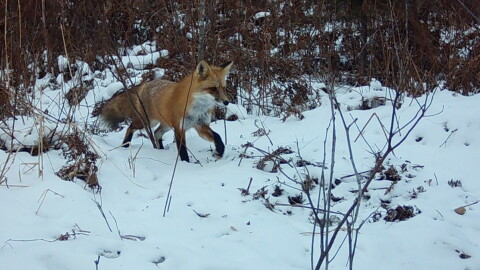 Grace Malinowski, program coordinator, discusses the Offal Wildlife Watching Project. The Community Science series is produced by Mark Jacobs.
 -
 The disease, which causes internal bleeding and sudden death, was confirmed Sept. 9, 2026. It does not affect humans.
 -
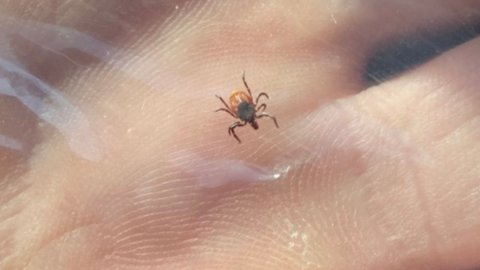 ContributedDozens of ticks as part of a study with the Marshfield Clinic Research Institute were submitted from the Bemidji area.
 -
 Christopher Smith, conservation committee chair for the Minnesota Herpetological Society, discusses how salamanders use dead and dying trees. The series is produced by Mark Jacobs.
 -
 Lorie Shaull/KAXEThe Minnesota Pollution Control Agency is surveying people's fish-eating habits to help limit contaminants in water bodies and make fish safer to eat.


