



Long Lake Conservation Center near Palisade
Hayden, Shay and Lyndon are from the Forkhorn I firearm safety training camp.
“Hi, this is Hayden, Shay and Lyndon from Forkhorn Summer Camp at Long Lake Conservation Center, June 28 through July 2.
“The temps for our camp week were a high of 86 degrees; jumping in the lake felt so good! The low was 58 degrees.
“We had a pretty spectacular storm on June 29 that produced thunder, LOTS of lightning and 1.33 inches of rain.
“In the LLCC neighborhood, a game camera caught a black bear roaming the area at 5:30 a.m.
“An American Bittern was seen hunting and eating earthworms from a grassy area. We looked it up and read that American Bitterns do not eat earthworms. But then, through more research, we did find other reports of them eating worms. Good news for the hungry Bittern, or we would have had to tell it to stop! In fact, they are not picky eaters and will eat just about anything. Kind of like summer campers.
“We also saw white-tailed deer, turkeys, loons, chipmunks, and a fledgling robin. We did not see but heard the constant song of the Red-eyed Vireos.
“’In bloom’ notes include; black-eyed Susan, Canada thistle, yarrow, cow parsnip, bindweed, daisies, meadow buttercup and bluebell.
“We had a great week of camp, and we want to remind everyone to go jump in a lake! AND to unplug, get outside and LIVE CONNECTED!”
Roots and Wings Forest School in New York Mills
Steve Neu in Grand Rapids
Listener observations
What have you seen out there? Let us know: email us at comments@kaxe.org or text us at 218-326-1234.
For more phenology, subscribe to our Season Watch Newsletter and podcast or visit the Season Watch Facebook page.
Funding for this project was provided by the Minnesota Environment and Natural Resources Trust Fund as recommended by the Legislative-Citizen Commission on Minnesota Resources (LCCMR).
-
 Contributed/Adobe Stock Image via Minnesota News ConnectionThe National Wildlife Federation recognizes October as "Leave the Leaves Month," when homeowners are encouraged to move some of the leaves they have cleared into garden beds.
 -
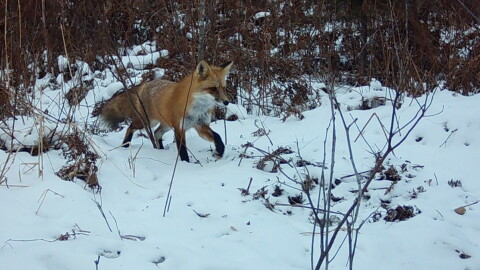 Grace Malinowski, program coordinator, discusses the Offal Wildlife Watching Project. The Community Science series is produced by Mark Jacobs.
 -
 The disease, which causes internal bleeding and sudden death, was confirmed Sept. 9, 2026. It does not affect humans.
 -
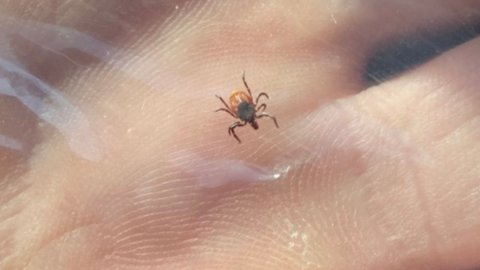 ContributedDozens of ticks as part of a study with the Marshfield Clinic Research Institute were submitted from the Bemidji area.
 -
 Christopher Smith, conservation committee chair for the Minnesota Herpetological Society, discusses how salamanders use dead and dying trees. The series is produced by Mark Jacobs.
 -
 Lorie Shaull/KAXEThe Minnesota Pollution Control Agency is surveying people's fish-eating habits to help limit contaminants in water bodies and make fish safer to eat.


