


ST. PAUL — The way lawmakers and lobbyists talk about a bonding bill, it comes off as quite a delicate and mysterious piece of legislation.
Delicate because negotiations over whether to take on debt to fund local infrastructure projects, let alone how much to borrow, can flame out at any time. Mysterious because deliberations mostly play out behind closed doors, making it seem like nothing is happening before proposals arise from the session’s dying embers.
Those factors turn the final week of Minnesota’s legislative session into a waiting and guessing game for observers.
“It does cut it down to the wire,” said Bradley Peterson, executive director of the Coalition of Greater Minnesota Cities. “It becomes kind of a nerve game both for the folks who are hoping to get projects funded and for the legislators themselves.”
Where does the bonding bill currently stand?


Not at the top of the Legislature’s to-do list, yet, which is nothing out of the ordinary.
Although it wasn’t always the case, nowadays House and Senate leaders mainly work out the bill’s parameters out of the public eye. If a bonding bill materializes, Peterson said it isn’t likely to happen before the final days or hours — Sunday is this session’s cut-off date.
“Recent history has been that towards the end of session a bonding bill just sort of appears,” he said. “It’s manifested out of the ether with some sort of agreement and it’s put on the table and they vote it up or down.”
Because of what he described as the “magic trick” nature of a bonding bill’s debut, he said nerves around the legislation’s prospects don’t truly kick in for him until the final week starts. One leading lawmaker, Sen. Sandra Pappas, DFL-St. Paul, acknowledged feeling a heightened sense of urgency last week.
“I’m a Nervous Nellie about the whole thing,” said the Senate’s Capital Investment Committee chair during a press conference calling for bonding funding for lead pipe replacement projects.
Pappas, set to retire after the session, has consistently struck optimistic notes about the bonding bill’s chances. At the presser, she said the Legislature is reaching “do or die” time given the low chances of a special session if they don’t meet the deadline.
“If we don’t finish a bonding bill (before the deadline), there probably won’t be a bonding bill,” she said.
Are there any signs pointing one way or another on the bill’s chances?
Craig Johnson, a lobbyist with the League of Minnesota Cities, doesn’t consider himself an optimist. This is worth noting because he’s actually feeling rosier about the bonding bill’s prospects than he did at any other point this session.
“I think the odds are better that we have a bonding bill than we don’t,” he said. “It’s over 50%.”


What fuels his positive odds? He sees DFL and GOP leaders working together in the House, as evidenced by the Capital Investment Committee co-chairs — Rep. Mary Franson, R-Alexandria, and Rep. Fue Lee, DFL-Minneapolis — joining Pappas at last week’s press conference.
Their remarks provided clues into what a bonding package could include. Lead pipe replacement funding would be a sure inclusion, along with larger investments in water, road and other infrastructure projects.
Pappas is advocating for a bonding bill up to $1.4 billion, while Lee referenced a $1.2 billion figure. House Republicans, Franson included, have cited a goal closer to $1 billion.
Compared to the House, the Senate doesn’t appear to be working together across the aisle as much so far, Johnson said.
“It sounds like getting Republican votes in the Senate is where the challenge is,” Johnson said.
Quietness isn’t necessarily a bad sign, though, he added. Grandstanding at a mic makes for better reality television, but the lack of it may say talks are productive enough behind closed doors.
As this week wears on, he anticipates the bonding bill will become the Legislature’s main focus. When exactly that happens, largely depending on lawmakers resolving fraud and Hennepin County Medical Center tax funding legislation, will help determine the package’s outcome.
Friday passage in the House leaves time for representatives and senators to work out differences in a conference committee. Leaving it late with passage on Sunday would give the Senate few other options than to vote on the House version, making the three-fifths majority needed to get it over the finish line even harder to achieve.
Before then, as Sen. Karin Housley, R-Stillwater, pointed out earlier this session, the bill’s chances can change on a dime. She has stated support for a bonding bill this year, but also noted the delicateness of getting it done.
“It can blow up at a moment’s notice,” said the Senate’s ranking minority member on capital investment.
This article first appeared on MinnPost and is republished here under a Creative Commons Attribution-NoDerivatives 4.0 International License.
-
 Plus: Zebra mussels found in more Northern Minnesota lakes; Stauber-Swanson to square off in debate; and the KAXE Election Guide is live.
 -
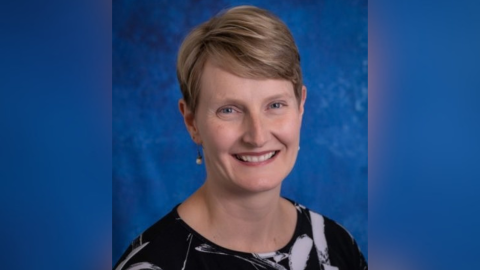 ContributedDr. Dania Kamp, who practices at the Gateway Family Health Clinic, is the 160th president of the professional organization representing physicians, residents and medical students.
 -
 Contributed/Adobe Stock via Minnesota News ConnectionAs demand for electricity soars, industry observers said increasing capacity on the power grid for sources like wind and solar is just one of many crucial needs.
 -
 Larissa Donovan/KAXERed Lake's charter school was one of many to commemorate Orange Shirt Day in honor and remembrance of children impacted by the residential school system.
 -
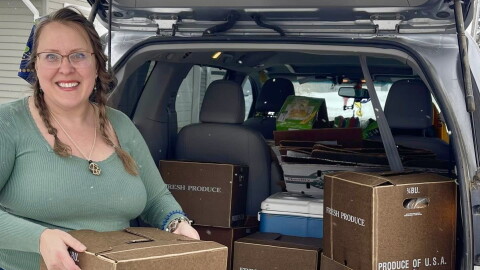 Contributed/Kristine JonasThe Minnesota Department of Agriculture announced its first Food to Farm Security Grant recipients on Sept. 28, 2026. The new grant provides funds to distribute local produce to communities for free.
 -
 Property Watch is designed to keep property owners informed and offer a head start to combat fraud.
 -
 The disease, which causes internal bleeding and sudden death, was confirmed Sept. 9, 2026. It does not affect humans.
 -
Plus: Minnesota Department of Agriculture awards Farm to Food Security Grants
-
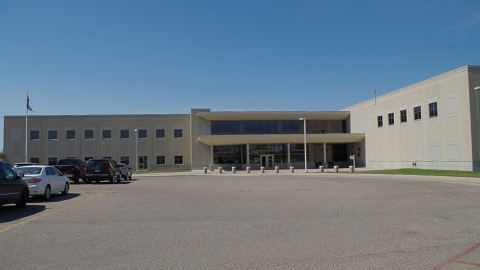 ContributedA statement of probable cause charges an officer at the Northwest Regional Correctional Center in Crookston with two counts of felony sexual assault.
 -
 Contributed/Courtesy Photo via Minnesota ReformerRepublican Ron Schutz owns more than $1.74 million of individual stocks, including in companies being sued by Minnesota.
 -
Essentia Health announces merger; Detroit Lake school board introduces 'viewpoint neutrality' policyPlus: Lost hunters rescued near Hibbing.
-
 Lorie Shaull/KAXEThe Detroit Lakes School Board rescinded its July 2026 action that prompted an ACLU lawsuit as it prepares to amend its policy on non-school materials.


