


ST. PAUL — The Minnesota House on Thursday, May 7, passed bipartisan legislation to create an independent office of inspector general to oversee the state’s public dollars and investigate allegations of fraud.
People have been convicted of bilking hundreds of millions of dollars from state-supervised safety net programs, and the widespread theft has garnered national attention, including from the Trump administration, which has deferred millions of Medicaid dollars because of fraud concerns. With the midterm elections coming in November, Republicans see the issue as one of their best to run on, while Democrats are anxious to show they’re taking action to combat the theft of public money.
The office of inspector general bill (SF 856) is a marquee fraud-prevention bill this legislative session, which ends on May 17 at 11:59 p.m. Other fraud measures being considered this session include a bill to tax money stolen through fraud; expanding the Minnesota Attorney General Office’s Medicaid Fraud Control Unit; and strengthening state agencies’ ability to stop payments when fraud is suspected.


“When it comes to fighting fraud there are no silver bullets. But this bill is a substantial step forward. It’s a step toward preventing fraud in the first place rather than just investigating it after the fact,” said Rep. Matt Norris, DFL-Blaine. “This office represents an unprecedented amount of fraud-fighting power in our state.”
The Minnesota Senate, where Democratic-Farmer-Labor members hold a one-seat majority, passed its own version last year. The Senate is expected to concur with the House’s changes. Gov. Tim Walz has said he supports the creation of an office of inspector general and proposed creating one in his 2026 budget proposal.
The inspector general would be appointed by the Minnesota governor, but a bipartisan group of legislators will vet and forward a slew of candidate recommendations from which the governor can choose. The inspector general, who will serve a five-year term, must be confirmed by a three-fifths majority vote in the Senate.
The office would be able to investigate any public or private entity that receives public dollars. It would also expand information-sharing between agencies and implement best anti-fraud practices for the agencies. The office of inspector general would also be required to submit regular reports to the Legislature.
Minnesota Reformer is part of States Newsroom, a nonprofit news network supported by grants and a coalition of donors as a 501c(3) public charity. Minnesota Reformer maintains editorial independence. Contact Editor J. Patrick Coolican for questions: info@minnesotareformer.com.
-
 Larissa Donovan/KAXEA public open house will be announced before the new Beltrami County Adult Corrections Center opens in May 2027.
 -
 Complaint accuses Cass sheriff of sharing nude images; Nevis man sentenced for social services fraudFind more stories from KAXE News at kaxe.org/local-news.
 -
 Screenshot/Minnesota Department of Natural ResourcesThe agency announced its decision to require supplemental environmental review Oct. 8, 2026, for the copper-nickel project planned between Babbitt and Hoyt Lakes.
 -
 Contributed/Sora Shimazaki via PexelsVincent Bellomo, 76, was sentenced in September 2026. He originally faced six felonies after investigators found he had large sums in his savings accounts while he was applying for benefits.
 -
 Megan Buffington/KAXEDeputy Aaron Ammerman, who is running for Cass County sheriff, filed the complaint against Sheriff Bryan Welk in January. An investigation was closed with no apparent action.
 -
 Contributed/Trina Swanson for CongressWhile Democrats running for the U.S. House have an advantage this year, Stauber has positioned himself well in the Iron Range district.
 -
Plus: MPCA’s draft Minntac permit at issue at information session.
-
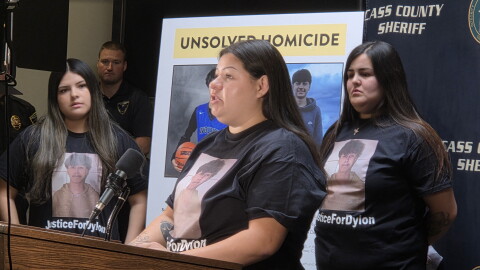 Larissa Donovan/KAXEThe family of Dylon Oothoudt, the Leech Lake Band of Ojibwe and the Cass County Sheriff's Office hosted a press conference Oct. 7, 2026, as the homicide investigation continues.
 -
 Matt C/UnsplashThe rechargeable batteries are used in nearly every home and are generally safe but can be dangerous.
 -
 Maria Hileman/KAXEThe Grand Rapids Police Department is investigating a prank call about a fabricated shooting at Old Central School on Oct. 6, 2026.


