Tribal governments and nonprofit organizations are stepping up in tackling water quality issues in Northern Minnesota.
With the help of Legacy-funded grant dollars, the Sustainable Farming Association of Minnesota is working with farmers in the Red River Basin to establish sustainable farming practices, including no-till soil.
“The less you disturb the soil, the more your soil builds, and the more your soil helps with the ecosystem services that soil provides, which includes water filtration and water quality,” said Patrick Toomey, grazing education lead for the nonprofit.
The Sustainable Farming Association of Minnesota is one of eight organizations to receive a total of more than $1 million from the Minnesota Board of Water and Soil Resources, or BWSR, through the Clean Water Legacy Partners Grant Program. Other Northern Minnesota awardees are White Earth Nation, Fond du Lac Band of Lake Superior Chippewa and Leech Lake Band of Ojibwe.
Toomey said some farmers are on the fence about whether to implement sustainable practices because new practices come with uncertainty and risk.
That’s where a grant can help.
The Sustainable Farming Association of Minnesota plans to use the grant to offer cost-share incentives to farmers.
“Whenever you change anything in a farming operation, there's always going to be a little bit of a learning curve, and what these cost-share incentives provide is a way to buffer against if there are issues with it,” Toomey said.

The organization will also offer farmer-to-farmer education about regenerative and conservation agriculture.
Toomey said he’s excited to see how farmers find ways to fit sustainable practices into their operations.
For the Fond du Lac Public Works Division, an entity of the Fond du Lac Band of Lake Superior Chippewa, the grant means a new street sweeper.


The Fond du Lac Band previously owned sweeping equipment, including a sweeper attachment for a skid steer, but the machinery needed repairs. A new street sweeper offers an important benefit.
"The idea behind it is clean water. The more contaminants that we can pull off the parking lots, off the roadways — in the form of sand, gravel, other contaminants that might enter that stream, from oil to gas in a parking lot — that just increases the water quality itself versus allowing all those contaminants into the waterway and to settle out and potentially impact aquatics," said Jordan Vandal, division manager.
He said the Fond du Lac Band will now be able to sweep the streets in the fall, removing leaves before they cause blockages when snow melts in the spring. The band will eventually be able to quantify how much material gets removed before reaching waterways.
Vandal encouraged people to reach out to BWSR with ideas.
"They're really knowledgeable. They typically want to try to work with local government bodies or tribal governments and see what might work. I guess the answer is always no if you don't ask it," he said. "You're better off asking and kind of posing the idea and having a conversation."
The Clean Water Legacy Partners Grant Program aims to support partners using out-of-the-box thinking to address water-related issues.
“A lot of times tribal governments and NGOs [non-governmental organizations] take more innovative approaches to water quality work. It's not just projects. It's not just practices. It's not just installations. There's outreach. There's education,” said Ara Gallo, an NGO and tribal grants specialist with BWSR.
According to Gallo, educational efforts can be just as cost-effective as projects that work directly to improve water quality. Many of the NGOs also work with private landowners who may not ordinarily be served by BWSR funding.
"A lot of times tribal governments and NGOs take more innovative approaches to water quality work. It's not just projects. It's not just practices. It's not just installations. There's outreach. There's education."Ara Gallo, Board of Water and Soil Resources
“I think that's really, really important to have that community connection to show people why it matters and change minds and give them an active role to play,” Gallo said. “It helps to give them a voice and a place and a seat at the table, and show that they can do this work as well.”
Funding for the Clean Water Legacy Partners Grants comes from sales tax collected through the Clean Water Legacy Amendment.
“Every time you buy something, if you're paying sales tax on that, a little portion of that goes to do this work,” Gallo said. “It's a really powerful way to show that you know we all have a vested interest in water quality and our land and what it means to all of us.”
According to Gallo, this was the fourth proposal cycle since the program started in 2023. In that time, BWSR awarded more than $3 million for projects that protect, improve and restore water quality across Minnesota.
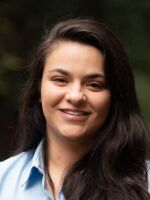
Stella Mayerhoff is a Report for America corps member, covering Minnesota’s headwaters region for KAXE in Grand Rapids, Minnesota. Report for America places talented journalists in local newsrooms to report on under-covered issues and regions.
-
 During the Phenology Report for the week of Sept. 22, 2026, Staff Phenologist John Latimer remarks on changing autumn colors, departing birds, and the taste of nannyberries.
 -
 Contributed/Lorie Shaull via FlickrEarly voting options in Minnesota began on Sept. 18, 2026. Those who aren't yet registered can do so now, or even on Election Day.
 -
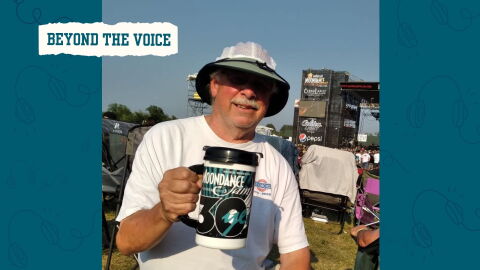 Contributed/Will OwensGet to know the volunteers behind the mic on KAXE. This week we find out more from On The River host and volunteer, Will Owens.
 -
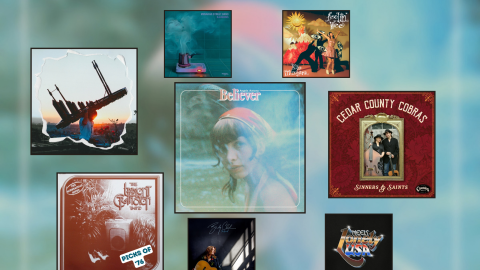 Malachy Koons/KAXEThe KAXE Music Team on new music from Angela Autumn, Son Rompe Pera, Cedar County Cobras, Kiko Mizuhara, Brandy Clark, Menahan Street Band and Meels. Plus, The Lamont Cranston Band in '76.