


The Minnesota Department of Natural Resources confirmed the presence of zebra mussels in LaRue Mine Pit in Itasca County and Kabekona Lake in Hubbard County.
The DNR received a report of the invasive species in LaRue Mine Pit from the Itasca County Soil and Water Conservation District aquatic invasive species program’s survey crew, according to news releases Thursday, Aug. 13. They also received a report from the Kabekona Lake Board about zebra mussels discovered on the lake’s sand bar.
In both cases, the DNR inspected the reported areas and confirmed the presence of the zebra mussels.
According to the DNR, invasive species have economic and ecological consequences. They cause damage to humans, equipment, native species and the environment.
Zebra mussels, in particular, are known to attach to boat motors and clog water intakes. Their sharp shells also pose an injury hazard for people and pets swimming in lakes.
The mussels remove food that’s necessary for larval fish and other native species. Their filtration also fosters harmful algal blooms.
The DNR encourages people to inspect all lake equipment, including boats, docks and lifts. By law, equipment removed from a lake must remain out of the water for 21 days before being placed into a new body of water.
Zebra mussels can be confused with other mussel species or clams, including the quagga mussels and Asian clams.
Whether or not a lake has any invasive species, Minnesota law requires people to:
- Clean watercraft, trailers and equipment to remove aquatic plants and prohibited invasive species.
- Drain all water and leave drain plugs out during transport.
- Dispose of unwanted bait in the trash.
- Never release bait, plants or aquarium pets into Minnesota waters.
- Dry docks, lifts and rafts for 21 days before moving them from one water body to another.
These additional steps reduce the risk of spreading aquatic invasive species:
- Decontaminate watercraft and equipment – find free stations on the courtesy decontamination page of the DNR website.
- Spray watercraft and equipment with high-pressure water or rinse with water if high-pressure water is not available.
- Dry watercraft and equipment for at least five days before using in another water body.
People should contact a Minnesota DNR aquatic invasive species specialist if they think they have found zebra mussels or any other invasive species that was not already known to be in the water body.
More information is available on the aquatic invasive species page of the DNR website.
-
 Plus: Beltrami County officials tour the under-construction jail facility slated to open in May 2027.
 -
 Contributed/M StateThe closure announcement comes as the Minnesota State system announces plans to "right size" its operations over 50 campuses amid financial challenges.
 -
 Larissa Donovan/KAXEA public open house will be announced before the new Beltrami County Adult Corrections Center opens in May 2027.
 -
Complaint accuses Cass sheriff of sharing nude images; Nevis man sentenced for social services fraudFind more stories from KAXE News at kaxe.org/local-news.
-
 Screenshot/Minnesota Department of Natural ResourcesThe agency announced its decision to require supplemental environmental review Oct. 8, 2026, for the copper-nickel project planned between Babbitt and Hoyt Lakes.
 -
 Contributed/Sora Shimazaki via PexelsVincent Bellomo, 76, was sentenced in September 2026. He originally faced six felonies after investigators found he had large sums in his savings accounts while he was applying for benefits.
 -
 Megan Buffington/KAXEDeputy Aaron Ammerman, who is running for Cass County sheriff, filed the complaint against Sheriff Bryan Welk in January. An investigation was closed with no apparent action.
 -
 Contributed/Trina Swanson for CongressWhile Democrats running for the U.S. House have an advantage this year, Stauber has positioned himself well in the Iron Range district.
 -
Plus: MPCA’s draft Minntac permit at issue at information session.
-
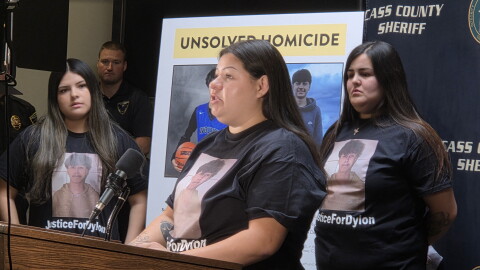 Larissa Donovan/KAXEThe family of Dylon Oothoudt, the Leech Lake Band of Ojibwe and the Cass County Sheriff's Office hosted a press conference Oct. 7, 2026, as the homicide investigation continues.


