If your dock no longer reaches the water or if your yard has seen better days, the ongoing “storage drought” could be to blame.
North-central Minnesota has seen abnormally high temperatures and low rainfall. In more temporary droughts, a few heavy rains could replenish water levels. But the region is now in a particularly persistent drought known as a “storage drought” after years of losing more water than recovered in rainfall. This depletes long-term water storage, including lakes, and makes the area even more prone to further droughts.
“We're seeing a situation where a lot of our lakes in Cass County and Hubbard County are anywhere from 3 to 4 feet lower than they were back in 2020,” said Luigi Romolo, Minnesota Department of Natural Resources state climatologist.
According to the U.S. Drought Monitor Map released Thursday, Aug. 6, the Severe Drought region includes most of Beltrami County, and all of Cass, Hubbard and Wadena counties. The region spans eastward across much of Crow Wing and Aitkin counties, encompassing all of the Arrowhead.

The prolonged lack of precipitation in this region means heavy rainfall won’t be enough to bring water back to normal levels.
“One season isn’t going to get us out of this storage drought. We're going to need to make up over a half a year of precipitation in that region. So, if you can imagine it not raining for half a year, that's basically the deficit that they've accumulated since 2020,” Romolo said.
The DNR suggested people refrain from altering lake level outlets or making major shoreline adjustments in an Aug. 3 news release. Water levels are expected to return to average, and changes made when water is unusually low may pose problems when the water comes back.
“In the long term, with the precipitation trend pointing towards increasing, as long as we practice good water conservation, we should be able to get out of this,” Romolo said.
The agency also encouraged the public to conserve water. Storage drought is worsened by increased water use, and the effects are already impacting those who rely on wells.
“We're seeing an uptick in what are called well interferences. That's when one appropriator is pumping water and it creates a cone of depression that affects nearby wells,” said Randall Doneen, DNR Ecological and Water Resources deputy director.
In other words, taking too much water from your well during a drought can leave your neighbor without water in theirs.
This also means being mindful of water used for landscaping.

“The majority of the water that is used to water our landscapes, our yards and gardens is coming from wells. Or it's coming from municipal sources, which are sourced either from wells or from surface bodies of water,” said John Trappe, University of Minnesota Turf Grass Extension educator.
Fortunately, people don’t have to choose between saving water and saving their lawn during droughts.
“Most of the grasses that we grow in Minnesota are perfectly capable of going into what we call dormancy,” Trappe said. “Overall, most lawns can get a little bit brown or not be watered at all and be perfectly healthy come this fall, once temperatures kind of settle back down and once we have some more consistent rainfall.”
So when is it time to worry? If your grass sounds crunchy when you walk on it, it may be time to give your lawn some water, Trappe said.
You can learn how much water you are using compared to the average American home or view the U.S. Drought Monitor Map on the DNR website.
Stella Mayerhoff is a Report for America corps member, covering Minnesota’s headwaters region for KAXE in Grand Rapids, Minnesota. Report for America places talented journalists in local newsrooms to report on under-covered issues and regions.
-
 ContributedDr. Dania Kamp, who practices at the Gateway Family Health Clinic, is the 160th president of the professional organization representing physicians, residents and medical students.
 -
 Contributed/Adobe Stock via Minnesota News ConnectionAs demand for electricity soars, industry observers said increasing capacity on the power grid for sources like wind and solar is just one of many crucial needs.
 -
 Larissa Donovan/KAXERed Lake's charter school was one of many to commemorate Orange Shirt Day in honor and remembrance of children impacted by the residential school system.
 -
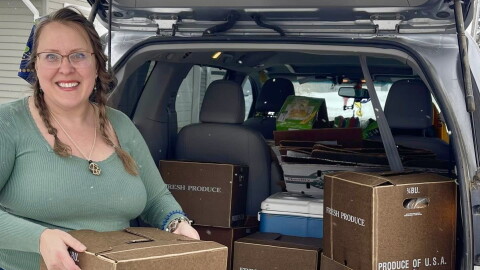 Contributed/Kristine JonasThe Minnesota Department of Agriculture announced its first Food to Farm Security Grant recipients on Sept. 28, 2026. The new grant provides funds to distribute local produce to communities for free.
 -
 Property Watch is designed to keep property owners informed and offer a head start to combat fraud.
 -
 The disease, which causes internal bleeding and sudden death, was confirmed Sept. 9, 2026. It does not affect humans.
 -
 Plus: Minnesota Department of Agriculture awards Farm to Food Security Grants
 -
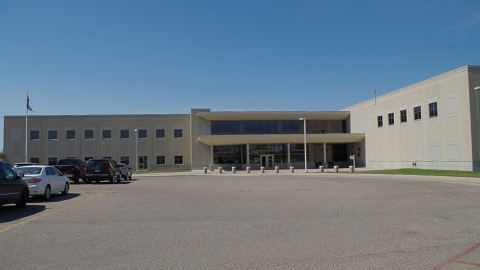 ContributedA statement of probable cause charges an officer at the Northwest Regional Correctional Center in Crookston with two counts of felony sexual assault.
 -
 Contributed/Courtesy Photo via Minnesota ReformerRepublican Ron Schutz owns more than $1.74 million of individual stocks, including in companies being sued by Minnesota.
 -
Essentia Health announces merger; Detroit Lake school board introduces 'viewpoint neutrality' policyPlus: Lost hunters rescued near Hibbing.