


WASHINGTON — Congressman Pete Stauber’s bill to renew Great Lakes cleanup funding passed the House on Tuesday, March 24.
The Great Lakes funding is part of Stauber’s American Water Stewardship Act, which includes six stand-alone bills to strengthen water quality and ecosystem restoration programs by the Environmental Protection Agency.


“The Great Lakes Restoration Initiative, or the GLRI, represents the largest federal investment in the Great Lakes, which are vitally important to my home state of Minnesota,” Stauber said while delivering remarks.
“The GLRI is the largest and, arguably, the most successful EPA geographic program. Its work focuses on cleaning up the Great Lakes, reducing pollution, addressing invasive species and restoring critical habitat for local species.”
The bill would extend about $475 million in annual funding for the Great Lakes through 2031. Stauber described it as "a common-sense approach to water stewardship," supporting community-led efforts and encouraging collaboration.
The bipartisan legislation cleared the House on a 378-32 vote.
The Great Lakes Restoration Initiative was first funded by Congress in 2010 and has since spent more than $4 billion on efforts like preventing invasive species, restoring fish and wildlife habitat and managing agricultural and urban runoff.
Past Minnesota projects funded through the Great Lakes Restoration Initiative include: habitat restoration in Nett Lake and Nett River in a partnership with the Bois Forte Band; moose and elk reintroduction research as well as updating the Stoney Brook watershed with the Fond du Lac Band; and studying contaminants in wildlife within the Lake Superior basin with the Grand Portage Band.
The measure now advances to the Senate for consideration.
-
 Plus: Minnesota Department of Agriculture awards Farm to Food Security Grants
 -
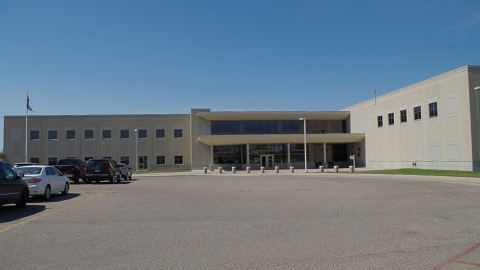 ContributedA statement of probable cause charges an officer at the Northwest Regional Correctional Center in Crookston with two counts of felony sexual assault.
 -
 Contributed/Courtesy Photo via Minnesota ReformerRepublican Ron Schutz owns more than $1.74 million of individual stocks, including in companies being sued by Minnesota.
 -
Essentia Health announces merger; Detroit Lake school board introduces 'viewpoint neutrality' policyPlus: Lost hunters rescued near Hibbing.
-
 Lorie Shaull/KAXEThe Detroit Lakes School Board rescinded its July 2026 action that prompted an ACLU lawsuit as it prepares to amend its policy on non-school materials.
 -
 Lorie Shaull/KAXEThe healthcare companies announced the merger on Sept. 29, 2026. The combined company would include 22 hospitals and over 135 clinics in Minnesota, North Dakota and Wisconsin.
 -
Plus: Superfund site in Hermantown to become FedEx distribution center; free well water testing kits available for Beltrami County residents.
-
 Lorie Shaull/KAXEThe Mesabi Metallics plant, which will source iron from the company's mine in Nashwauk, may begin producing steel as early as 2030.
 -
The retired DNR forester gave a walking tour of his forest property as part of a Cass Soil and Water Conservation District forest management event.
-
Plus: Aitkin's 68-year-old water tower is demolished; Demuth, Klobuchar will debate in the Brainerd lakes area; and we're partnered with ICTV to host school board forums.


