


LaPRAIRIE — A craft cannabis company proposed for Second Harvest Northland’s shuttered warehouse in LaPrairie is not expected to move forward.
The City Council approved a conditional use permit March 2 for a prospective buyer — 1212 Holding Company LLC — which planned to lease the building to a cannabis microbusiness. But the prospective buyer was informed Thursday, March 12, that the hunger relief organization had entered a letter of intent with another purchaser.
Shaye Moris, Second Harvest Northland president and CEO, said Thursday that the building has not been sold and she could not share any details about potential plans.
“I need full board approval [of a sale] before we can move forward with any public communication,” Moris said in an interview.
The nonprofit’s board of directors meets at the end of March, and Moris said there may be more information available in early April.
LaPrairie City Clerk Lisa Mrnak said 1212 Holding Company LLC informed the city of the news Thursday.
“We’re always happy to have new businesses come in the city,” Mrnak said. “[We] have no idea what kind of impact that will have since we don’t have a clue who it is or what they’re going to be doing.”
What about the Grand Rapids food shelf?
Grand Rapids-based Second Harvest North Central merged with Duluth-based Second Harvest Northern Lakes in 2024. A year later, the combined Second Harvest Northland shuttered its Grand Rapids food bank — which is within LaPrairie city limits — and consolidated operations to one facility in Duluth in the name of efficiency.


A food bank is a warehouse where food is stored and then distributed to food shelves, where those in need pick up or “shop” for the food. The Grand Rapids food shelf connected to the food bank remains open.
But since then, Second Harvest has been exploring other locations for the food shelf and surveying visitors about their needs and future options.
“We heard that they love to shop, which we knew because that’s been our style of food shelf,” Moris said. “But they also said it would be nice to have it closer to the middle of town, where it’s closer to other services like a grocery store, the library.”
Second Harvest has narrowed the food shelf to three potential locations, and Moris said the hope is to have a clearer direction in the next one to three months, with the plan to move as soon as possible.
“Our plan is to have no disruption to our neighbors in terms of our food shelf program move. That’s our desire and our hope,” Moris said.
Last year, Second Harvest said it would reinvest its estimated $300,000 savings from the food bank consolidation back into its Grand Rapids programming. Moris said the proceeds from the warehouse sale would go toward retrofitting and operating the new food shelf.
Cannabis company would have been all-in-one microbusiness
Mandy Nintzel, formerly of M.N. Technology, applied for a conditional use permit with the city of LaPrairie in late December on behalf of 1212 Holding Company LLC.
It’s a bit unusual for a business to apply for a permit before even owning the property, but Nintzel considered it due diligence because of the lengthy and complex cannabis regulation process.


M.N. Technology had planned a manufacturing facility in Cohasset but did not get a permit in the state Office of Cannabis Management’s lottery last summer.
The Council approved the permit at its March 2 meeting and soon heard concern from a nearby housing developer. Foxhaven, a 55-plus community, has eight units built behind the warehouse, seven of which are already leased, according to Travis Luedke, one of the partners in the project.
Eight more units are expected to be finished by the end of April, and then Foxhaven plans to move into the next phase of development.
Luedke and his partners were concerned about the potential smell of cannabis from the facility, and he said the city was aggressively looking into how to address the potential issue.
According to the permit, the plan was for the company to purchase the property and then enter a long-term lease with Reclaimed Roots Cannabis Co., which would have operated a cannabis microbusiness on the property. That means cultivating, manufacturing and dispensing cannabis on the same site.
The $3 million-$4 million project would have been completed this spring or summer.
“It would have been really awesome, but yeah, [I’m] just totally, caught off guard,” Nintzel said in an interview Thursday. “ ... Second Harvest, they were great to work with. I’m sure they got a good offer, and it’s the board that makes the decision for them.”
-
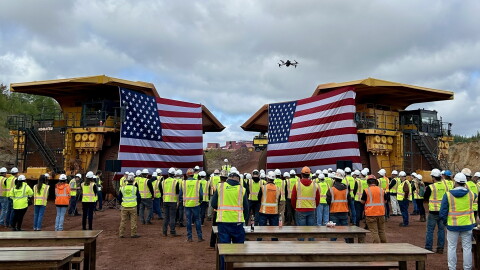 Emma Krab/KAXEThe mining company celebrated a $770 million federal loan and the production of its first concentrate at a blast event Sept. 17, 2026. Two days earlier, it announced the "next phase of investment" at an Itasca County Board meeting.
 -
 Contributed/Minnesota SenateProsecutors are calling for five years in prison for the former Grand Rapids state senator. His defense team is arguing for time already served, plus five years of supervision.
 -
 Pam Perry, a retired non-game wildlife biologist, stopped by to talk about BirdCast, Northern Flickers, Blue Jays, and Common Nighthawks.
 -
 Contributed/Old School LivesThe repurposed building features a food shelf, free meals, a thrift store, mercantile shop, fitness center, bakery and eatery, art classes and seasonal maker markets, as well as a youth center.


