


BEMIDJI — J.W. Smith Elementary School in Bemidji is slated for permanent closure after this school year after a Board of Education vote Monday, March 2.
The Bemidji Area Schools’ Board of Education voted to accept budget reductions, which includes the closure, in a special meeting. The decision is not yet final: the district must advertise a public hearing on closing the school for two weeks in its legal newspaper, the Bemidji Pioneer.
The Board is attempting to trim $3.5 million off the district’s budget this spring to avoid a deficit in the next school year and voted unanimously between two options: both of which included closing the school.
“It's hard to separate the emotional side versus the having to be fiscally responsible side. And it royally stinks that we have to be in a position year after year after year to make these hard decisions,” said Board member Jenny Frenzel. “My hope and dream — and I'm pretty sure I can say this for the Board — is that we get to a point that we don't have to have these conversations every spring.”

During the Monday and Feb. 23 meetings, hundreds packed in to hear the board’s decision and advocate on behalf of J.W. Smith.
The closure of J.W. represents $1 million in cost savings, factoring in the additional busing that will be required in what is now J.W.’s “walk zone.”
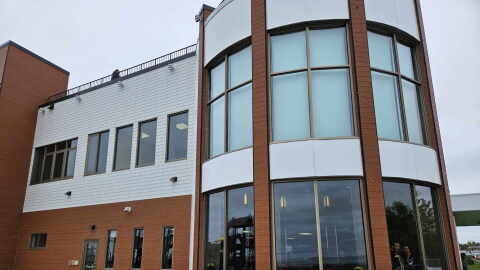
J.W. Smith Elementary is the district’s oldest school building, built in 1954. During a meeting last month, School Board Chair Todd Haugen said the district’s budget woes come with some ugly choices, and J.W.’s age brings its own challenges because of maintenance requirements and a lack of accessibility.
On Monday, Superintendent Jeremy Olson described the declining birth rates at Sanford Health-Bemidji — with the assumption that about 40% of children born there go on to attend Bemidji Area Schools — as one of the drivers of enrollment decline leading to excess space in the district’s school buildings.


“As we look and project out in the future, we're not seeing our K-3s [kindergarten through third grade schools] growing anytime soon,” Olson said. “So that is certainly a factor that we have to contend with as a district as well.”
Olson said if the board opted not to close the school, some sort of cuts would happen at the K-3 grade level.
"If we don't do something, we're going to have to make a reduction of some sort in the K-3 to equate to the same kind of savings we're projected to see with J.W. Smith, that would result in higher class sizes.”
He further explained class sizes may increase to as many as 28 students per first grade classroom, 30 per second grade classroom and between 33 and 35 students in third grade classrooms.
Other K-3 elementary schools are miles away from the walkable neighborhoods of Bemidji’s Old Town, including Lincoln Elementary in Nymore, Northern Township’s Northern Elementary, Solway Elementary near the Clearwater County line, and Horace May Elementary, which is just north of the Hubbard County line.
The Boys and Girls Club of Bemidji Area has a partnership with J.W. Smith for a grant-funded after-school program, which may face uncertainty with the closure. Families and staff expressed concerns about what the change will mean for the students, many of whom are Native American and qualify for free and reduced lunch.
-
 Plus: DNR cancels mineral lease for Twin Metals; and ICE's immigration crackdown last winter may have ripple effects for farm labor during harvest season.
 -
 Contributed/Twin Metals Minnesota via MinnPostThe action comes weeks after executive action by Gov. Tim Walz halted the mining company's efforts to establish a copper-nickel mine in the Rainy River Headwaters Watershed.
 -
 Larissa Donovan/KAXEThe Bureau of Indian Affairs announced it was assuming operations of family and children services in Red Lake following a raid on Sept. 10, 2026.
 -
 Contributed/Adobe Stock via Minnesota News ConnectionAn estimated 15,000–20,000 seasonal agricultural workers arrive for work in Minnesota during the peak harvesting season, according to the National institutes of Health.
 -
 Contributed/MedicAlert UK via Unsplash.comThe standard began Sept. 10, 2026, following approval from the Centers for Medicare and Medicaid Services on Aug. 11.
 -
 Scott Rodgerson/UnsplashOfficials found a man dead in the yard of a residence in Pike Bay Township on Sept. 13, 2026. The Cass County Sheriff's Office, Leech Lake Tribal Police and other agencies are investigating.
 -
Plus: Industry-specific minimum wage goes into effect for Minnesota nursing home workers; lawmakers hear continuity of care concerns amid fraud battles.
-
 Contributed/Minnesota Department of Natural ResourcesThe organization aims to help Minnesota forests regenerate after fire and disease and protect them in the future.
 -
 Megan Buffington/KAXEThe Public Utilities Commission approved a plan for how Minnesota Power will generate power on Thursday, Sept. 10. That includes new details about the future of Boswell in Cohasset.
 -
 Larissa Donovan/KAXEThe FBI confirmed in an email that federal agents from the FBI and the Bureau of Indian Affairs executed a search warrant at Ombimindwaa on Sept. 10, 2026.


