


WADENA — Conditions in the Redeye River Watershed have remained stable in the last decade, but a draft report shows some areas are facing emerging risks for nutrient levels and E. coli.
The Minnesota Pollution Control Agency released the Watershed and Restoration and Protection Strategy report, which provides updates from data last reported in 2016. Key findings and recommendations will guide local planning and implementation.
A public comment period is open until Wednesday, Dec. 17, and stakeholders are encouraged to review the report and submit feedback.
The Redeye River Watershed covers 899 square miles and lies on the west-central edge of the Upper Mississippi River Basin in central Minnesota. It encompasses parts of Becker, Otter Tail, Todd and Wadena counties, and includes the city of Wadena. The Redeye River begins at Wolf Lake, flows south to join the Leaf River, and eventually meets the Crow Wing River north of Staples.

All re-sampled lakes have water quality that supports aquatic recreation. However, East Leaf Lake shows too many nutrients in the water, indicating a need for proactive strategies to protect water quality, according to a news release.


Most streams in the watershed show good conditions for aquatic life. Three streams previously included on a list of impaired waters have been “delisted.” That means they have improved water quality. E. coli impairments persist in eight stream reaches, although two are trending in the right direction, the MPCA reported.
This updated report includes new data on climate trends, flow changes, and land-use impacts. It also outlines practical strategies to protect healthy waters and restore those at risk. These include practices such as septic system compliance, lakeshore buffers, and stormwater management, as well as watershed-wide practices, such as cropland nutrient reductions, increasing forested acreage and conservation easements.
The watershed contains about 633 total miles of river, of which 316 miles are considered perennial. Major rivers within the watershed include the Redeye, Leaf and Wing. There are also 11 creeks, seven county ditches, and numerous smaller flowages.
The watershed contains approximately 126 lakes covering 8,228 acres. The area is home to 73 lakes larger than 10 acres, including notable ones such as Wolf Lake, Gourd Lake, and the West, Middle and East Leaf Lake chain.
-
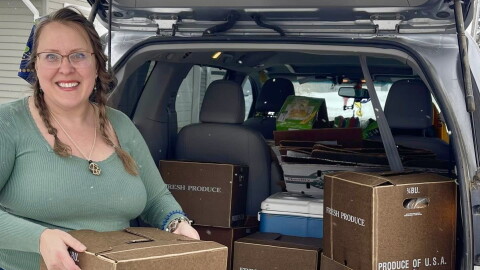 Contributed/Kristine JonasThe Minnesota Department of Agriculture announced its first Food to Farm Security Grant recipients on Sept. 28, 2026. The new grant provides funds to distribute local produce to communities for free.
 -
 Property Watch is designed to keep property owners informed and offer a head start to combat fraud.
 -
 The disease, which causes internal bleeding and sudden death, was confirmed Sept. 9, 2026. It does not affect humans.
 -
 Plus: Minnesota Department of Agriculture awards Farm to Food Security Grants
 -
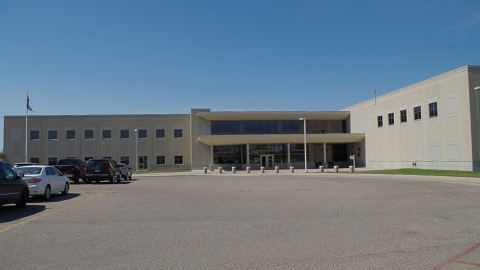 ContributedA statement of probable cause charges an officer at the Northwest Regional Correctional Center in Crookston with two counts of felony sexual assault.
 -
 Contributed/Courtesy Photo via Minnesota ReformerRepublican Ron Schutz owns more than $1.74 million of individual stocks, including in companies being sued by Minnesota.
 -
Essentia Health announces merger; Detroit Lake school board introduces 'viewpoint neutrality' policyPlus: Lost hunters rescued near Hibbing.
-
 Lorie Shaull/KAXEThe Detroit Lakes School Board rescinded its July 2026 action that prompted an ACLU lawsuit as it prepares to amend its policy on non-school materials.
 -
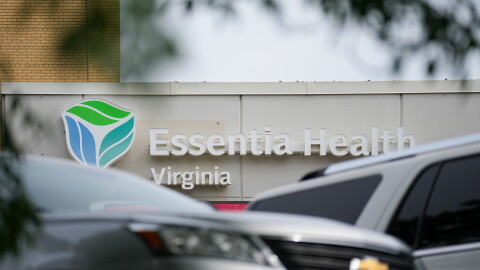 Lorie Shaull/KAXEThe healthcare companies announced the merger on Sept. 29, 2026. The combined company would include 22 hospitals and over 135 clinics in Minnesota, North Dakota and Wisconsin.
 -
Plus: Superfund site in Hermantown to become FedEx distribution center; free well water testing kits available for Beltrami County residents.


