


It’s that time of year when local governments are finalizing their budgets and property tax levies — and getting feedback from residents on those decisions.
In required public hearings, often referred to as “Truth in Taxation” meetings, on Tuesday, Dec. 2, both Itasca and Beltrami county officials got an earful as each body considered tax increases and decisions impacting local libraries.
Counties, cities and school districts host these meetings at the end of each year, after proposed property tax statements are sent out with tax estimates based on the proposed levies.
Library cuts finalized in Beltrami County
Beltrami County commissioners finalized a 9.6% increase to the county’s property tax levy, committing to the preliminary budget that cut funding for local libraries by more than 40%.
Beltrami County Administrator Tom Barry said inflation and other uncontrolled costs, such as increasing insurance premiums and energy costs, are driving factors for any budget, and the county is no exception.
Beltrami’s budget also set aside $700,000 in a contingency account as the county braces for more state and federal cost shifts.

"These are programs or formula funding changes that are now adding additional costs to our county operation,” Barry explained. “We're kind of used to this year by year, but it has become more pronounced and more accelerated, and the outlook going forward is very concerning.”
Barry said he anticipates the county will need to cover an additional $2.8 million in costs to run mandated programs such as health and human services by 2029.
Using the budget principles adopted by the board early in 2025 to prioritize funds for the county’s core operations, the 2026 budget reduces the county’s contribution to the Kitchigami Regional Library System, which operates the Bemidji and Blackduck public library branches.


As Blackduck’s library already operates near the statutory minimum of 20 hours each week, Bemidji Branch Manager Sherilyn Warren said hours will come out of that branch.
Hours will be limited to 35 each week at the Bemidji Public Library and will be going from being open six days a week to four.
Warren said people turn more to libraries when times are tough economically and are reducing their own budgets for new books, movies or internet access.
“Cutting libraries during budgetary crisis is like cutting hospitals during a plague, because that's basically what you're doing is you're cutting the library at a time when people need it the most,” Warren said.
A handful of Beltrami County residents urged the board to preserve library funding.
“Our libraries provide a government service every bit as essential as law enforcement,” said Beltrami resident Randy Berg. “They protect and serve our citizens by arming them with the most important safeguard of ordered liberty: knowledge.”
According to Barry, the county has paid $1.5 million to fund libraries more than it’s legally required to over the last 10 years.
Still time for budget to decrease in Itasca County
Nearly 300 people attended Itasca County’s meeting Tuesday, Dec. 2, in Grand Rapids — spilling out of the new boardroom — to hear about the proposed budget and give feedback.
There was a near-universal theme in the feedback.
“Obviously it’s clear how the vote should go on this property tax increase. At least I hope it’s clear,” said Zach Van Drunen of Cohasset, one of over 20 who addressed the Board, asking for a lower levy.


“I want to offer my recommendation: Do it all proper, legal, above board, but let the state know you don’t want to play these games anymore. We don’t want to do these mandates.”
The county commissioners and Auditor-Treasurer Austin Rohling said mandates from the state of Minnesota are driving up costs for the county, creating the need for the proposed 9.87% levy increase.
“You want to talk specific mandates, I mean, pick a department. Everything that the county does, we’re directed to do by state mandate,” Rohling said in an interview Thursday, explaining more requirements mean more work, which means higher costs.
“ ... When I look at Itasca County and how we provide services, we do a very good job. But that’s very expensive.”

At the Truth in Taxation meeting, Rohling told the public there were three main ways to lower the levy: cut services, cut staff or not comply with state mandates.
The audience was interested in the latter.
“We’ve hit a wall. The people are pissed,” Matt Hegman said to applause, wearing a “Make America Great Again” hat. “I know you can’t change everything, but you do have a decision to make right here or whenever. And change has to start from someplace.”
“Folks, there will be consequences,” Commissioner Cory Smith said in response. “If you would like us to not follow mandated services — if that’s what the goal of the residents of this county are — believe me, we will be in a financial ruin.”
“You already are,” an audience member replied, part of a trend of comments and heckles from across the room that continued throughout the nearly 3.5-hour meeting.
The county’s budget process began back in May, when department heads submitted their budget proposals. Those would have amounted to a 24.9% levy increase.
The county reduced the increase to 9.87% by September. After hearing from the public Tuesday, the board shared plans to lower it further to a 6.7% increase, with additional cuts to transportation costs and dipping into reserve funds.
The Board tabled its final budget decision, with plans to cut more before the levy has to be certified on Dec. 20.
Though the atmosphere was tense, a spirit of collaboration began to emerge by the end of the meeting. Closer to 50 residents remained in the room, with talks of a public committee to brainstorm on the budget and revenue generation.
-
 Larissa Donovan/KAXERed Lake's charter school was one of many to commemorate Orange Shirt Day in honor and remembrance of children impacted by the residential school system.
 -
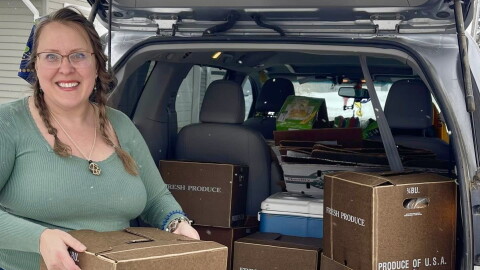 Contributed/Kristine JonasThe Minnesota Department of Agriculture announced its first Food to Farm Security Grant recipients on Sept. 28, 2026. The new grant provides funds to distribute local produce to communities for free.
 -
 Contributed/Madison McVan / Minnesota ReformerAttorneys for Good’s family called the lawsuits “historic” and framed them as an opportunity to hold the Trump administration accountable for Operation Metro Surge.
 -
 Lorie Shaull/KAXELocal leaders say it's fine to still mail in your ballot, but no matter how you vote, they stress making a plan.
 -
 Lorie Shaull/KAXEAmerican farmers say importing large international supplies sends the wrong message to ranchers, and a Minnesota dairy farmer says the ripple effects could extend to his operation.
 -
 Property Watch is designed to keep property owners informed and offer a head start to combat fraud.
 -
 The disease, which causes internal bleeding and sudden death, was confirmed Sept. 9, 2026. It does not affect humans.
 -
 Plus: Minnesota Department of Agriculture awards Farm to Food Security Grants
 -
 Maria Hileman/KAXEKAXE's weekly list of concerts near you features Amanda Standalone, Ted Hajnasiewicz, Bemidji Bogtrotters, The Cropdusters, Doyle Turner, Paul Lawrence, and Wussow's One Week Live festival.
 -
 ContributedA statement of probable cause charges an officer at the Northwest Regional Correctional Center in Crookston with two counts of felony sexual assault.


