


The Minnesota Department of Natural Resources will host three workshops in September for people interested in learning how to collect tree seeds and cones to sell to the State Forest Nursery.
The DNR reports seeds and cones collected by the public play a critical role in reforesting state forests, parks and private lands across the state.
The workshops are open to anyone interested in learning more about seed and cone collection. Each session is limited to 30 participants.
Registration is available on the DNR website under upcoming events.
Workshop details

Each training will include an indoor presentation led by DNR Seed Procurement Consultant Nicole Schafer, followed by a hands-on outdoor session in a nearby forest.
Participants will learn which types of tree seeds and cones the DNR purchases, how to collect and handle seeds and cones, and standards for cleaning and preparing seeds for sale to the DNR. The training will also cover DNR’s purchasing and payment procedures.
Workshop participants should bring a water bottle, work gloves and bug spray, and should wear appropriate outdoor clothing (consider boots, layers that can be removed, rain gear, etc.).
If weather conditions prevent outdoor collection, the training will move indoors, where participants will work with cut branches.
Workshop dates and locations
- 1-4 p.m. Wednesday, Sept. 10: General C.C. Andrews State Forest Nursery facility, 85894 County Highway 61, Willow River
- 1-4 p.m. Friday, Sept. 12: State Forest Nursery, 13885 State Highway 64, Akeley
- 1-4 p.m. Wednesday, Sept. 24: DNR Lake City Field Office, 1801 S. Oak St., Lake City
Why collect?
Collecting local seeds and cones ensures that the resulting trees are adapted to Minnesota’s climate, the DNR says, helping to create healthier, more resilient forests. Seeds and cones purchased from the public are important to the DNR’s reforestation efforts.
Participating in seed and cone collection can be a family activity that offers a chance to earn some extra income. Prices for seeds and cones range from $20 to $150 per bushel, depending on the specific tree species.
For more information about seed and cone collection, including price lists and species fact sheets, visit the DNR website.
-
 Contributed/M StateThe closure announcement comes as the Minnesota State system announces plans to "right size" its operations over 50 campuses amid financial challenges.
 -
 Larissa Donovan/KAXEA public open house will be announced before the new Beltrami County Adult Corrections Center opens in May 2027.
 -
 Complaint accuses Cass sheriff of sharing nude images; Nevis man sentenced for social services fraudFind more stories from KAXE News at kaxe.org/local-news.
 -
 Screenshot/Minnesota Department of Natural ResourcesThe agency announced its decision to require supplemental environmental review Oct. 8, 2026, for the copper-nickel project planned between Babbitt and Hoyt Lakes.
 -
 Contributed/Sora Shimazaki via PexelsVincent Bellomo, 76, was sentenced in September 2026. He originally faced six felonies after investigators found he had large sums in his savings accounts while he was applying for benefits.
 -
 Megan Buffington/KAXEDeputy Aaron Ammerman, who is running for Cass County sheriff, filed the complaint against Sheriff Bryan Welk in January. An investigation was closed with no apparent action.
 -
 Contributed/Trina Swanson for CongressWhile Democrats running for the U.S. House have an advantage this year, Stauber has positioned himself well in the Iron Range district.
 -
Plus: MPCA’s draft Minntac permit at issue at information session.
-
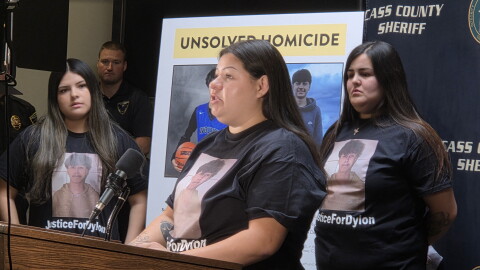 Larissa Donovan/KAXEThe family of Dylon Oothoudt, the Leech Lake Band of Ojibwe and the Cass County Sheriff's Office hosted a press conference Oct. 7, 2026, as the homicide investigation continues.
 -
 Matt C/UnsplashThe rechargeable batteries are used in nearly every home and are generally safe but can be dangerous.


