


ST. PAUL — Some of the laws passed in the Minnesota Legislature in the last session went into effect on Aug. 1.
One that was passed with near-unanimous support creates more stringent requirements for repeat driving-while-intoxicated offenders.
The bill expands the state’s ignition interlock program — a device like a breathalyzer that won’t allow a vehicle to start until the driver has proven they’re not impaired.
The legislation was inspired by a 2024 incident in which a drunk driver, with several prior DWI convictions, killed two people on a restaurant patio and injured several others in St. Louis Park.
As of Aug. 1, consequences for DWIs will get tougher, extending the "lookback period" for prior DWIs from 10 to 20 years. Anyone who gets a DWI with a prior one in the last 20 years will have to use an interlock device for 2 years.
The penalties get stricter for repeat offenders; with two new DWIs requiring 6 years of interlock, and offenders with three new DWIs will have to use the interlock for 10 years.
-
 Screenshot/Minnesota Department of Natural ResourcesThe agency announced its decision to require supplemental environmental review Oct. 8, 2026, for the copper-nickel project planned between Babbitt and Hoyt Lakes.
 -
 Contributed/Sora Shimazaki via PexelsVincent Bellomo, 76, was sentenced in September 2026. He originally faced six felonies after investigators found he had large sums in his savings accounts while he was applying for benefits.
 -
 Megan Buffington/KAXEDeputy Aaron Ammerman, who is running for Cass County sheriff, filed the complaint against Sheriff Bryan Welk in January. An investigation was closed with no apparent action.
 -
 Contributed/Trina Swanson for CongressWhile Democrats running for the U.S. House have an advantage this year, Stauber has positioned himself well in the Iron Range district.
 -
 Plus: MPCA’s draft Minntac permit at issue at information session.
 -
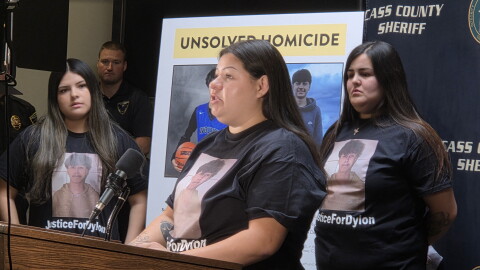 Larissa Donovan/KAXEThe family of Dylon Oothoudt, the Leech Lake Band of Ojibwe and the Cass County Sheriff's Office hosted a press conference Oct. 7, 2026, as the homicide investigation continues.


