


ST. PAUL — State lawmakers may be seemingly deadlocked on the budget, but a bill proclaiming some new official state symbols is on its way to the Governor’s desk.
Minnesota now officially has a state fossil in the giant beaver, which used to live in North American lakes and rivers during the last Ice Age.
Science Museum of Minnesota paleontologist Nicole Dzenowski visited a Bemidji State University Beaver hockey game last year as part of the lobbying effort for the prehistoric rodent.
She said that the push for an official fossil is for the sake of passion in paleontology, especially since giant beaver fossils were discovered in areas of the metro and in Freeborn County.
She said there was also evidence that the Giant Beavers were around, interacting with the First Peoples of Minnesota.
“One of the things we’re trying to put forth is not just the giant beaver or Castoreides [ohioensis], we’ve also got the Dakota name 'Ċapa' and then 'Amik,' the Ojibwe name, for the giant beaver,” she said.
Giant beavers, unlike their small modern cousins, were about the size of bears and didn’t have the same tree-felling incisors we see in modern beavers.
Giant beavers instead fed on aquatic plants, which scientists at the Smithsonian Museum believe left them susceptible to a climate that grew increasingly drier at the end of the last Ice Age.
State lawmakers also agreed upon a new state constellation, Ursa Minor, the little bear and home of Polaris, the North Star — fitting for a state with a motto translating to “Star of the North.”
-
 Plus: Industry-specific minimum wage goes into effect for Minnesota nursing home workers; lawmakers hear continuity of care concerns amid fraud battles.
 -
 Contributed/Minnesota Department of Natural ResourcesThe organization aims to help Minnesota forests regenerate after fire and disease and protect them in the future.
 -
 Megan Buffington/KAXEThe Public Utilities Commission approved a plan for how Minnesota Power will generate power on Thursday, Sept. 10. That includes new details about the future of Boswell in Cohasset.
 -
 Larissa Donovan/KAXEThe FBI confirmed in an email that federal agents from the FBI and the Bureau of Indian Affairs executed a search warrant at Ombimindwaa on Sept. 10, 2026.
 -
Plus: Fosston Schools accept garden bounties to fill gap from lost program.
-
 Larissa Donovan/KAXEBecause of low free-and-reduced lunch numbers, the Fosston school district no longer qualifies for a fresh fruits and vegetables program for elementary students.
 -
 Megan Buffington/KAXEThe Board deliberated on the offer for Greenhaven Elementary in a closed-door session at Hibbing High School on Wednesday, Sept. 9, 2026.
 -
 Lorie Shaull/KAXEDrought, temperature and September weather conditions can have an impact on how vibrant the changing season will be.
 -
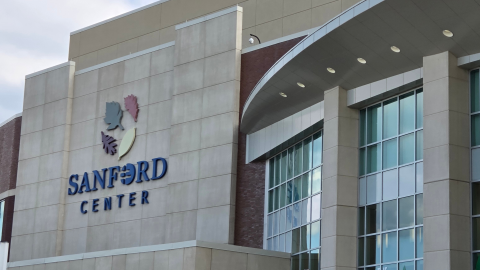 Larissa Donovan/KAXEThe Bemidji City Council voted to pursue in-house management of the Sanford Center rather than renew a contract with Legends Global, slated to expire in March 2027.
 -
 Lorie Shaull/KAXEThe Boy River Hobo Club hosted its annual Hobo Day, a Labor Day weekend tradition in northern Cass County celebrated since 1953.


