


Child care funding increased for providers and families this year in Minnesota.
But public testimony to the House Children and Families Finance and Policy Committee this week shows affordability continues to be a serious issue for middle class families.
Shawntel Gruba is chief executive officer at the Iron Range Tykes Learning Center in Mountain Iron. Gruba told the committee she needs to raise rates at the center to make ends meet and expects to lose families in the process. These are families with solid jobs in mining and health care.

"At what point do they not make enough money to pay for child care?" Gruba said. "At what point do they decide that in order to make ends meet, they need to find a child care option that has much lower quality? This is a horrible decision to be forced to make."
Brittany Kjenaas of Mountain Iron, a parent of one, reinforced the challenges families face.
"She is our only child, and unless something changes in the cost of child care she will remain our only child," Kjenaas told legislators. "We pay more for child care than we do our mortgage and there's no way we could double that and still afford to live."

The Legislature already invested $300 million, including in early learning scholarships for 25,000 low-income and vulnerable children. But advocates say the income threshold is too low and leaves the majority of Minnesotans struggling.
DFL State Sen. Grant Hauschild of Hermantown is one of the legislators working on a proposal to ensure no family would pay more than 7% of their income on child care and early learning. Hauschild said child care concerns are a top issue for his rural constituents, not only for cost reasons but also availability.
Lack of affordable housing and child care combined make it harder for families in Greater Minnesota, he said, and limits economic development opportunities.

"If we want Minnesota to be the best place to raise a family, and support businesses, workforce and our economy, we must address the child care affordability crisis," Hauschild said.
The proposal is expected to be considered in the 2024 session.
-
 Minnesotans across the state will have a constitutional amendment on their ballots asking to increase the yearly allotment from the Permanent School Fund. For some, the measure is 20 years in the making.
 -
Plus: Beltrami County officials tour the under-construction jail facility slated to open in May 2027.
-
 Contributed/Tom PageAn open community jam in September 2026 was centered around the history and legacy of four families in Grand Rapids with deep musical ties to the area.
 -
 Contributed/M StateThe closure announcement comes as the Minnesota State system announces plans to "right size" its operations over 50 campuses amid financial challenges.
 -
 Larissa Donovan/KAXEA public open house will be announced before the new Beltrami County Adult Corrections Center opens in May 2027.
 -
 Lorie Shaull/KAXETune in to the KAXE Morning Show on Monday, Oct. 12, 2026, for conversations with Indigenous people and find area celebrations of Indigenous Peoples Day.
 -
 Co-hosts Charlie Mitchell and Julia Schrenkler opine about the weird and endearing American Woodcock, a love of strange science, and much more.Send us a voice memo through SpeakPipe!
 -
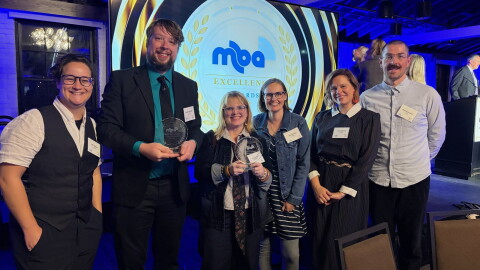 ContributedThe Minnesota Broadcasters Association's Excellence Awards spotlight work that demonstrates the power of local radio and television, moving Minnesota communities forward.
 -
Complaint accuses Cass sheriff of sharing nude images; Nevis man sentenced for social services fraudFind more stories from KAXE News at kaxe.org/local-news.
-
 Events this week include Indigenous Peoples Day events in Bemidji, Grand Rapids and Brainerd, plus a few local theater productions.


