


Aurora Waasakone Community of Learners in Bemidji
“Hi, I'm Avi, I'm Abigail, and I'm Severn from Aurora Waasakone Community of Learners and this is the phonology report for Wednesday, Nov. 18. Recently it has been frosting more and more nights and increasingly cool throughout the daylight hours.
“We have seen a lot of birds recently, including Blue Jays, geese, chickadees, Trumpeter Swans, even a Red-tailed Hawk, some ducks and pelicans.
“
We are still noticing dandelions in their flowering form and in their puffy seed spreading kind. We have seen woolly bear caterpillars and I saw an abandoned wasp nest. I wonder, where do the wasps go?
“Thanks for listening. That's all for today.”
Cohasset Elementary School
East Rapids Elementary in Grand Rapids
North Shore Community School near Duluth
“Hello from North Shore Community School on the north shore of Lake Superior. This is the phenology report for the week of Nov. 14, 2026. My name is Rozalee, and I am your phenologist for this week!
"On Tuesday, Nov. 17, Peter saw frost on the grass at his house.
"On Sunday, Nov. 15, Adley found many maple leaves on the ground in Duluth. Many of the leaves had black spots on them, called black tar spot fungus. Mrs. Rolfe and Eleanor saw a dandelion blooming by the front of the school on Monday, Nov. 16. They noticed it was on a very short stem compared to other dandelions they saw all summer. On Wednesday, Nov, 18, Ms. Jeske’s class saw that the asters under the chickadee mural were still blooming. On Thursday, Nov. 19, Mrs. Rolfe’s class was bud capping white pine trees in the school forest and Zach, Chasen and Owen found two bright yellow buttercup flowers blooming! Also while we were out, Ms. Urban found that several wild strawberry plants had leaves that were still bright green. As we were walking back from our bud capping, we saw about 15 Pine Siskins at the top of a birch tree. They were causing the birch tree catkins to flutter to the ground, and they made it look like it was snowing!
"On Thursday, Nov. 19, Ms. Urban saw a snowshoe hare in the school forest- it was mostly white but its body had a little brown in it.
"Mrs. Rolfe has had several grouse in her crab apple tree this past week. This is surprising as her crab apple tree is right next to her house and she doesn’t usually have grouse so close to her home. On Tuesday, Nov. 17, there were 10 Wild Turkeys spotted where McQuade Road meets the Smith River Road. Also on Tuesday, Mrs. Rolfe’s class was watching the birds at the feeding station of Chickadee Landing and saw several White- and Red-breasted Nuthatches, one Mourning Dove and many chickadees. We are curious if the Mourning Dove will winter near Chickadee Landing.
"This week we lost 16 minutes of daylight.
“This concludes the phenology report. Have a great week and be observant!”
Long Lake Conservation Center near Palisade
This report is brought to you by Guinevere, Issac, Izzy and the students from Andover Elementary - Black Group.
“During our trip from Nov. 16-18, the low temp was 36 degrees and the high was 54.
“The beavers remain very, very active. They were spotted numerous times on the beach and in the lake. We found many freshly chewed trees. The branch pile in front of the beaver lodge is pretty big. It’s almost the same size as the lodge.
“A large black bear and a trio of plump racoons were spotted on a trail camera near campus. It’s noteworthy that these critters are still out and about in the forest. There was a confirmed report of a garter snake in the woods. It looked cold and confused.
“Long Lake is suffering from a case of bobcat kitten fever. There were sightings on campus that may or may not have been real. The fact that the squirrels have come out of hiding and are active at the bird feeders are signs that maybe the bobcat has moved on.
“At night, we saw the Milky Way. We also saw a spider making a web, deer scrapes and rubs, a whitetail deer, and a variety of woodpeckers. Someone said they saw a spider on a leaf that almost went into their nose.
“It’s a great time to explore nature and we want to remind everyone to unplug, get outside and LIVE CONNECTED!”
This report is brought to you by Kenzie, Louis, Nora and the students from Andover Elementary - Gold Group.
“During our trip from Nov. 18-20, the low temp was 29 degrees and the high was 58.
“Someone in our group reported seeing a queen bee outside. It’s been warm, but this is very unusual. It’s possible that it’s a new queen bee that is finally getting around to finding a place to hibernate, but it most likely was already hibernating in some leaf litter and was disturbed.
“We also found a dead mouse on a trail with its guts eaten. We think a weasel might have eaten it.
“There were numerous beaver sightings and lots of freshly gnawed trees. With the leaves all gone, it was easy to notice the catkins on the birch trees. We learned that catkins are a good late fall food source for birds. Speaking of birds, we saw a hawk soaring over Long Lake, Pileated, Downy, Hairy and Red-bellied Woodpeckers, chickadees and nuthatches. We thought that the nuthatches looked really blue.
“There were lots of signs that deer are still in rut. We saw a couple of old paper wasp nests and squirrels and chipmunks. It won’t be long before the chipmunks take their winter nap.
“We enjoyed exploring nature during ‘bonus autumn’ and we want to remind everyone to unplug, get outside and LIVE CONNECTED!”
Brainerd Learning Center's Middle Level Alternative Program
Matthew: “Hi, this is Matthew. Danielle, Twyla, and Esmeralda reporting from the Brainerd Learning Center in Brainerd, Minnesota. We are reporting for the week of Nov. 16-20.”
Twyla: “I noticed the Mississippi River is starting to form slushy trunks in the morning that usually disappear by the evening.”
Matthew: “I noticed there was less rain this week, but it’s colder in the mornings. Twyla even said her hair froze in the mornings when she walked while it was wet.”
Esmeralda: “I noticed that the pine trees are starting to brown and more pinecones are on the ground. It's also getting dark really early. The sun is starting to set around 4:40, which makes for a fast night when you work until around 7:30.”
Danyele: “I have noticed that everyone in my household is more tired and cranky in the morning, and I wonder if that's related to daylight saving time or less vitamin D. We have some research to do.”
Twyla:“When Sarah dropped her keys in the forest one night, there was a significant bed of leaves as almost all trees have lost their leaves, and the underlayer of leaves are going to decay.
This has been Danyele, Twyla, Esmeralda and Matthew. Reporting from the Brainerd Learning Center. Be aware, be out there. Be alternative.”
Little Falls Middle School

“This is Kylie and Raayn reporting from Mr. Kaddatz’s class in Little Falls Middle School. This is our phenology report for the week of Nov. 22.
“We have seen the seeds from goldenrods and little bluestem grass in fields.
“We have also had multiple sightings of british soldier lichen, which stands out with their red caps against the bare ground.
“We noticed our first frozen bird baths of the year, as nighttime temperatures dropped down into the 20s.
“This week we talked about how rose hips are the top producer of Vitamin C, and you can make a drink out of sumac fruit.
“We have seen large flocks of Blue Jays, and a HUGE flock of crows.
“A classmate reported seeing a bumblebee this week, which will definitely go down as our latest sighting of those.
“One odd sight this week are dandelions with seed heads standing in some yards and open areas.
“We have had reports of Downy, Hairy, Pileated, and Red-bellied Woodpeckers this week.
“We set up a camera at a bird feeder, and the first visitor was a flying squirrel in the middle of the night.
“Students have also reported seeing coyotes, raccoons, bobcats, beavers and a possible fisher.
“Once you realize that buckthorn still has green leaves, you start to see it everywhere.
“The House Finches have become the newest birds to show up and feed on the fruit trees outside our classroom window.
“That is our report for this week, until next week, keep exploring, keep discovering, and keep connecting with the great outdoors.”
Zimmerman Middle School
Rockford Middle School
“Hello, this is PJ, Nate, Anden, and Jack from Ms. K’s sixth-grade class at Rockford Middle School. We are reporting on Nov. 10-20.
“We had our first hard freeze back on Nov. 6. Since then, we have had a mix of warmer weather in the 50s and 60s followed by a few crisp mornings in the low 20s and now warmer weather back in the 50s and 60s.
“We noticed a thin blanket of frost on the ground early on chilly days andthe pond near Nate’s house is beginning to look like a fog machine. The birds have been migrating for winter vacation. We no longer hear the robins and Red-winged Blackbirds in our school forest. Anden shared that the deciduous trees in our community were bare, and the leaves were blanketing the ground. The boxelder bugs and Asian lady beetles are treating Jack's house like a warm hotel. The sun has recently been rising later and setting earlier. A classmate saw a grey squirrel burying acorns in the ground. Mice have been living in Jack's shed for warmth.
“This is PJ, Nate, Anden, and Jack reporting from Rockford, Minnesota. Thank you for listening. We will be back with more phenology findings in December. BYE!!!!”
Prairie Creek Community School in Northfield
Letty: “Hi, I’m Letty-”
Jack: “And I’m Jack-”
Letty: “And we’re from Prairie Creek Community School-”
Jack: “Way down south in Northfield, Minnesota.”
Letty: “It’s been a quiet but cold week here.”
Jack: “Michelle saw the first snowflakes this morning before dawn.”
Letty: “We have not seen any chipmunks and we are pretty sure we’ve seen the last of the dragonflies!”
Jack: “There were a lot of deer seen.”
Letty: “I saw a buck and so did Orion.”
Jack: “There have also been a lot of dead mice sighted – including one frozen in a bucket.”
Letty: “We have seen a lot of eagles-”
Jack: “And a lot of chickadees and juncos.”
Letty: “Finally, there were a lot of woodpeckers sighted, and Penelope saw a Pileated Woodpecker.”
Jack: “Wait, we also saw a GIANT SQUIRREL!”
Letty: “Yes. We saw Simon the Squirrel in our woods, but that was part of our Give to the Max fund raiser: Squirrel-a-thon.”
Jack: “This has been Prairie Creek-”
Letty: “One more step along the phenology journey.”
Caledonia High School in Houston County
“Hi, this is Chloe, Clara, and Luella reporting from Caledonia High School in Minnesota. On the week of November 16th, we noticed:
“Nights have gotten cooler and we have had more frosts. The days continue to be warmer and we still have days in the 60s. It has gotten windier.
“After the hard frost over the weekend, many leaves in town have dropped, including the gingkos. One classmate noticed that the honey locusts still have green leaves though.
“With the warmer-than-average weather, we are noticing lots of animal activity. Our trail cameras from hunting are picking up lots of raccoon families, opossums, skunks, and bobcats. The end of the rut seems to be nearing. One classmate has been seeing only groups of does and the bucks are chasing them less often. There are still 13-lined ground squirrels.
“The pheasants were crowing and turkeys were gobbling. We are wondering why they are gobbling this time of year.
“This has been Chloe, Clara, and Luella reporting from Caledonia, MN. ‘Stay wild, stay curious!’”
What have you seen out there? Let us know: email us at comments@kaxe.org or text us at 218-326-1234.
For more phenology, subscribe to our Season Watch Newsletter and podcast or visit the Season Watch Facebook page.
-
 Contributed/MN DNRLeading conservation groups say that with federal protections for wetlands now weakened, Minnesota needs to strengthen its own rules covering ecosystems, including peatlands.
-
 Contributed/Bridget Bennett / MinnPost / CatchLight Local / Report for AmericaSince 2001, the DNR has been reintroducing native freshwater mussels into this section of the Mississippi, returning every year to add more mussels and monitor the ones that are already there.
-
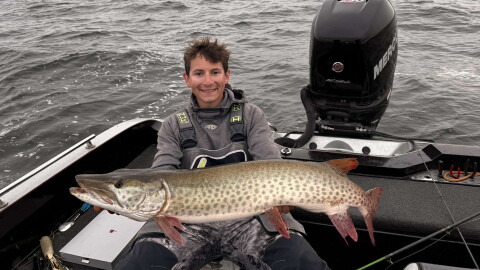 Contributed/Bemidji State UniversityAn ongoing Bemidji State University research project seeks to learn whether new fishing technology could be putting Leech Lake’s muskies at risk.
-
 Contributed/Adobe Stock Image via Minnesota News ConnectionThe National Wildlife Federation recognizes October as "Leave the Leaves Month," when homeowners are encouraged to move some of the leaves they have cleared into garden beds.
-
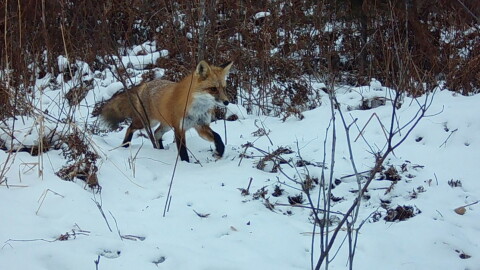 Grace Malinowski, program coordinator, discusses the Offal Wildlife Watching Project. The Community Science series is produced by Mark Jacobs.
-
 The disease, which causes internal bleeding and sudden death, was confirmed Sept. 9, 2026. It does not affect humans.


