


East Rapids Elementary in Grand Rapids
North Shore Community School near Duluth
“Hello from North Shore Community School on the north shore of Lake Superior. This is the phenology report for the week of Nov. 7, 2026. My name is Elsie, and I am your phenologist for this week!
“According to the Ojibwe, November is the month of the ice-forming moon. On Saturday, Nov. 7, there were nine hours and 53 minutes of daylight. That was 19 minutes less than the previous week. On Monday, Nov. 9, there was a new moon. On the morning of Tuesday, Nov. 10, it was cold enough that Ms. Jackson’s class could see their breath as they were journaling on the nature trail. On Thursday, Nov. 12,Beau saw that ice had formed on puddles. Also on Thursday, Evelyn noticed snow on her mom’s car in the morning.
“On Wednesday, Nov. 11, the tamarack trees near the school swale had lost about one half of their needles. Also on this day, Mrs. Rolfe’s class saw that about two thirds of the cattails had gone to seed and had released their silky down and seeds in the swale. On Thursday, November 12, Ms. Urban saw green round-lobed hepatica leaves in the school forest. On Friday, the aster flowers are still flowering by the chickadee mural.
“On Sunday, Nov. 8, Owen saw a buck when he was putting his chickens away. The buck was only like 15 feet away from him. Also on that morning, Ms. Jackson spotted a mouse scurry along the edge of her house. Mice are looking for places to nest during the winter. On Wednesday, Nov. 11 on his way to school, Sorin saw a dead skunk on the side of Jean Duluth Road. Owen saw a squirrel running around on the school nature trail when he was going out to EE class. On Nov. 12, some students in Ms. Loundsberry’s class saw a mostly white snowshoe hare in the school forest.
“On Sunday, Nov. 8, a student saw a Golden Eagle perched on a white pine at their house. On Tuesday, Nov. 10, Finn saw a Bald Eagle flying over his house.
“On Tuesday, Nov. 11, Rio found a caterpillar in the school forest. It’s a Virginia Tenucha moth- it has fully black and yellow hairs on its body.
“This concludes the Phenology Report. Have a great week and be observant!”
Bay View Elementary near Duluth
“Good morning my name is Easton, my name is Svea, I am Brennan, and Isla, and my name is Raelie, and this is our report for the week of Nov. 9, 2026 from Bay View Elementary School.
“This past week I was able to spend some time observing chickadees. I noticed that they were jumping up and down on the ground. I think that they may be playing around. My teacher suggested that they may be scratching the ground to kick up seeds to eat.
“I’ve noticed that as it gets colder, I see fewer animals and plants. In the afternoon when it gets warmer, I saw a couple squirrels, but that is all. I wonder where all of them go with no trees or leaves for cover.
“I noticed that all the leaves are gone from the trees. I was wondering why trees drop their leaves.
“I did a search to see why leaves fall from trees. I learned they drop their leaves to prepare for winter. The leaves are too delicate to survive the winter.
“I observed frost on the ground. My question was: Why does frost turn into frost and not snow? I read that it was because of where and how the water vapor changes.
“This concludes our report from the western edge of the forested Duluth hillside. Look closely. Be Curious. Wonder often.”
Long Lake Conservation Center near Palisade
This report is brought to you by Kallyn, Ridley and the students from Battle Lake Elementary School.
“During our trip from Nov. 9-11,the low temp was 28 degrees and the high was a sunny 62.
“One of the highlights of the trip was seeing the bobcat kitten. It was near a building on campus and when it saw us, it ran into the nearby marsh. The little fella waded through belly deep water to get away.
“At night, the skies were clear and very dark because there was no moon. We saw the Milky Way and a couple of shooting stars.
“Deer were everywhere. We spotted groups of five and two does, and lots of tracks. The beavers remain very active near campus with a well-worn path leading from the lake to nearby trees. Fresh chews were seen on Birch, Aspen and even a few big Oak trees.
“We walked to the beaver lodge and noticed that there was a large bunch of branches outside the entrance. It looks like plenty to last throughout the winter.
“During Birds of Minnesota Class, we spotted a Bald Eagle soaring over the lake, Blue Jays, sparrows, a female Downy Woodpecker, nuthatches, chickadees, Red-bellied and Pileated Woodpeckers and a Yellow-bellied Sapsucker.
“During Lake Bottom Organisms Class, we also found a frog and tadpole in the water.
“It’s a great time to explore nature and we want to remind everyone to unplug, get outside and LIVE CONNECTED!”
This report is brought to you by Blayke, Kaiya and the students from Rum River Elementary in Andover.
“During our trip from Nov. 11-13, the low temp was 15 degrees and the high was 46. That’s the coldest temperature since February 15. The first snowflakes of the season fell on Wednesday night, and we woke up to ice around the south edge of Long Lake. Kitt reported that she could see her breath at sunset. Winter is coming.
“There were two reported bobcat kitten sightings, and lots of tracks around campus. The beavers were very active once again. There were numerous sightings in the water. One person saw a tree on a walk that the beavers had just started chewing. By morning, they had chewed most of the way through. The sap from the tree had frozen solid.
“A pair of Trumpeter Swans was spotted on the far east side of the lake. They only stayed for a short while before moving on.
“This morning, three otters were playing in the lake during the misty sunrise. It looked like they were having a lot of fun. Other sightings included a bunny that hopped about a foot in front of us, numerous deer, a pile of deer fur, Blue Jays, squirrels, chickadees and a couple of unidentified ‘hard’ mushrooms.
“It’s a great time to explore nature and we want to remind everyone to unplug, get outside and LIVE CONNECTED!”
Brainerd Learning Center's Middle Level Alternative Program
“This is Regina and Danyele reporting from the Middle Level Alternative Program in Brainerd, Minnesota. Our teachers names are Twila and Sarah.
“I have noticed the family of pheasants that were feeding in my driveway have now moved out.
“I'm seeing fewer deer and the five to 10 turkeys that show up in my yard are showing up more frequently, looking for their food.
“Twila heard an owl and Merlin bird ID identified it as a Great Horned Owl.
“Sarah is seeing less geese flying over her Nisswa home and on the way to work Thursday saw one of the still migrating flock vigorously passing over the Mississippi.
“We're experiencing hard frosts pretty much every night now. Thanks for listening. Be aware, be out there, be alternative.”
Little Falls Middle School
“This is Daishawn and Izabella reporting from Little Falls Middle School. This is our phenology report for the week of Nov. 15.
“Multiple students reported watching five to six gray squirrels high on the branches of a sugar maple tree; we are unsure what exactly they were trying to get.
“We are still hearing Sandhill Cranes in Little Falls, although they are more frequently in pairs or small groups and not in huge flocks like we were seeing earlier.
“The calls of the Pileated Woodpecker are very common sound in the woods at this time of year.
“There have been several moths spotted flying around during daytime hours. We are assuming they are either linden loopers or fall cankerworms.
“A classmate was able to watch a porcupine as it hung on the end of a small branch while she was in her deer stand.
“There was an earthworm on the sidewalk on Nov. 11.
“We had two reports of Brown Creepers that were spotted by deer hunters.
“A student witnessed a Blue Jay killing a mouse on the ground, this was a new behavior for us.
“We also had a group of Blue Jays that were picking fruit off the trees outside our classroom this past week.
“We have seen a couple of Coyote on trail camera videos, and one was seen running around in the middle of the day
“Another classmate heard a Great Horned Owl in the morning by her house. It was so loud that her mother thought it was an alarm in her brother's bedroom.
“The beavers have been very active hauling branches out into the water during these warmer days.
“We had a surge of shaggy mane mushrooms popping up in our yards this week.
“That is our report for this week, until next week, keep exploring, keep discovering, and keep connecting with the great outdoors.”
Prairie Creek Community School in Northfield
Natalie: “Hi, this is Natalie-”
Noah: “And this is Noah-”
Natalie: “And we’re from Prairie Creek Community School-”
Noah: “Way down south in Northfield, Minnesota.”
Natalie: “We celebrated frost here at school by lying down face first on our first frosty morning.”
Noah: “We have been seeing a lot of eagles.”
Natalie: “Some of the eagles are in pairs and they are hanging out on branches.”
Noah: “I saw a ton of crows!!”
Natalie: “Thor reports squirrels ‘squirreling’.”
Noah: “Wagner found a torn up bird. He did not know what did the tearing up.”
Natalie: “Emory saw a green darner dragon fly! After the frost!”
Noah: “Grace said there is ice around her pond.”
Natalie: “At recess we found a mystery – a long poop filled with fur. When we looked closer, we saw that it was STUFFED ANIMAL FUR!”
Noah: “We think a local dog was a VERY BAD DOG.”
Natalie: “Penelope saw a male and female Pileated Woodpecker at her feeder.”
Noah: “This has been Prairie Creek-”
Natalie: “One more step along the phenology journey.”
Caledonia High School in Houston County
“Hi, this is Aubrey, Ella, and Aubree reporting from Caledonia High School in Caledonia, Minnesota. On Friday, Nov. 13, we noticed that:
“The beginning of the week began with temperatures in the 60s. Yesterday the high was only in the 40s. We also had our first hard frost last night as temperatures dipped into the 20s for the first time this fall.
“There are still a few plants blooming. There are some dandelions in our yards with flowers. One classmate even noticed a goldenrod near the river in full bloom. A couple of maples still have some leaves, but most trees have dropped theirs.
“Our classmates who work on farms are noticing that the cattle are growing thicker coats for winter. Deer continue to be quite active during the rut, and we are still seeing large flocks of blackbirds near the Mississippi River. Earlier in the week a painted turtle and a leopard frog were enjoying the warm temperatures.
“Early in the week with the warmer temperatures, there were two butterflies still active. One was a mourning cloak and the other was a cabbage butterfly. We wonder where they are getting their energy.
“This has been Aubrey, Ella, and Aubree reporting from Caledonia High School. ‘Stay wild, stay curious!’”
What have you seen out there? Let us know: email us at comments@kaxe.org or text us at 218-326-1234.
For more phenology, subscribe to our Season Watch Newsletter and podcast or visit the Season Watch Facebook page.
-
 Contributed/Bridget Bennett / MinnPost / CatchLight Local / Report for AmericaSince 2001, the DNR has been reintroducing native freshwater mussels into this section of the Mississippi, returning every year to add more mussels and monitor the ones that are already there.
-
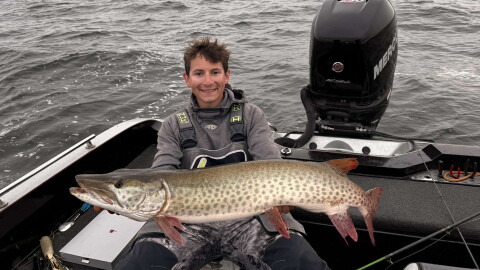 Contributed/Bemidji State UniversityAn ongoing Bemidji State University research project seeks to learn whether new fishing technology could be putting Leech Lake’s muskies at risk.
-
 Contributed/Adobe Stock Image via Minnesota News ConnectionThe National Wildlife Federation recognizes October as "Leave the Leaves Month," when homeowners are encouraged to move some of the leaves they have cleared into garden beds.
-
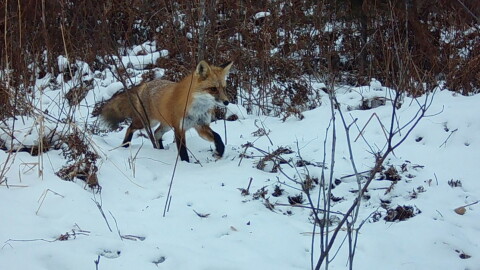 Grace Malinowski, program coordinator, discusses the Offal Wildlife Watching Project. The Community Science series is produced by Mark Jacobs.
-
 The disease, which causes internal bleeding and sudden death, was confirmed Sept. 9, 2026. It does not affect humans.
-
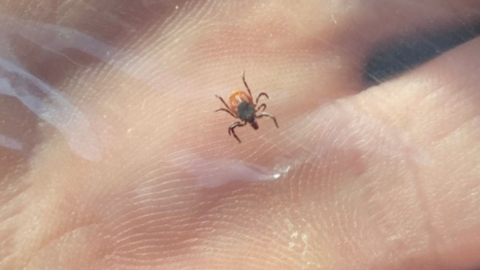 ContributedDozens of ticks as part of a study with the Marshfield Clinic Research Institute were submitted from the Bemidji area.


