



Cohasset Elementary School
North Shore Community School near Duluth
“Hello from North Shore Community School on the north shore of Lake Superior. This is the phenology report for the week of Oct. 17, 2026. My name is Chasen, and I am your phenologist for this week!
“Saturday, Oct. 17, Mrs. Rolfe had the first snow of the year happen in her backyard! There must have been a very strong updraft to have the moisture come down as snow flurries because it was 42 degrees outside when it was snowing. On Friday, Oct. 23, Chasen noticed it was so foggy in the morning he could barely see the Ryan Road from the big kids playground.
“On Monday, Oct. 19, Ella noticed most of the trees in her yard had only a few leaves left or no leaves at all. About half of Mrs. Rolfe’s milkweed plants have had their seed pods burst open as of Monday, Oct. 19. Beau found a puff ball mushroom on the playground on Tuesday, Oct. 20.
“Saturday Oct. 17, Ella noticed 5 turkeys crossing the Lismore Road on her way home. On Sunday, Oct. 18, Nora saw 3 tom turkeys on the side of the McQuade road. That same day Ms. Urban saw an American Goshawk at Hawk Ridge. The next day, Ms. Urban saw several Snow Buntings by the 4-6 playground. Tuesday, Oct. 20, Ronan spotted two grouse in his yard! Thursday, Oct. 22, Ms Jeske’s second-grade class saw two Snow Buntings near the 4-6 playground.
“Saturday, Oct. 17, at dusk, Mrs. Rolfe had a bear in her yard eating the crabapples of one of her trees! On Tuesday, Oct. 20, Nora saw a deer eating apples off a tree near her house.
“Mrs. Rolfe noticed on Monday Oct. 19, that there were several orange and red beetle-like bugs on her milkweed seed pods. She looked them up to find out that they were large milkweed bugs. She also learned that if there are several of them on a pod, that it is highly likely that few or none of the seeds in that specific pod will be viable. When large milkweed bugs target a pod, they inject digestive enzymes directly into the developing milkweed seeds to liquefy them and drink the nutrients; this kills the seeds.
“This concludes the phenology report. Have a great week and be observant!”
Bay View Elementary near Duluth
“Good morning my name is Rylee and my name is ___ and this is our report for the week of Oct. 19, 2026 from Bay View Elementary School.
“Ever looked up into one of those huge summer clouds and wondered what it was like inside it? We got to experience it last week. Our school forest had a dense fog blanket which happens quite a bit in our neighborhood. Bay View School sits on the top of a bluff above Lake Superior, and it makes for some very foggy days. Some days we get to visit our school forest in the clouds.
“When I went outside Saturday morning, I heard animals howling. One was high pitched and the other was low and they went back and forth howling and I thought maybe it could be a wolf, but my mom thinks it is a coyote. So I did some research and found that the deep howl I was hearing was a wolf and the high-pitched one was a coyote. But then I got curious and did some research on why that was happening, and found the grey wolf was probably marking territory and telling the coyote that it is its territory. That was what I observed Saturday morning by walking on my back porch.
“Dark-eyed Juncos have arrived at our feeders. They are in fresh from their summer home way up north. We have learned that these fun little ground feeders will be with us for a few months then visit again in the spring. A few classes got to see them scratching below our feeders.
“This concludes our report from the western edge of the forested Duluth hillside. Look closely. Be Curious. Wonder often.”
Long Lake Conservation Center near Palisade
This report is brought to you by Solomon, Garret, Trey and the students from TrekNorth in Bemidji.
“During our trip from Oct. 19-21, the low temp was 34 degrees and the high was an unseasonably warm 69.
“The beavers once again stole the show with a beaver once again coming onto campus, chewing down a tree and dragging it past our campfire to the lake. That was fun to see. We found a handful of other fresh chews on and near campus. It seems that the beavers prefer aspens over other trees.
“Lacey saw a dark fishing spider and noticed that the winterberry bushes are filled with red berries but have very few of their leaves left.
“There have been recent sightings of a bobcat on campus, but we weren’t lucky enough to spot him. The garter snakes remain active in the forest, and more and more are hanging out near their hibernaculum. Garrett learned that reptiles eat less in the autumn, while mammals eat more.
“The chipmunks are very active, and we saw what we thought looked like a baby gray squirrel. Gray squirrels typically have two litters, one in the spring and one in the late summer.
“We also heard a Barred Owl at night. During Lake Bottom Organisms Class, we found and identified three adult and baby backswimmers, a frog, a minnow, and a dragonfly nymph. “It’s a great time to explore nature and we want to remind everyone to unplug, get outside and LIVE CONNECTED!”
This report is brought to you by Monce, Nathan, Kaffrey and the students from Fridley Middle School.
“During our trip from Oct. 21-23, the low temp was 34 degrees and the high was an unseasonably warm 71.
“The highlight of our trip was when a bobcat ran out of the raspberry bushes, chased, caught and ate a chipmunk or mouse. It was like a scene from National Geographic. Very exciting! The bobcat has been seen numerous times on and near campus in the last couple of weeks. We sure wouldn’t want to be a mouse. That bobcat was fast! It was small and probably a juvenile.
“The beavers remain very active on the lake and on shore. We found numerous freshly chewed trees right on campus, and along the lakeshore.
“During Wilderness Meal, we found a spring peeper in the leaf litter. It was tiny. We learned that spring peepers overwinter by freezing partially solid under leaf litter, loose bark or logs.
“Also in the leaf litter, we found a yellow spider that could have been a yellow sac spider.
“When we were canoeing, a giant snapping turtle swam right under one of our canoes. That big girl will soon hibernate beneath the mud at the bottom of the lake.
“It’s a great time to explore nature and we want to remind everyone to unplug, get outside and LIVE CONNECTED!”
Little Falls Middle School
“This is Sidney and Layne reporting from Little Falls Middle School. This is our phenology report for the week of Oct. 25.
“There is a new and heavy carpet of red pine needles covering the forest floor.
“Mr. Kaddatz discovered a large collection of mushrooms on a shelf in his shed. He discovered that it was from a red squirrel.
“We have had several reports of large groups of blackbirds.
“We have discovered the berries from poison ivy, and learned that they can also cause a skin reaction if you touch them.
“One classmate reported hearing the calls of a Great Horned Owl.
“We also had a sighting of a Northern Harrier soaring over a field.
“We are not sure if they change throughout the year, but there are very large groups of turkeys spotted out in fields this time of year.
“The tiny, floating, wooly alder aphids can be spotted drifting across our yards.
“We have had several trail cam videos of bobcats, bears, and lots of sparring deer.
“There was a group of 4 cardinals feeding together at a feeder. We are wondering if they are still together as a family unit?
“There was a group of 6 long necked birds flying by, and we are guessing that they were cormorants?? They looked like loons, but we do not think that loons gather together in flocks.
“Our oak trees are a dark red, and the maples have dropped about half of their leaves.
“We are seeing groups of Juncos on the ground under our feeders.
“A classmate had a sighting of 3 bobcat kits running across their yard.
“That is our report for this week, until next week, keep exploring, keep discovering, and keep connecting with the great outdoors.”
Prairie Creek Community School in Northfield
Ingrid: "Hi, this is Ingrid-”
Ria: "And this is Ria-”
Ingrid: "And we’re from Prairie Creek Community School-”
Ria: "Way down south in Northfield, Minnesota.”
Ingrid: "We are STILL seeing dragonflies, monarchs, mosquitos, egrets and even herons.”
Ria: "There is an eagle’s nest on the road many of us take to school. The two eagles have been hanging out on a limb by the nest all week.”
Ingrid: "Penelope saw a chipmunk.”
Ria: "There were reports of squirrels fighting and digging in the trash - not at the same time.”
Ingrid: "Ezri saw a decapitated rabbit - perfect for Halloween!”
Ria: "I saw a cardinal - WITH its head!”
Ingrid: "Natalie noted that it is dark when she gets on the bus and it’s been cold.”
Ria: "Orion saw a flock of geese.”
Ingrid: "And Emory saw a possum.”
Ria: "This has been Prairie Creek-”
Ingrid: "One more step along the phenology journey.”
Caledonia High School in Houston County
“This is Addison, Morgan, Aiden and Leo reporting from Caledonia High School in Houston County on Oct. 23, we noticed:
“The first frost of the year occurred on Oct. 17, but the temperatures continue to be above normal. This week we have seen temperatures in the 70s and lows in the upper 40s and 50s.
“Leaves continue to change, the birch have dropped their leaves and the aspen pockets on the bluff are bright golden yellow, oaks are turning deep red and brown. The soybeans have already been harvested and corn is being harvested currently.
“We have noticed less individual birds but more in flocks. There are still large flocks of blackbirds near the river. There have been quite a few woolly bear caterpillars noticed on the roads, and ladybugs and fox elder beetles are congregating in large numbers. Some of our classmates are noticing that the rut is beginning. Bucks are chasing does and seem exhausted. Warmer temperatures are allowing ticks to be more active.
“Our weekly highlight is that domestic animals like horses, dogs, and cows are getting fluffy, growing their winter coats.
“This is Ben, Addison, Morgan, Aiden, Leo reporting from Caledonia High School. Stay wild, stay curious.”
Jeffers phenology workshop
What have you seen out there? Let us know: email us at comments@kaxe.org or text us at 218-326-1234.
For more phenology, subscribe to our Season Watch Newsletter and podcast or visit the Season Watch Facebook page.
-
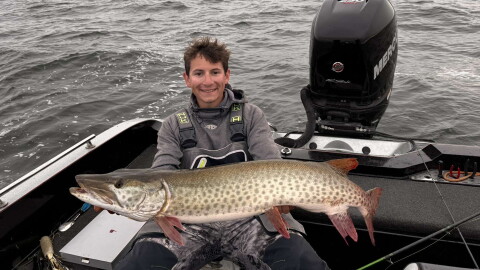 Contributed/Bemidji State UniversityAn ongoing Bemidji State University research project seeks to learn whether new fishing technology could be putting Leech Lake’s muskies at risk.
-
 Contributed/Adobe Stock Image via Minnesota News ConnectionThe National Wildlife Federation recognizes October as "Leave the Leaves Month," when homeowners are encouraged to move some of the leaves they have cleared into garden beds.
-
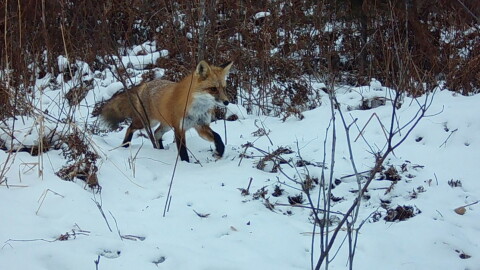 Grace Malinowski, program coordinator, discusses the Offal Wildlife Watching Project. The Community Science series is produced by Mark Jacobs.
-
 The disease, which causes internal bleeding and sudden death, was confirmed Sept. 9, 2026. It does not affect humans.
-
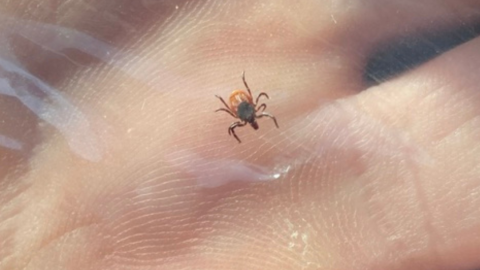 ContributedDozens of ticks as part of a study with the Marshfield Clinic Research Institute were submitted from the Bemidji area.
-
 Christopher Smith, conservation committee chair for the Minnesota Herpetological Society, discusses how salamanders use dead and dying trees. The series is produced by Mark Jacobs.


