



East Rapids Elementary in Grand Rapids
North Shore Community School near Duluth
“Hello from North Shore Community School on the north shore of Lake Superior. This is the phenology report for the week of Sept. 19, 2026. My name is Sorin, and I am your phenologist for this week!
“On the morning of Monday, Sept. 21, Ms. Jackson could see her breath outside when she took her dog out. It was our first frost advisory alert for September.
“On Tuesday, Sept. 22, Ms. Jackson’s class was walking the school nature trail and noticed that near Shelter Two, only about 5% of the leaves in the canopy that had changed color. They also noticed it was the maple trees that had or were changing color.
"On Sunday, Sept. 20, Sam noticed Broad-winged Hawks migrating when he was outside at his house. On Monday morning, Sept. 21, Vivian saw an owl on a tree near her house. Also this week, Faye has been hearing Barred and Great Horned Owls at her house. On Monday afternoon, Melanie noticed a flock of songbirds flying south near her pasture.
“On Tuesday, Sept. 22, Ms. Caroline saw a bluebird flying as she was driving home after school. Also on this day, Finn spotted about 40 geese flying in a V- formation. On Thursday, October 24th, Easton observed several Wild Turkeys during his bus ride to school.
“On Saturday, Sept. 19, Kade saw a moose on his dad’s trail camera. On Tuesday, Sept. 22, Cruz spotted several deer eating the apples on his apple trees. On Wednesday, Sept. 23, Natahlia’s cat food on her porch was eaten. She thinks the culprits are a community of badgers, skunks, porcupines, or possibly raccoons eating her cat’s food. Those animals are caching food to prepare for winter. On Thursday morning, Sept. 24, Ms. Jackson smelled a skunk in her backyard. Skunks are very active during this time of the month looking for grubs and insects to eat. On Thursday, Sept. 24, Nora saw a black bear walking across the road.
"On Monday, October 21, Melanie noticed that all the wasps had disappeared from the marigolds in her yard. Several people have reported that they have seen many monarch butterflies during this past week. These monarchs are called the “Super Generation” and are currently migrating to Mexico. It is a 2,500 to 3,000 mile migration that will take the monarchs two months, or longer, to complete. The Super Generation will live up to 8 to 9 months unlike the typical 2 to 6 weeks of the summer generations.
"The fall equinox for 2026 occurred on Tuesday, Sept. 22.
“This concludes the Phenology Report. Have a great week and be observant!”
Bay View Elementary near Duluth
“Good morning, my name is Vivian and my name is Bradley and this is our report for the week of Sept. 21, 2026 from Bay View Elementary School.
“Oh no! The season’s chill is starting to make its move. Last week we were watching the days get shorter, now it is the temperature! On Wednesday we had a morning low of 38 degrees. In a couple of months it may not seem that cold, but it was our first morning temperature in the 30’s this season.
"Students in outdoor education class discovered goldenrod galls. Actually, we have been seeing these galls for a long time but never knew what they were. We learned the goldenrod we created by a little fly and that there is a little worm inside the bulb. The worm will live inside the gall over the winter and, if lucky, will emerge as a goldenrod gall fly .
"Some of our classmates have also been able to pop jewelweed seed pods. That may not sound like much, but it is quite fun. Jewelweed, or touch-me-not, have these fat seed pods that dangle from its stems. When you touch or pinch the pods, they pop open and shoot their seeds out. Most our jewelweed plants are all done for the season, but last week Mrs. Urban’s class found a large patch in a swampy area that we ready to be popped.
“This concludes our report from the western edge of the forested Duluth hillside. Be Aware. Things are happening out there.”
Long Lake Conservation Center near Palisade
This report is brought to you by Max, Alexis, Jack, Caroline and the students from Christ the King Catholic School in Browerville.
“During our trip to Long Lake Conservation Center from Sept. 23-25, the high temperature was 67 degrees and the low was 44.
“There was 0.51 inches of rain on Thursday. We estimate that about half the trees have begun changing color, but are only between 10 and 20% of peak color.
“During our phenology hike, we noticed a lot of recent beaver activity, including a freshly chewed tree and a drag trail. We saw lots of mushrooms, including puff, coral and turkey tail mushrooms. We also found dog vomit slime mold which looks as gross as it sounds. Asters and Joe Pye Weed are still hanging on, but we didn’t see any butterflies. We suspect they’re done for the season.
“We saw Red-headed and Pileated Woodpeckers, and found lots of trees with holes in them. Swans are still on the lake and a flock of Blue Jays migrated through, squawking loudly. We found a baby wood frog and flushed a grouse on a walk. A handful of wooly bear caterpillars were found on campus, and it seems like it’s raining acorns. At night, we were lucky to hear Barred and Saw-whet Owls.
“We had a great time exploring nature and we want to remind everyone to unplug, get outside and LIVE CONNECTED!”
This report is brought to you by Willa, Samantha and the students from Braham Elementary.
“During our trip to Long Lake Conservation Center from Sept. 24-25, the high temperature was 67 degrees and the low was 44.
“During our canoe adventure we saw a garter snake swimming in the water. We didn’t know that snakes were such good swimmers. Bigger fish will eat snakes if they find them, so that might not have been the smartest snake.
“In the lake, we saw tadpoles and baby leeches. Leeches! Yuck! Two Trumpeter Swans were still around, and we saw a big toad on the sidewalk.
“Rejay got up early to enjoy the sunrise, which he said was beautiful.
“There are lots of mushrooms springing up, including the slippery jack or sticky bun mushroom. They are edible.
“The red maples have turned to their brilliant, bright red, but most of the other trees are just beginning their autumn transformation.
“We had a great time exploring nature and we want to remind everyone to unplug, get outside and LIVE CONNECTED!”
Little Falls Middle School
“This is Braden and Eli reporting from Little Falls Middle School. This is our phenology report for the week of Sept. 27.
“Although we are still primarily green, there are some colors starting to show up in our trees: Reds in some maples and yellows in birch trees.
“We have seen groups of Blue Jays and flickers in our yards and school, so we assume their migration has begun.
“While walking in the woods after the rain, we noticed that the moss carpet made the forest floor very spongy.
“After the rain we had an explosion of mushrooms around Little Falls. We have seen meadow mushrooms, milk cap mushrooms, and destroying angel fungus in our yards, and tiny puffballs are everywhere.
“We had a student who spotted a musky on the Mississippi River.
“Purple and white asters are still providing color to ditches and meadows.
“We have encountered a lot of our most annoying seeds, the painful sand burs.
“The walnuts are falling off our black walnut tree by our school.
“One unique sighting this week was from a classmate who had boxelder bug eggs hatch in her house, and she was able to photograph the odd-looking nymphs.
“Although the monarchs have received a lot of attention, we also had a sighting of a red admiral butterfly.
“Some of our soccer players have been bothered by gnats, but more have been seen on turf fields, possibly due to the heat.
“The milkweed plants are turning a yellow color, and the sumacs are a dark red.
“We have had reports of raccoons, skunks, coyotes and even a hare.
“One interesting thing for people to look for when outside are the leaf miner trails found on lots of different plant leaves.
“That is our report for this week, until next week, keep exploring, keep discovering, and keep connecting with the great outdoors.”
Prairie Creek Community School in Northfield
Grace: "Hi, I’m Grace-”
Sam: "And I’m Sam-”
Grace: "And we’re from Prairie Creek Community School-”
Sam: "Way down south in Northfield, Minnesota.”
Grace: "It’s been a busy week! I saw an egret hunting in my pond.”
Sam: "We’ve seen a lot of herons.”
Grace: "At our campout, we heard three Great Horned Owls calling to each other in the morning.”
Sam: "Penelope saw two hummingbirds, cranes and two pheasants.”
Grace: "Juniper saw a pair of cranes. And Noah saw Blue Jays.
Sam: "Autumn found a feather - we think it is a Blue Jay’s.”
Grace: "We also saw a Northern Flicker.”
Sam: "This just in! Because of the fog this morning, there were lots of migrating birds. Our Merlin caught twenty eight different species - including a Bobolink and a lot of warblers.”
Grace: "On our campout we saw a giant fishing spider and a fierce orb weaver.”
Sam: "We saw a long worm on our way to the post office to mail some letters.”
Grace: "Juniper saw chipmunks cashing nuts.”
Sam: "This has been Prairie Creek-”
Grace: "One more step along the phenology journey.”
Caledonia High School in Houston County
“Hi, this is Easton, Haley, Adalyn, and Kellan reporting from Caledonia High School in Houston County. On Sept. 25, we noticed:
“That Sept. 22 was the autumnal equinox meaning the length of day and night were equal. Lows have been in the 40s this week.
“The soybeans have turned brown completely with the cooler temperatures. According to the DNR fall color map, Houston County is currently around 25% of peak color.
“Certain migrating birds have left already including hummingbirds and Chimney Swifts. Hunting seasons have begun for deer and ducks. There are quite a few hunters on the Mississippi River. According to Birdcast, about 350,000 birds migrated through Houston County this week.
“The highlight this week was that the month of September has seen 8.54” of rain in Caledonia. Almost half of that fell over the weekend, which brought flooding to Beaver Creek Valley State Park.
“This has been Easton, Haley, Kellan, and Adalyn reporting from Caledonia High School. ‘Stay wild, stay curious!’”
What have you seen out there? Let us know: email us at comments@kaxe.org or text us at 218-326-1234.
For more phenology, subscribe to our Season Watch Newsletter and podcast or visit the Season Watch Facebook page.
-
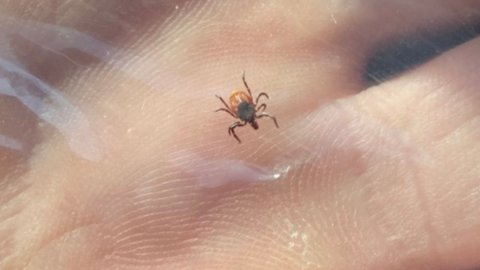 ContributedDozens of ticks as part of a study with the Marshfield Clinic Research Institute were submitted from the Bemidji area.
 -
 Christopher Smith, conservation committee chair for the Minnesota Herpetological Society, discusses how salamanders use dead and dying trees. The series is produced by Mark Jacobs.
 -
 Lorie Shaull/KAXEThe Minnesota Pollution Control Agency is surveying people's fish-eating habits to help limit contaminants in water bodies and make fish safer to eat.
 -
 Contributed/Daniel DewaldCisco and other cold water fish died by the thousands in the large, shallow lake as water temperatures soared to an average of 77 degrees in late July and early August 2026.
 -
 Contributed/Adobe Stock via Minnesota News ConnectionPublic health experts said states can better prepare for future illness outbreaks by keeping a sharp eye on climate change.
 -
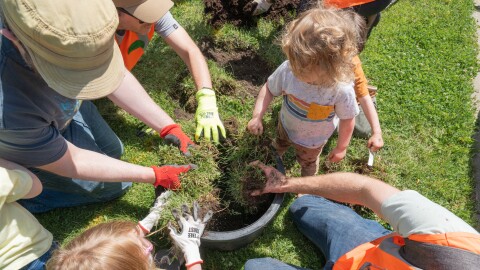 Contributed/Deborah Rose / Minnesota Department of Natural ResourcesThirty-three communities received nearly $5 million in funding, including Virginia, Hill City and other Northern Minnesota cities. A new DNR grant closes Sept. 14, 2026.


