



Jeffers Foundation phenology workshop for educators
Registration opens soon! Check the Jeffers Foundation website for details.

Bay View Elementary in Duluth
“Good morning, my name is Ryan and my name is Rayley and this is our report for the week of September 14, 2026 from Bay View Elementary School.
“The sun is rising later in the morning and setting earlier in the evening. We are losing just over three minutes every day! It may not sound like much, but it adds up. In just one week we lost almost 25 minutes of daylight!
"Last week we had an incredible number of mushrooms in our school forest. Most of us enjoyed looking at all of the different sizes and shapes of mushrooms. On our walks we saw red, yellow, orange, white, and even purple ones. There was one orange mushroom that was compared in size to a small pizza! We believe that the burst of mushrooms have something to do with all of the rain we had the week before.
"For a couple of days early in the week we had swarm of dragonflies around in our field. They were swarming all over and were fun to watch. We were wondering why they were gathering in our soccer field. We believe that the apple trees might have something to do with it. The apple trees next to our soccer field have lots of fallen fruit. The fruit is being eaten by lots of bees. Some quick research told us that dragonflies will eat bees.
“This concludes our report from the western edge of the forested Duluth hillside. Be Aware. Things are happening out there.”
Long Lake Conservation Center near Palisade
This report is brought to you by Claire, Lyra and the students from DaVinci Academy in Ham Lake.
“During our trip to Long Lake Conservation Center from Sept. 16-18, the high temperature was 69 degrees and the low was 47.
“The cool mornings made for beautiful, misty sunrises. Signs of autumn are everywhere, but summer is still holding on.
“The winterberry holly bushes are full of red berries, but we learned they are toxic to people, but animals can eat them. Our group saw mushrooms of many colors, including bright red, regular red, yellow and, in the bog, we saw a bright orange one. We also saw a big doe on the boardwalk in the bog. The garter snakes are on the move in the forest, chipmunks are busy and curious, and a beaver and Trumpeter Swans were spotted during our canoe adventure. It was cool to see large flying grasshoppers.
“In the lake, we saw some fish that looked like they were playing a game. We wonder what games fish play.
“A variety of wasps and bumblebees as well as monarch and painted lady butterflies were enjoying all the late-season wild flowers. They seemed to especially love the spotted Joe-Pye-weed and the New England aster. The oak trees have dropped millions of acorns. If you believe the old wives' tale, that means we’re in for a long, cold and snowy winter.
“We had a great time exploring nature and we want to remind everyone to unplug, get outside and LIVE CONNECTED!”
Little Falls Middle School

“This is Madelyn and Rowan reporting from Little Falls Middle School. This is our phenology report for the week of September 20.
“This past week a student was able to watch and photograph a white-lined sphinx moth as it fed on some thistle.
“This week Mr. Gwost was able to watch two young foxes chasing each other and wrestling in his yard.
“We had a sighting of a HUGE group of Sandhill Cranes in a field, maybe as many as 100.
“We are still seeing hummingbirds at our feeders this week, and bumblebees seem to be on any flowers that are still blooming.
“Several people who attended the craft fair last weekend commented on the large numbers of wasps they were seeing by the garbage cans.
“We are starting to see small groups of Northern Flickers in our yards.
“A classmate found a large bald faced hornet hive in their deer stand.
“Another individual found some long, black pin mold growing out of some bear droppings. It resembled black hair that stood several inches tall.
“The dew in the mornings make it very easy to spot all of the spider webs in our lawns.
“We have seen a few chicken of the woods mushrooms, but the dry weather has prevented a lot of our typical mushrooms from popping up.
“This has been a great summer for seeing monarch butterflies, and this past week the numbers have increased and there was even a sighting of a large group.
“A student was able to see and record some video of a young piebald deer that was out in a field with a doe.
“One unique sighting this week was a garter snake that had bluish colored stripes.
“That is our report for this week; until next week, keep exploring, keep discovering, and keep connecting with the great outdoors.”
Prairie Creek Community School in Northfield
Ezri: "Hi, this is Ezri-”
Anika: "And this is Anika-”
Ezri: "And we’re from Prairie Creek Community School-”
Anika: "Way down south in Northfield, Minnesota.”
Ezri: "We’ll start with birds. Wagner and Autumn saw herons.”
Anika: "And Penelope saw hummingbirds but the males have left Northfield.”
Ezri: "Hank and Sam both saw hawks. Juniper and I saw crows.”
Anika: "Noah heard an owl - probably a Great Horned Owl.”
Ezri: "Ria saw and heard a pair of Mourning Doves.”
Anika: "Emory saw both cranes and pheasants.”
Ezri: "There have been many reports of deer, including a ten-point buck.”
Anika: "Grace saw a lot of bunnies.”
Ezri: "Juniper saw chipmunks and Noah saw albino and regular squirrels.”
Anika: "Michelle saw a huge flock of seagulls and two eagles by their nest.”
Ezri: "We’ve all seen a lot of dragonflies and we’re still seeing toads.”
Anika: "The weather has just turned colder so we are interested in seeing what changes this week.”
Ezri: "This has been Prairie Creek-”
Anika: "One more step along the phenology journey.”
Caledonia High School in Houston County
“Hi, this is Isla, Nolan, Jax, and Chris reporting from Caledonia High School in Caledonia, Houston County. On Sept. 18, we noticed:
“A cold front came through and drove temperatures down. Highs were in the 60s and 70s this week.
“On a trip to the school forest, we found acorn weevil grubs eating the inside of the acorns. There were quite a few different fungi after the recent rains from this week. We also found ghost pipes which do not photosynthesize. Asters, goldenrods, and ragweeds continue to bloom.
“Cicadas are still buzzing and crickets and grasshoppers are still calling. Warblers continue to migrate. There was a new county record in Fillmore County of a Yellow-throated Warbler. Hummingbirds are flying away. A flock of over 20 Killdeer flew over and landed on the roof of the school.
“This has been Isla, Nolan, Jax, and Chris reporting from Caledonia High School. ‘Stay wild, stay curious!’”
What have you seen out there? Let us know: email us at comments@kaxe.org or text us at 218-326-1234.
For more phenology, subscribe to our Season Watch Newsletter and podcast or visit the Season Watch Facebook page.
-
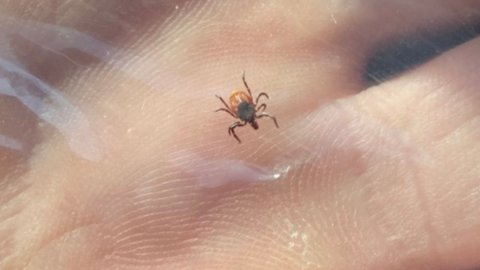 ContributedDozens of ticks as part of a study with the Marshfield Clinic Research Institute were submitted from the Bemidji area.
 -
 Christopher Smith, conservation committee chair for the Minnesota Herpetological Society, discusses how salamanders use dead and dying trees. The series is produced by Mark Jacobs.
 -
 Lorie Shaull/KAXEThe Minnesota Pollution Control Agency is surveying people's fish-eating habits to help limit contaminants in water bodies and make fish safer to eat.
 -
 Contributed/Daniel DewaldCisco and other cold water fish died by the thousands in the large, shallow lake as water temperatures soared to an average of 77 degrees in late July and early August 2026.
 -
 Contributed/Adobe Stock via Minnesota News ConnectionPublic health experts said states can better prepare for future illness outbreaks by keeping a sharp eye on climate change.
 -
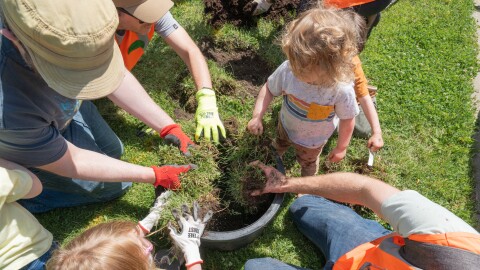 Contributed/Deborah Rose / Minnesota Department of Natural ResourcesThirty-three communities received nearly $5 million in funding, including Virginia, Hill City and other Northern Minnesota cities. A new DNR grant closes Sept. 14, 2026.


