



Little Falls Middle School
“This is Olivia and Kylee reporting from Little Falls Middle School. This is our phenology report for the week of September 6.
“Our dragonfly sightings have become almost exclusively meadowhawks in the past week.
“Mr. Kaddatz was outside one night and noticed 40-50 small white moths fluttering on and around on his lawn.
“We had multiple sightings of hummingbirds on the Sept. 2, and we are curious when we will see our last one this fall.
“Most roadsides and ditches have splashes of yellow from goldenrods, butter and eggs, or evening primrose.
“The sumacs are starting to show a lot of red, and some of our maples have some leaves that are changing colors already.
“We have had a few students who are still seeing fireflies at night.
“We did have a sighting of an America Goldfinch feeding on seeds from a bull thistle plant.
“Our most puzzling observation this past week was of some gray squirrels that were pulling down branches and partially eating green acorns from a bur oak.
“The cardinals are molting, and we see quite a few with odd looking ‘naked heads.’
“There are lots of slugs and toads out around our houses after dark.
“A classmate found a red-bellied snake and tiger salamander.
“We are finding lots of oak apple galls, which are large marble sized maroon and white colored balls caused by the oak gall wasp.
“We have had observations of a few birds that we typically only see in May, the American Redstart and Rose-breasted Grosbeak.
“As is typically the case, we see numerous Turkey Vultures flying overhead each day, but we have seen very few nighthawks so far this month.
“That is our report for this week; until next week, keep exploring, keep discovering, and keep connecting with the great outdoors.”
Listeners
What have you seen out there? Let us know: email us at comments@kaxe.org or text us at 218-326-1234.
For more phenology, subscribe to our Season Watch Newsletter and podcast or visit the Season Watch Facebook page.
-
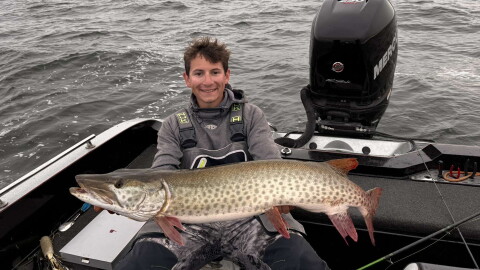 Contributed/Bemidji State UniversityAn ongoing Bemidji State University research project seeks to learn whether new fishing technology could be putting Leech Lake’s muskies at risk.
 -
 Contributed/Adobe Stock Image via Minnesota News ConnectionThe National Wildlife Federation recognizes October as "Leave the Leaves Month," when homeowners are encouraged to move some of the leaves they have cleared into garden beds.
 -
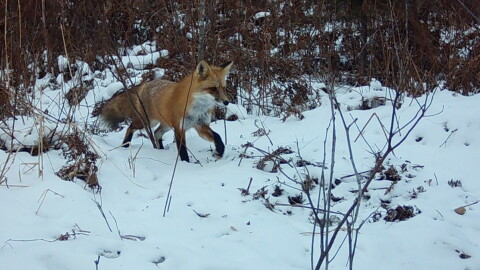 Grace Malinowski, program coordinator, discusses the Offal Wildlife Watching Project. The Community Science series is produced by Mark Jacobs.
 -
 The disease, which causes internal bleeding and sudden death, was confirmed Sept. 9, 2026. It does not affect humans.
 -
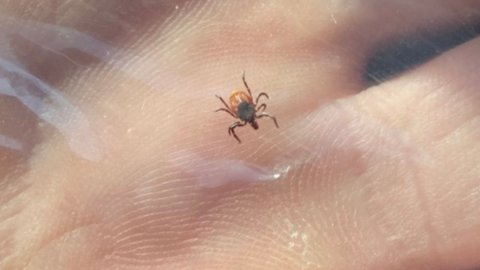 ContributedDozens of ticks as part of a study with the Marshfield Clinic Research Institute were submitted from the Bemidji area.
 -
 Christopher Smith, conservation committee chair for the Minnesota Herpetological Society, discusses how salamanders use dead and dying trees. The series is produced by Mark Jacobs.


