



Newstok family
Sugar Lake Lodge
Long Lake Conservation Center
This report is brought to you by Layla, Vince, Eleanor, Alice, Adeline and the campers from Outdoor Explorers Camp at Long Lake Conservation Center, Aug. 4-8, 2026.
“Hi, this is Layla from Outdoor Explorers summer camp at Long Lake Conservation Center.
“During our camp the low temp was 50 degrees and the high was 80. We got some much needed rain on Friday morning.
“This is Vince with the lake report: We found seven leopard frogs, including one with a leech attached to its leg. Walleye fingerlings were seen, so we know at least some of the fry that the DNR released in the spring are now large enough to identify. Swans were sighted. One loon was very curiously watching our cardboard boat race. During fishing time, the loon swam around the swim raft we were fishing from, and all of the fish went away for several minutes until the loon swam off to the other side of the lake.
“This is Eleanor with the fishing report: Long Lake is a shallow lake, and some winters the water freezes so deep that many of the fish die, but we were able to catch a few nice perch and crappies. We used barbless hooks so that we could get them back into the water as soon as possible.
“This is Alice with the forest report; We saw a deer by the lake and lots of deer scat everywhere, two adult turkeys with nine poults, chipmunks, a toad, a small snake, a vole and a rabbit. One camper had 10 ticks on him! Marcus & Stella found a ghost pipe plant. This plant is all white, it does not use photosynthesis for food or energy, it uses underground fungi and tree roots instead.
“This is Adeline. We had a great time exploring nature and we want to remind everyone to unplug, get outside and LIVE CONNECTED!”
Roots and Wings Forest School
Listener talkbacks
What have you seen out there? Let us know: email us at comments@kaxe.org or text us at 218-326-1234.
For more phenology, subscribe to our Season Watch Newsletter and podcast or visit the Season Watch Facebook page.
-
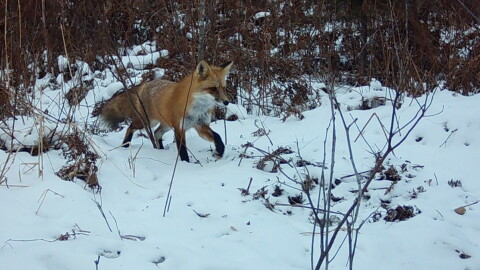 Grace Malinowski, program coordinator, discusses the Offal Wildlife Watching Project. The Community Science series is produced by Mark Jacobs.
 -
 The disease, which causes internal bleeding and sudden death, was confirmed Sept. 9, 2026. It does not affect humans.
 -
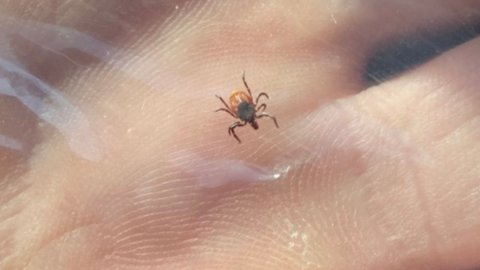 ContributedDozens of ticks as part of a study with the Marshfield Clinic Research Institute were submitted from the Bemidji area.
 -
 Christopher Smith, conservation committee chair for the Minnesota Herpetological Society, discusses how salamanders use dead and dying trees. The series is produced by Mark Jacobs.
 -
 Lorie Shaull/KAXEThe Minnesota Pollution Control Agency is surveying people's fish-eating habits to help limit contaminants in water bodies and make fish safer to eat.
 -
 Contributed/Daniel DewaldCisco and other cold water fish died by the thousands in the large, shallow lake as water temperatures soared to an average of 77 degrees in late July and early August 2026.


