



This week our Staff Phenologist John Latimer talks early signs of autumn. Birds are quiet and late summer wildflowers like boneset and Joe Pye weed are in bloom, but the first spreading dogbane leaves are turning yellow.
John was taken by a Red-tailed Hawk this week sitting on a fence post. "I wasn't 15 feet from it and it just turned its head and looked at me like, 'What are you doing?'" John was able to get an up close and personal look at it and thought it was probably a juvenile.
John has also been able to watch a family of kestrels performing what he calls "unbelievably delicate and lovely flights."
He said, "It's just a thrill to come out of my driveway and see them all sort of scatter and whip this way and that way across the land. It must be frightening to be a grasshopper in their presence."
What have you seen out there? Let us know: email us at comments@kaxe.org or text us at 218-326-1234.
For more phenology, subscribe to our Season Watch Newsletter and podcast or visit the Season Watch Facebook page.
-
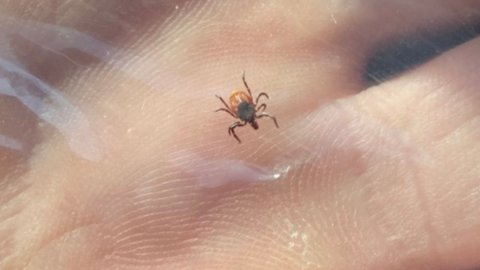 ContributedDozens of ticks as part of a study with the Marshfield Clinic Research Institute were submitted from the Bemidji area.
 -
 Christopher Smith, conservation committee chair for the Minnesota Herpetological Society, discusses how salamanders use dead and dying trees. The series is produced by Mark Jacobs.
 -
 Lorie Shaull/KAXEThe Minnesota Pollution Control Agency is surveying people's fish-eating habits to help limit contaminants in water bodies and make fish safer to eat.
 -
 Contributed/Daniel DewaldCisco and other cold water fish died by the thousands in the large, shallow lake as water temperatures soared to an average of 77 degrees in late July and early August 2026.
 -
 Contributed/Adobe Stock via Minnesota News ConnectionPublic health experts said states can better prepare for future illness outbreaks by keeping a sharp eye on climate change.
 -
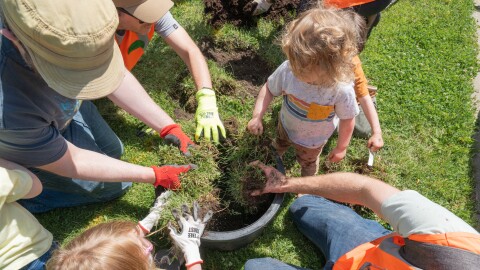 Contributed/Deborah Rose / Minnesota Department of Natural ResourcesThirty-three communities received nearly $5 million in funding, including Virginia, Hill City and other Northern Minnesota cities. A new DNR grant closes Sept. 14, 2026.


