



Prairie Creek Community School in Northfield
North Star Elementary School in Virginia, MN
“This is Sadie, Zoe, Kaia, Evelyn, and Brooke reporting from North Star Elementary in Virginia, Minnesota on Friday, April 17, 2026.
“Spring has sprung in northeastern Minnesota!
“On our morning walk to the lake today, we observed that the ice has melted out about a foot from the shoreline so far. Next to the boardwalk, we noticed something cool happening. There was a very thin layer of ice over a few inches of water which was sitting on top of a thick layer of ice. We hypothesized that it was warm yesterday, which melted the top layer of ice, but then it was below freezing last night, which froze the top layer of the ice.
“As we walked further down the shoreline, we noticed some birds we haven’t been seeing or hearing all winter. We observed Red-winged Blackbirds, Song Sparrows, Dark-eyed Juncos, and a Mallard duck. Also overhead, we saw two of our year-round residents flying over the lake: A raven and Bald Eagle.
“The lake is dotted with muskrat push-ups, but we didn’t see any active muskrats.
“On our afternoon walk to the lake, we observed our first bee of the season. It kept landing on different people and was pretty slow-going, so we got to get a good picture of it so we can try to identify it.
“Zoe’s mom saw a Northern Harrier and some Sandhill Cranes just south of the Sax-Zim bog yesterday.
“Today brought the first thunderstorm of the season. We got to watch the lightning out the big windows of our classroom.
“This has been the sixth grade at North Star Elementary in Virginia, Minnesota, signing off.
“Keep exploring the great outdoors!”
Cherry School near Iron Junction
“Hi, this is Harper, Lydia, Andrew, and Reid reporting from Cherry School in Iron Junction, Minnesota on April 16, 2026.
“We have been noticing some warmer weather and an increase in bird and bug observations.
“On April 13, Jed, Charlie, Walker, and Deegan saw the first thunderstorm of the year near Meadowlands.
“On April 11, Kenzie saw two Great Blue Herons in her yard and on April14, Lydia saw a heron in a field.
“On April 14, Addie noticed a group of Turkey Vultures circling in the sky and some were eating a dead deer.
“On April 15, the class noticed the first earthworms of the year on the pavement outside our school and four Red-winged Blackbirds visiting the cattail pond.
“On April 15, Gavin thinks he may have seen a monarch butterfly. But we think it’s too early… Easton thinks it’s probably just a moth covered in Cheeto dust.
“This week, Walker saw an otter in the creek on his way to school three days in a row!
“Today during our walk in the school forest, we noticed a large increase in pollen from the speckled alder. When you shake the bush, there is a huge yellow cloud! We also noticed a change on the beaked hazelnut. The catkins have gotten larger and there is one very small red flower coming out.
“It was a warm day and we noticed an increase in insects. We found our first mosquitoes and ticks of the year and saw some flies and beetles.
“This concludes our phenology report. This has been Harper, Lydia, Andrew, and Reid reporting from Cherry School. Nature Rules!”
East Rapids Elementary in Grand Rapids
St. Joe’s in Grand Rapids
“Hello! My name is Ella and I am Asher. We are sixth graders at St. Joseph’s Catholic School in Grand Rapids.
“This week we noticed the Juneberry, or service tree, has bud break. The berries will ripen at different times, making it very challenging to harvest a lot of berries, plus trying to get them before the birds is a challenge in itself.
“We have many maple trees on our school property. We have an unknown species that has no bud break - but the buds are swelling!
“The red maple has bud break! Also, there is bark ripped off by squirrels. They love the sweet bark in spring.
“The sugar maple doesn’t have bud break yet, however we did see a bird nest today that we didn’t see on our walk last week.
“One new thing we found is Pennsylvania sedge. It looks like a clump of grass, but when you feel it, you can feel an edge to it. As Mr. Latimer taught us: Sedges have edges.
‘After walking deep into the woods, we found a polly locket tree which had many mushrooms on it.
“The big tooth aspen has big gray buds. We learned that the gray part is the insulation to protect the bud before it blooms.
“We saw two Pileated Woodpeckers and heard Song Sparrows.
“A mourning cloak butterfly flew over me!!
“Our tamarack had first bud break on April 16. And so far, our leatherwood bud is swollen and fuzzy - but no bud break yet!!
“Until next time, be observant, responsible, and adventurous outside!!”
North Shore Community School near Duluth
“Hello from North Shore Community School on the north shore of Lake Superior. This is the Phenology Report for the weeks of April 4 and April 11, 2026. My name is Solvei, and I am your phenologist for this week!
"The National Weather Service issued a ‘Dense Fog Advisory' for our area for April 13-15. Thursday, April 16, we had sunshine and a high temperature of 68 degrees!
"Ms. Jackson’s class collected 6 gallons and 2 cups of sap from their four tapped maple trees on Wednesday, April 8. It had been 5 days since the last collection. 19.5 cups were collected on Friday, April 10, and an additional 38 cups were collected on Monday, April 13! Thursday’s collection was only 1.5 cups of sap. Mrs. Rolfe’s class noticed on Wednesday, April 15, that there was green grass growing in a few areas by the playground.
"On April 11, Miss Robin heard a Greater Yellowlegs, a shorebird that is not commonly heard in the Duluth area. Also, her bird feeders are filled with Dark-eyed Juncos. On Saturday, April 11, Ms. Urban heard Song Sparrows singing at Park Point and saw loads of duck species, including Common Goldeneyes, Greater and Lesser Scaups, Redheads and Hooded Mergansers.
"On Monday, April 13, Ms. Felton’s class heard a Ruffed Grouse drumming, they even got to watch it! On Tuesday, April 14, Ms. Jackson spotted her first Purple Finch and on Wednesday, April 15, she spotted a Pine Grosbeak. Also on April 15, Ms. Urban saw her first Winter Wren of the season, and Ms. Jeske’s class heard a Red-winged Blackbird at school.
"On April 15, Azalea saw the first robin in her neighborhood. Mrs. Rolfe had two wild turkeys in her driveway on the morning of April 16. Also on April 16, Mr. Dover’s class saw a Double-Crested Cormorant flying over the school next to a flock of 83 Canada Geese.
"On Monday, April 13, Jacob saw a red fox at his house.
"On Sunday, April 12, Ms. Nikki saw two different caterpillars while she was on a walk in her neighborhood. With the rain on Sunday, April 11, Mrs. Rolfe saw earthworms on the road when she went for her morning walk on Monday, April 13.
"On Monday, April 13, Enja saw snow mold on the ground at her house. On Tuesday, April 14, the preschoolers noticed that the stream was really high and had gone over the banks.
“This concludes the phenology report. Have a great week and be observant!”
Long Lake Conservation Center near Palisade
This report is brought to you by Derrick, Yazmin, Coen and the students from St. Raphael's Catholic School in Crystal.
“Temperatures in the 60s woke up nature. The ice officially went out on Long Lake on April 14. That is about average. According to Long Lake’s records dating back to 1988, the earliest ice out was March 23, 2000 and the latest was May 8, 2013.
“Two pairs of Trumpeter Swans, Canada Geese, Common Mergansers and a variety of ducks soon took up residence on the lake.
“Another spring milestone was that the spring peepers have emerged for the winter-long mud nap. It was fun hearing their beautiful song for the first time this spring. We thought they sounded like birds.
“Speaking of birds, our group saw American Woodcocks and even got to watch them dance. Very cool. Other bird sightings of note were the season’s first American Goldfinches, a Yellow-rumped Warbler, a very large flock of Dark-eyed Juncos, Red-winged Blackbirds, a male Hairy and Red-bellied Woodpecker, and Song Sparrows.
“Chipmunks are out in big numbers and are competing well at the feeders winning their share of seed from the red and gray squirrels.
“The snow has entirely melted, but we found that parts of the bog are still frozen. Not for long.
“Nature is waking up and there’s lots to see. We had a great time exploring nature and we want to remind everyone to unplug, get outside and LIVE CONNECTED!”
This report is brought to you by Penelope, Olver and the students from Benilde-St. Margaret's in St. Louis Park.
“We enjoyed summer-like weather with a high temperature of 77 degrees. It was the warmest it’s been since September 5, 2025.
“The water temperature on Long Lake was 48 degrees, allowing our group to go on a canoeing adventure - the first of the year. We saw the season’s first Common Loon and painted turtles, plus two muskrats, and a garter snake swimming in the lake. There were also Canada Geese, Trumpeter Swans, and Hooded Mergansers enjoying the open water.
“The lake was a happening place. Spring peepers were in full voice and were joined by wood and chorus frogs, filling the early evening with loud, joyous songs.
“The chipmunks are out and hungry. They left the feeders with cheeks bulging with seeds. Our group found wooly bear caterpillars on our way to the bog. We had a great time exploring nature and we want to remind everyone to unplug, get outside and LIVE CONNECTED!”
Baxter Elementary
“Hello from Mr. Macejkovic’s class at Baxter Elementary School. This is the phenology report for April 11-17. Our names are Lavaena, Declan, and Summer, and we are your phenologists for this week.
“We had volatile weather this past week. We hit 81 degrees on Thursday, April 9, but on Friday on our trail, we were caught in a hailstorm! The ice is out on most lakes, and we recorded our first thunderstorm on Sunday, April 12.
“Catkins from our small tooth aspen are really falling. Our hazel catkins started releasing their pollen when you flick them on Sunday, April 12.
“We finally captured our porcupine on our trail cam! We search for him every time were out but have only seen evidence of his eating. Our year’s first garter snake was reported by Summer on April 15 and Sofia reported our first snapping turtle sightings when she saw two on April 16.
“Griffin heard spring peepers on April 12.
“We had many reports of kids being swarmed with gnats as they played outside on April 12. Ants were reported by Sky, and many kids have seen beetles and spiders, including a fishing spider up against our school.
“Sofia saw Sandhill Cranes on the 11th and reported our first Yellow-headed Blackbird on April 12.
“Our first sandpiper was seen on April 13 by Isaac, and his dad saw a goldfinch the same day. Our first Northern Flicker was reported by Leo on Tuesday. Izzy heard the distinctive call of the American Woodcock on April 16. We’ve started to see more herons and Red-tailed Hawks too.
“This concludes the phenology report. Have a great week, and be observant!!!”
Little Falls Middle School

“This is Emily and Maegen reporting from Little Falls Middle School. This is our phenology report for the week of April 19.
“We heard the first thunder of the year on April 12.
“During this past week we have heard and seen leopard frogs, wood frogs, and spring peepers.
“We had Killdeer that nested on our school roof outside of Mrs. Gwost’s room last spring, and this week another pair returned and started forming a nest.
“We have seen swarms of midges and gnats, and even had a reporting of our first mosquito kill.
“Wild leeks, wild ginger, and hepatica can be found growing in our hardwood forests, and dandelion flowers are popping up everywhere.
“Some new birds that arrived this week were Yellow-rumped Warblers, an Eastern Meadowlark, a Ruby-crowned Kinglet, and a loon.
“We had a sighting of a river otter hauling leaves and grass under a shed, probably building a nest.
“We have also spotted muskrats, beavers, and skunks.
“One student was chopping some wood and found several larvae under the bark of the tree.
“A classmate was able to watch a woodcock doing its courtship display and was able to sneak pretty close to where it would land.
“Our rarest sighting this week was of a Red-headed Woodpecker; they are definitely not common in our area.
“We have spotted several woolly bear caterpillars this week. We often associate them with the fall, but there is another generation that lives in the summer.
“Sandhill Cranes and pheasants have been spotted in fields, and the pheasants are cackling.
“That is our report for this week, until next week, keep exploring, keep discovering, and keep connecting with the great outdoors.”
Caledonia High School in Houston County
“Hi, this is Jaycie, Brayden, and Jonah reporting from Caledonia High School in Houston County, MN. On April 14, we noticed:
“More humid, rain showers, quarter-sized hail, and red maples are flowering. Wildflowers that are blossoming include golden alexanders, prairie smoke are close to blooming, and pasqueflowers are nearing the end of their bloom. In Beaver Creek Valley, spring ephemerals like sharp-lobed hepatica and bloodroot are blooming. Skunk cabbage is almost done blooming.
“Birds are chirping, wood frogs are calling, spring peepers as well. Last weekend our first warblers, Tree Swallows, and cowbirds were back in the area.
“Worms are on the pavement which means the ground is no longer frozen.
“This has been Jaycie, Brayden, and Jonah reporting from Caledonia High School. ‘Never stop questioning!’”
What have you seen out there? Let us know: email us at comments@kaxe.org or text us at 218-326-1234.
For more phenology, subscribe to our Season Watch Newsletter and podcast or visit the Season Watch Facebook page.
Funding for this project was provided by the Minnesota Environment and Natural Resources Trust Fund as recommended by the Legislative-Citizen Commission on Minnesota Resources (LCCMR).
-
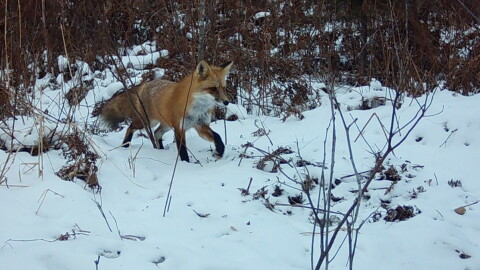 Grace Malinowski, program coordinator, discusses the Offal Wildlife Watching Project. The Community Science series is produced by Mark Jacobs.
 -
 The disease, which causes internal bleeding and sudden death, was confirmed Sept. 9, 2026. It does not affect humans.
 -
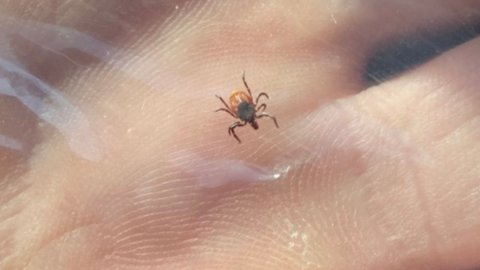 ContributedDozens of ticks as part of a study with the Marshfield Clinic Research Institute were submitted from the Bemidji area.
 -
 Christopher Smith, conservation committee chair for the Minnesota Herpetological Society, discusses how salamanders use dead and dying trees. The series is produced by Mark Jacobs.
 -
 Lorie Shaull/KAXEThe Minnesota Pollution Control Agency is surveying people's fish-eating habits to help limit contaminants in water bodies and make fish safer to eat.
 -
 Contributed/Daniel DewaldCisco and other cold water fish died by the thousands in the large, shallow lake as water temperatures soared to an average of 77 degrees in late July and early August 2026.


