



Aurora Waasakone Community of Learners in Bemidji
"Wednesday, March 25 AWCL phonology report: Warm weather is upon us, and with that, mud.
“There have been bird berries noticed on bushes. Bugs have also started to come out. Box elder, common flies, Asian beetles, wolf spider, and a June bug have all been spotted.
“Animals that we have seen have been a rabbit, deer, voles, one student watched a squirrel take a big fall, and a very white red fox has been hanging around. Now that the snow is mostly melted, lots of us have seen bones and carcasses. We have seen a whole heap of birds, including woodcocks, juncos, nuthatches, chickadees, turkeys, crows carrying sticks and food, eagles making a nest - one looked to be juvenile - raven, pigeon on the move with smaller birds behind, Pileated Woodpeckers, and have heard, but not seen, grouse drumming and robins calling.
“Someone also heard some birds at night and we wonder which one it is. We have also seen a goldfinch and a Killdeer.
“Thanks for listening. Remember to go outside and stay weird.”
North Star Elementary School in Virginia

“This is Brooke, Molly, and Penellapi with a report from North Star Elementary in Virginia on Wednesday, March 25, 2026.
“The high temperature in Virginia today is 57 degrees. Most of the snow is gone from our school yard and the mud is drying up.
“This is Brooke. The pair of Trumpeter Swans has returned to the ponds north of Virginia. They are patiently waiting for the ice to melt. At my bus stop yesterday, I heard a crow cawing, then a raven croaked. It was cool to hear the two calls so close together.
“This is Molly. I noticed that some of the young white pine trees in our school yard are green and some look more yellowy. We are worried that the hundreds of sawfly larvae that we found last spring may have damaged them. We will continue to investigate that situation.
“This is Penellapi. I noticed some new cones emerging on the red pines in our school yard. Near my house, I saw a coyote on Saturday. I also heard Black-capped Chickadees making their chick-a-dee-dee-dee-dee call. They might have been talking about me!
“Thanks for listening, and KEEP EXPLORING THE GREAT OUTDOORS!”
North Shore Community School near Duluth
“Hello from North Shore Community School on the north shore of Lake Superior. This is the Phenology Report for the week of March 21, 2026. My name is Willis , and I am your phenologist for this week!
“The vernal or spring equinox was on Friday, March 20, marking the first day of astronomical Spring. This is when the sun shines directly over the Earth's equator, resulting in nearly equal day and night. It was reported that it was 61 degrees in Two Harbors. On Saturday, March 21, there was 12 hours 13 minutes of daylight. This was a gain of 22 minutes from the previous Saturday.
“As of Monday, March 23, there was 18.6 inches of snowfall in Duluth. The normal amount is 9.7 inches. Even with this increase of snow, our area is still considered abnormally dry according to the local news drought monitor. As of Tuesday, March 24, about 40% of our school playground is covered in snow.
“On Saturday, March 21, Ms. Urban saw her first Merlin of the season at Park Point by the ball field. Miss Robin observed the first flock of robins at her house on Tuesday, March 24. About a dozen were on the lawn and several perched on the fence. Ms. Urban saw her first robin of the season on the drive to school on Tuesday, and on Wednesday, March 26, she spotted the first junco of the season perched on a willow at school. On Thursday, March 26, Ms. Pierson-Evans saw two Snow Geese fly over the playground at school.
“Ms. Jackson smelled evidence of a skunk on Monday morning, March 23, on her way into the school building.
“As of Wednesday, March 25, there is more mud and grass exposed on the school playground than snow. Ms. Jackson’s class tapped maple trees in EE on this day. The sap is flowing! It was close to 48 degrees outside and students did not need their jackets on. Ms. Jackson’s class has been observing their tagged trees from the fall starting again on March 11. The 5 species are a gray alder, a quaking aspen, a bur oak, a paper birch, and a red maple. Of the 5 trees, the gray alder is the only one that has flower buds, or catkins, beginning to emerge.
“On Tuesday, March 24, Ms. Beagle’s class saw a small, black and yellow caterpillar in the snow by the septic mound at school. Miss Robin saw her first banded wooly caterpillar of the year at her house in West Duluth on Thursday, March 26.
“This concludes the phenology report. Have a great week and be observant!”
Long Lake Conservation Center near Palisade
This report is brought to you by Sierra and the students from Highland Catholic School in St. Paul.
“The spring temperatures melted most of what is left of the snow, but we were able to identify animal tracks in the mud. We found deer, turkey and canine tracks, most likely fox or coyote. There were unconfirmed reports of howling wolves at nighttime.
“It’s peak maple tapping season and the sap is flowing fast. We found one tree with a branch broken off at the trunk and sap was running out. We all got to taste it.
“American Robins returned last week and are now here in big numbers. The first flock of juncos arrived on campus this morning. The bird migration is underway. Eric saw a Pileated Woodpecker and we heard lots of fast drumming. We found a dead tree with lots and lots of woodpecker holes in it. It was nice hearing all of the spring bird songs.
“I found what we believe is a white spring moth. These are typically the first moths of the season because they can tolerate colder temperatures. Someone saw a caterpillar on the sidewalk, a few trees are starting to bud and there are green leaves on strawberry plants in the woods.
“We had a great time exploring nature and we want to remind everyone to unplug, get outside and LIVE CONNECTED!”
This report is brought to you by Penelope, Winston, James and the students from Cuyuna Range Elementary School in Crosby-Ironton.
“It was sunny and 64 when we arrived and 15 and snowing on our last day. There’s something magical about the first snowfall of spring.
“One of the highlights of our trip was an up-close encounter with a muskrat. The little fellow was spotted 100 yards from shore in front of the Marcum House Lodge. It was digging in the grass looking for food. Our entire group was only 25 feet away, but it didn’t seem scared at all. We watched him for a few minutes and left him to eat in peace.
“The insects liked the warm weather. We saw flies, mosquitos, spiders and a diving beetle on the trail that we named Timmy. Unfortunately, we encountered our first two ticks of the season. One was a wood tick and the other a deer tick. They are out, so beware. It’s tick check season.
“A deer was seen in the bog and two Trumpeter swans stopped by the lake and rested on the ice before moving on in search of open water. Our group saw a chipmunk. It was the first sighting of the season. Garter snakes were seen sunning themselves near their hibernaculum, but one snake was spotted deeper in the woods.
“Mr. Corbett went for a hike and found a deer bed. He said that fur was everywhere. He also found a $200 check that Dave from Long Lake may or may not have unintentionally released into the wild on an earlier trek around the lake… further proof that it pays to go on a nature hike. We would like to send a special shout out to Mr. Sipper.
“We had a great time exploring nature and we want to remind everyone to unplug, get outside and LIVE CONNECTED!”
Baxter Elementary
"Hello from Mr. Macejkovic’s class at Baxter Elementary School. This is the phenology report for the week of March 30. Our names are Lucas, Lavaena, and Summer and we are your phenologists for this week.
"We had one week of very warm temperatures, then it got colder again. We don’t like the cold, but it is good for maple syruping. We boiled down some sap in our class. It was very sweet! We all got a fingerful.
"Nora is starting to see the ice start to melt on her lake.
"Silver and red maples are starting to flower. Maya has seen some green grass on the south side of the school and her house. Our male big tooth aspens are growing their fuzzy buds. They are about a quarter inch long right now.
"On March 21, Sofia saw our first salamander. We’ve seen coyote scat on our trail and seen them on our game cam. Our squirrels are very active digging holes in our yards, and our first chipmunk sighting by Jack was on March 20. Sofia and Reid saw rabbits as well.
"Summer saw our first mourning cloak butterfly on March 24. Griffin has infant moths in his house. He first noticed them March 27. Landon noticed a grayish moth on the 25 and a small beetle on the 24. Nora found our first tick on the trail on March 20 and Lavaena saw our first spider on the 20. Ants have been spotted building hills in Leo’s driveway this week too. Jon saw the first mosquito sighting was last Thursday. Everyone groaned when he told us. A wooly bear caterpillar was found by Kai on the 17.
"Our first robin sighting was March 7. Now the wave has arrived. Our first Sandhill Crane was seen on the 20. Our first Great Blue Heron was seen on the 24th by Jack. Levi spotted an Eastern Bluebird on the 26th. Many waterfowl are showing up last week, with our first flock of Canadian Geese being spotted on March 9, and Mallards were seen on March 17. Our first cardinal of the spring was seen on March 1. Eagles have been spotted eating road kill.
"This concludes the phenology report. Have a great week, and be observant!"
Little Falls Middle School
“This is Brett and Brooks reporting from Little Falls Middle School. This is our phenology report for the week of March 29.
“We now have flocks of robins around town, so we know the migrants have arrived, and we have even seen some males fighting over territory.
“There was a unique sighting with the first Sandhill Cranes we saw on March 19. There were 3 flying together, one nipping and harassing the crane in front of it while flying and calling continuously.
“Mourning cloak butterflies have emerged from hibernation and can be found on trees feeding on sap.
“Alder catkins and silver maple flowers have become very noticeable this week.
“We had our first Red-winged Blackbirds and a single grackle sighted on March 21.
“We had a sighting of a woodcock in the morning of March 24, and the males are starting to ‘peent’ in fields around dawn and dusk.
“There was a large group of 16 Turkey Vultures soaring over the river on March 25.
“March 25 also gave us our first Song Sparrow, Tree Sparrow, and seagulls.
“On the morning of March 26, we saw several earthworms on the sidewalk after the overnight rain.
“One morning, Mr. Kaddatz heard a bird he didn’t recognize, and the Merlin app told him it was a junco. They have been around all winter, but this was a new song.
“Pocket Gopher mounds have also been popping up in fields and yards this week.
“That is our report for this week, until next week, keep exploring, keep discovering, and keep connecting with the great outdoors.”
Caledonia High School in Houston County
“Hi, this is Layton, Walker, Kiahnna, Jayse, and Keonte reporting from Caledonia High School in Houston County, MN. On March 27, we noticed:
“We hit our first 70 degree day of the year. The previous weekend we had blizzard conditions. All of the snow has melted.
“Tulips, peonies, irises, and lilies are coming through the ground. We’ve even noticed a flowering dandelion.
“Turkeys are beginning to gobble. Bald Eagles are sitting on nests along the Mississippi River. Owls are active, cardinals are singing, and the first Turkey Vulture was seen in the area on March 8. On March 21, we observed the first mosquitoes along with having the first bite.
“Within the last week, people have begun doing controlled burns because of the warmer and drier conditions.
“This has been Layton, Walker, Kiahnna, Jayse, and Keonte reporting from Caledonia High School. ‘Never stop questioning!’”
What have you seen out there? Let us know: email us at comments@kaxe.org or text us at 218-326-1234.
For more phenology, subscribe to our Season Watch Newsletter and podcast or visit the Season Watch Facebook page.
Funding for this project was provided by the Minnesota Environment and Natural Resources Trust Fund as recommended by the Legislative-Citizen Commission on Minnesota Resources (LCCMR).
-
 Contributed/Daniel DewaldCisco and other cold water fish died by the thousands in the large, shallow lake as water temperatures soared to an average of 77 degrees in late July and early August 2026.
 -
 Contributed/Adobe Stock via Minnesota News ConnectionPublic health experts said states can better prepare for future illness outbreaks by keeping a sharp eye on climate change.
 -
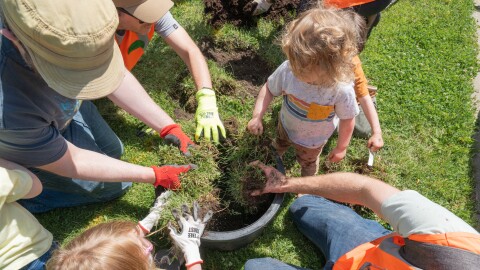 Contributed/Deborah Rose / Minnesota Department of Natural ResourcesThirty-three communities received nearly $5 million in funding, including Virginia, Hill City and other Northern Minnesota cities. A new DNR grant closes Sept. 14, 2026.
 -
 Contributed/Lorie ShaullThe Minnesota Department of Natural Resources reminds harvesters ahead of the Aug. 15, 2026, season opener that rice must be ripe for legal harvest.
 -
 Contributed/Minnesota Department of Natural ResourcesThe Department of Natural Resources reported forest tent caterpillars have damaged the leaves of 60,000 acres of foliage around Aitkin County in 2026.
 -
 Lorie Shaull/KAXEBoundary Waters entry points near Big Moose Lake and Big Lake are also scheduled to reopen on Aug. 13, 2026.


