



Aurora Waasakone Community of Learners in Bemidji
“Hi, this is AWCL conservation crew report for today, Feb. 11, 2026. Our group has been seeing a lot more birds recently; eagles, magpies, ravens, Blue Jays, nuthatches, chickadees, woodpeckers, crows, and swans have all been spotted. The temperatures are getting warmer. Some kids have been seeing tunnels in the snow. We suspect they are from mice or shrews. There are much more than a month ago. The animals we've seen are deer, squirrels, chipmunks, snowshoe hair, porcupines and rabbit. That's it for today. This was Silas and Bash on today's phenology report.”
North Star Elementary School in Virginia
“This is a report from North Star Elementary on Feb. 12, 2026.
“This is Avery with a weather report. February has brought warmer temperatures. Minnesota has seen some dramatic changes in weather. On average, temperatures have risen 3 degrees over the past 50 years or so. Today’s high is 37 degrees, which is 12 degrees above the daily average.
“The snow on our sledding hill got soft then froze into hard ice. We haven’t been able to go sledding during recess because the hill isn’t safe.
“Days are getting longer and we are enjoying the extra sunlight. Today, we have 10 hours and 9 minutes of daylight.
“This is Molly with a lake report. My grandpa measured 22 inches of ice on Sand Lake a couple days ago. Paul also measured 22 inches of ice on Lake 14 last weekend. This weekend looks great for getting out on the ice to fish!
“This is Breckan with a bird report. On Wednesday, Ellis saw a grouse in a conifer tree. Aiden heard some chickadee singing the ‘chick-a-dee-dee-dee' song. Hazel saw about 10 chickadees in her yard. That was Chase doing his best chickadee imitation. Alice’s grandma saw a very puffed up Blue Jay and Austin and some others saw a Bald Eagle soaring over the ski hill when we were on our class trip to Giant’s Ridge. Izik saw two eagles near Grand Rapids.
“This is Haley with a mammal report. Brooke’s brother saw an eagle feasting on a deer alongside Highway 53 heading toward Cook on Feb. 10. I saw rabbit tracks in my yard on Feb. 9. Aubrey’s mom saw a fox in their yard on Tuesday. Zoe saw a hole in the snow near a road. The hole had fox tracks around it.
“On her way home from a hockey game, Zoe saw a coyote in a field, then saw three white tailed deer running across the road near Hoyt Lakes. I wonder if they ever found each other…
“On our walk to Silver Lake on Thursday, we noticed that the lake was really quiet. One reason is that spot that is usually open water has frozen solid this year, so no geese or ducks stuck around this year. We found some muskrat push-ups on the lake, but when we got up close, they didn’t seem to be open and there weren’t any tracks leading to or from them.
“This has been a report from North Star Elementary in Virginia. Keep exploring the great outdoors!”
North Shore Community School near Duluth
“Hello from North Shore Community School on the north shore of Lake Superior. This is the phenology report for the week of Feb. 13, 2026. My name is Lincoln, and I am your phenologist for this week!
“This week we gained 20 minutes of daylight! As of Wednesday, Feb. 11, Lake Superior was reported to have 47% ice coverage. Starting on Friday, Feb. 13, we have a warm front moving in and a high temperature of 40 degrees with warm temperatures continuing into next week. The record high temperature for Feb. 13 was 45 degrees in 2011. On Feb. 12, a group of boys in Mrs. Rolfe’s class noticed that Schmidt creek had slush on the top of the ice.
"This week we have had a lot of owl activity in our area! Sunday, Feb. 8, Raina saw an owl sitting on a tree by her deck. Gavin’s mom heard two Great Horned Owls and then saw one of them take flight by their driveway on Monday, Feb. 9. A neighbor of Mrs. Rolfe heard a Northern Saw-whet Owl on Tuesday, Feb. 10. She used Merlin Bird ID as she had never heard a Northern Saw-whet Owl before.
Feb. 8, Rozalyn saw a coyote when it ran in front of their car and then she saw a wolf on the side of the highway! Ms. Fischer saw a fox running through Lakeside, by Crosley Street, on Wednesday, Feb. 11. She was surprised as she had not seen one near that area before. Students in Ms. Jackson’s class spotted racoon tracks frozen on Schmidt Creek on Thursday, Feb. 12.
"If you have a red oak tree, you might see that the leaves that have been attached since the last growing season are now falling. Red oak leaves falling is a subtle sign of spring.
“North Shore Community School is on break next week. Our next phenology report will be for the weeks of Feb. 15 and 22. This concludes the phenology report. Have a great couple of weeks and be observant!”
Long Lake Conservation Center near Palisade
This report is brought to you by Rose, Tommy and the students from St. Elizabeth Ann Seton School in St. Cloud.
“During our trip to Long Lake Conservation Center from Feb. 9-11, the high temperature was 38 degrees and the low was 14.
“We saw and heard very early signs of spring, including chickadees singing the ‘Cheeseburger’ song. We also observed that birch trees are shedding their seeds. This signals that the trees are starting to wake up and get ready for new growth.
“We heard a Great Horned Owl during our Wolfpack class and found coyote scat during Wilderness Meal.
“A fat squirrel was in the bird feeder, spilling seeds onto the ground. A flock of eight Pine Grosbeaks were on the ground eating the spilled seeds. Seven of the grosbeaks were female and one was male. We also saw a waxwing, but couldn’t tell whether it was a Cedar or Bohemian. Pileated, Downy and Hairy woodpeckers were seen, but we didn’t hear any drumming.
“One person saw a vole digging in the snow, another person saw four deer from their window, and one of the parents saw raccoons at the bird feeders before sunrise. Rose and Mia saw the Big Dipper near the North Star on the night hike.
“Winter is not over yet, but signs of spring are out there. We had a great time in nature, and we encourage everyone to unplug, get outside and LIVE CONNECTED!”
This report is brought to you by Brentley, Norah and the students from Paynesville Elementary.
“During our trip to Long Lake Conservation Center from Feb. 11-13, the high temperature was 43 degrees and the low was 5. The sun is getting stronger and there are spots where the snow has melted and the ground is showing.
“The lichen was colorful and bright in the sun. One person saw a lichen that was a perfect circle. We learned that lichens are a symbiotic pairing of fungi and algae.
“We saw rabbit tracks, watched a vole scurry into a hole in the ground and saw an unidentified white animal run across the hill. It could have been an ermine.
“The warm temperatures brought a garter snake inside our dorm. It’s too early for them to venture outside, but it’s a sign of spring that they are moving around.
“We saw a flock of Pine Grosbeaks and a female Hairy Woodpecker at the feeder along with red and grey squirrels, but no chipmunks yet. Deer were on the move and spotted numerous times around campus. There were signs of wolves in the area, including large scat, and perhaps some howls were heard. One of our minions says he thinks he saw wolves on the far side of the lake.
“We had a great time exploring nature and we encourage everyone to unplug, get outside and LIVE CONNECTED!”
Little Falls Middle School
“This is Elliott and Brooks reporting from Little Falls Middle School. This is our phenology report for the week of Feb. 15.
“The Great Horned Owls are still calling to each other in the morning, but we are guessing that most of them are already nesting.
“The warm weather this week has brought out some of the sleepers like skunks and chipmunks, and they are busy searching for food.
“A classmate found a wolf spider running on the snow this week.
“A Sharp-shinned Hawk landed on a branch near Mr. Kaddatz’s bird feeders. It was interesting to see the juncos and chickadees suddenly freeze while it was there.
“We also had our first house fly of the year show up in our classroom this week. We are wondering if it was hibernating somewhere in the room.
“There are always plenty of animal tracks in the snow to find and try to identify, but the warming temperatures change the way they look and makes it more difficult.
“We had another Opossum sighting this week; it definitely seems like we have seen way more of them this year than in the past.
“There are small groups of swans moving around in the mornings and evenings.
“Red-breasted Nuthatches are loudly calling by our feeders with their ‘Yank, yank, yank’ calls.
“We have had observations of most of our local woodpeckers this week, including Downy, Hairy, Red-bellied and Pileated.
“That is our report for this week, until next week, keep exploring, keep discovering, and keep connecting with the great outdoors.”
Linwood Elementary School
"Greetings from the fourth-grade phenology team in the Linwood School Forest. This is Oliver, Aela, and Arwen reporting on our observations from the week ending Feb. 13.
“This week we observed that the chewing on our fallen red maple’s branches by the rabbits has reached fever pitch. All branches within 2 feet of the ground are bare of bark.
“We also observed a pile of broken walnut shells hundreds of feet from our walnut tree. We saw squirrel tracks all around them so they are our main suspect.
“Mr. Steffen reported seeing two coyotes run across his yard in the early morning hours last Thursday.
“In the forest, we saw the buds on different types of trees look so different. We have many maples and are waiting patiently to see what emerges in the spring.
“That is all from the Linwood School Forest, and remember: There is no place like Linwood!”
What have you seen out there? Let us know: email us at comments@kaxe.org or text us at 218-326-1234.
For more phenology, subscribe to our Season Watch Newsletter and podcast or visit the Season Watch Facebook page.
Funding for this project was provided by the Minnesota Environment and Natural Resources Trust Fund as recommended by the Legislative-Citizen Commission on Minnesota Resources (LCCMR).
-
 Contributed/Daniel DewaldCisco and other cold water fish died by the thousands in the large, shallow lake as water temperatures soared to an average of 77 degrees in late July and early August 2026.
 -
 Contributed/Adobe Stock via Minnesota News ConnectionPublic health experts said states can better prepare for future illness outbreaks by keeping a sharp eye on climate change.
 -
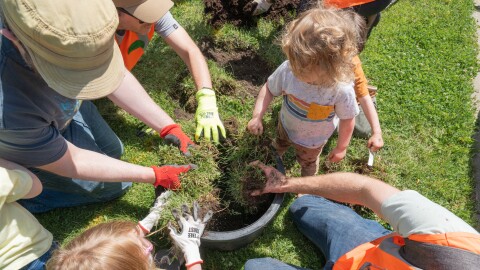 Contributed/Deborah Rose / Minnesota Department of Natural ResourcesThirty-three communities received nearly $5 million in funding, including Virginia, Hill City and other Northern Minnesota cities. A new DNR grant closes Sept. 14, 2026.
 -
 Contributed/Lorie ShaullThe Minnesota Department of Natural Resources reminds harvesters ahead of the Aug. 15, 2026, season opener that rice must be ripe for legal harvest.
 -
 Contributed/Minnesota Department of Natural ResourcesThe Department of Natural Resources reported forest tent caterpillars have damaged the leaves of 60,000 acres of foliage around Aitkin County in 2026.
 -
 Lorie Shaull/KAXEBoundary Waters entry points near Big Moose Lake and Big Lake are also scheduled to reopen on Aug. 13, 2026.


