



North Shore Community School near Duluth
“Hello from North Shore Community School on the north shore of Lake Superior. This is the phenology report for the week of Jan. 31, 2026. My name is Brenda, and I am your phenologist for this week!
“On Jan. 31, there was 9 hours and 46 minutes of daylight. The 'Snow Moon' for February peaked on Sunday, Feb. 1. It is the only full moon of the month. It appeared in the constellation Leo, following the tradition of naming it for the heavy snowfall typically seen this time of year. It is also called Bear Moon, Eagle Moon, or Hunger Moon. Monday, Feb. 2 was Groundhog Day. This day originated from the 18th-century German-American tradition that was brought to Pennsylvania merging folklore with local wildlife. Winter enthusiasts may be happy to hear that the famous Pennsylvania groundhog, Punxsutawney Phil, saw his shadow at Gobbler’s Knob. This supposedly means six more weeks of winter. On Feb. 5, we woke up to a warmer temperature that created a fine mist early in the morning. By late afternoon the temperature had risen to 33.5 degrees. This is the first time since Jan. 13 that we had temperatures above freezing.
On Wednesday, Feb. 4, Ms. Abigail saw two female turkeys cross the road on her way to school.
“On Friday, Jan. 30, Mr. Otten’s class found a place where a squirrel had been eating acorns. The base of a maple tree had a lot of disturbed snow, and they found the shells of the acorns littered about. The squirrel probably had a cache at the base of the tree. On Monday, Feb. 2, Ms. Courtney smelled a skunk on her way to school. On Wednesday, Feb. 4, Ms. Beagle woke up to her house smelling like skunk! Skunks enter a state of torpor during the winter, which is a bit different from true hibernation. Skunks will experience periods of wakefulness where they leave their dens and wander about for short periods before returning and re-entering the torpor state. We think that after the frigid temps, the skunks have emerged but will hopefully return to their dens soon! On Thursday, Feb. 5, Ms. Cassidy’s class noticed two types of rabbit tracks at their bunny restaurants- snowshoe hare and an Eastern cottontail.
“Savayda noticed the dark brown bumps of a fungus growing out of a tree on Thursday, Feb. 5.
“On Wednesday, Feb. 4, ice fishermen were spotted on the ice close to the shore of Lake Superior in Duluth. Please note that a minimum of 4 inches of new, clear, solid ice is recommended before walking on the ice. Use caution. Avoid areas with moving water or current as this leads to ice instability. Also, avoid white ice, slush, or honeycombed ice, or areas with dark spots or cracks. On this day, the ice coverage of Lake Superior was noted at 33%. It had peaked at about 47% a few days prior.
“On Thursday, Jan. 5, Ms. Jackson’s class noticed that the ice under the bridge at Schmidt Creek was frozen right up to the bottom of the bridge. Previously, kids could still crawl under the bridge, but not anymore.
“This concludes the phenology report. Have a great week and be observant!”
Long Lake Conservation Center near Palisade
“During our trip to Long Lake Conservation Center from Feb. 4-6, the high temperature was 36 degrees and the low was 16.
“At the bird feeders we saw Downy Woodpeckers, Red-bellied Woodpeckers, Pine Grosbeaks, chickadees, nuthatches and of course, squirrels and more squirrels.
“In the forest we noticed that there are trees that still have some leaves on them. We also found deer, mouse and rabbit tracks.
“We heard a Barred Owl calling in the evening and Bohemian Waxwings singing from the treetops during the day. The woodpeckers were heard drumming.
“Mr. Latimer visited us for a phenology walk. Some of the things we talked about on the walk included:
- Winter is a good time to find and investigate bird nests.
- When looking closely at evergreen needles, you know that if it has more than one needle in the bundle, it is from a pine tree.
- Squirrels make nests called dreys.
- You can tell an aspen from a birch tree by the color of the branches; aspen have white branches, and birch trees have black branches.
- Grouse like to hide in thickets because the close together trees protect them from hawks looking for a grouse meal.
- Unlike in our teeth, cavities in trees are GOOD! The holes are homes for wildlife like songbirds, owls and bats.
“We ended the walk by following a deer trail into a frozen swamp where we found black spruce trees, tamarack trees, Labrador tea plants and sphagnum moss. Thanks for joining us on our field trip Mr. Latimer!
“We had a great time exploring nature and we want to remind everyone to brush your teeth, unplug, get outside and LIVE CONNECTED!”
Little Falls Middle School
“This is Natalie reporting from Little Falls Middle School. This is our phenology report for the week of Feb. 8.
“It is hard to tell what we have seen more of this week: cottontail rabbits or whitetail deer. Based on how many we have seen this winter, the populations of both of these animals must be doing very well.
“With Groundhogs Day this past week, we have talked a lot about how different animals spend the winter, from the hibernating woodchucks and frozen wood frogs, to the sleeping black bears and skunks.
“A classmate saw a raven, which is not common around here, and noticed that it was carrying a dead mouse.
“Mrs. Kraus and her dog had an encounter with a muskrat that was out on the ice.
“One thing we noticed in looking at previous years' journals were the sightings we didn’t have this year. For instance, we did not see any Pine Siskins or redpolls this year, even though they are typical winter visitors.
“We have started hearing our first ‘Who cooks for you’ calls of the Barred Owls.
"A friend of ours has an old deer carcass behind her house and has been able to watch the coyotes picking away at it this winter.
“The box elder’s double helicopter tree seeds are hanging on their branches and making them easy to identify this time of year. It is the one time of year that they are not overshadowed by their other more popular maple family members.
“Wild Turkeys are still moving around in large groups, and the large flocks stand out against the snow when out in fields.
“There were a couple of small flocks of Mallards flying near the Mississippi River, so there must still be spots of open water for them to find.
“That is our report for this week, until next week, keep exploring, keep discovering, and keep connecting with the great outdoors.”
What have you seen out there? Let us know: email us at comments@kaxe.org or text us at 218-326-1234.
For more phenology, subscribe to our Season Watch Newsletter and podcast or visit the Season Watch Facebook page.
Funding for this project was provided by the Minnesota Environment and Natural Resources Trust Fund as recommended by the Legislative-Citizen Commission on Minnesota Resources (LCCMR).
-
 The disease, which causes internal bleeding and sudden death, was confirmed Sept. 9, 2026. It does not affect humans.
 -
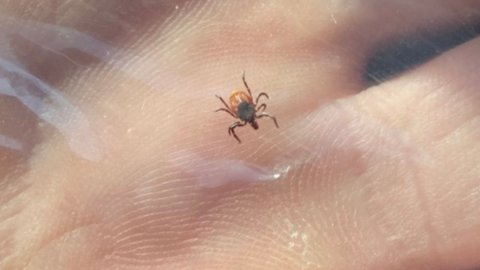 ContributedDozens of ticks as part of a study with the Marshfield Clinic Research Institute were submitted from the Bemidji area.
 -
 Christopher Smith, conservation committee chair for the Minnesota Herpetological Society, discusses how salamanders use dead and dying trees. The series is produced by Mark Jacobs.
 -
 Lorie Shaull/KAXEThe Minnesota Pollution Control Agency is surveying people's fish-eating habits to help limit contaminants in water bodies and make fish safer to eat.
 -
 Contributed/Daniel DewaldCisco and other cold water fish died by the thousands in the large, shallow lake as water temperatures soared to an average of 77 degrees in late July and early August 2026.
 -
 Contributed/Adobe Stock via Minnesota News ConnectionPublic health experts said states can better prepare for future illness outbreaks by keeping a sharp eye on climate change.


