



North Star Elementary School in Virginia
“This is Olivia, Aiden, Kaia, and Lillian with a report from North Star Elementary on December 18, 2025.
“This is Olivia with a weather report. Last week, on December 8, we got about 4 inches of snow. The high this week was 45 degrees on December 16, which caused a lot of snow to melt. On December 17, it was 21 degrees so the melted snow froze into slippery ice. Overnight from December 17-18 it rained and it is making a dangerous, slippery mess of very wet ice.
“Aiden here with an ice report. Eli said there was approximately 6-7 inches of ice on Little Sand Lake as of December 11. I measured 5 inches of ice on Silver Lake in Virginia on December 11. Lake Vermilion had 7 inches of ice as of December 15.
“This is Kaia with a bird report. Solveig and Felicia have both noticed Blue Jays in the trees this week. We have also seen ravens, crows. Evelyn’s dad saw an eagle feasting on a dead deer near Vermilion Trail in Gilbert. Parker saw a partridge in an oak tree.
“Lillian here with a mammal report. This week Kinslee saw three deer walking behind her duck shed. It was one doe and two fawns that were close to full grown.
“This has been a report from North Star Elementary in Virginia. Keep exploring the great outdoors!”
East Rapids Elementary in Grand Rapids
North Shore Community School near Duluth
“Hello from North Shore Community School on the north shore of Lake Superior. This is the phenology report for the week of December 13, 2025. My name is Aurora, and I am your phenologist for this week!
“On Saturday, December 13, it got to a low of -14 degrees, and on Tuesday, December 16, it got to a high of 43 degrees. That is a difference of 57 degrees! On Sunday, December 14, Will noticed that Lake Superior still has open water. However, along the shore, the large rocks are covered with ice. Azalea noticed sea smoke on the lake on this same day. On Tuesday, December 16, Ms. Jackson’s class noticed the ice on Schmidt Creek was yellow in color and frozen, but a bit slushy on the top. The yellow color occurs when ice freezes and thaws and minerals sediments from rocks get trapped. On Thursday, December 18, we had a Winter Weather Advisory in effect for most of our region due to freezing rain that covered roads, parking lots and sidewalks with a sheet of ice! In the afternoon we had wind with gusts of up to 30 or 40 miles per hour at times with snowfall making visibility difficult.
“On Sunday, December 14, Will noticed wolf scat in his driveway. On Tuesday, December 16, Ms. Jackson’s class noticed lots of fox scat on the school nature trail. Adelyn spotted snowshoe hare tracks and Jaxton noticed fox and deer tracks.
“On Wednesday, December 17, Lydia observed a tree that was freshly drilled into by a woodpecker. The circumference of the tree was about 76 inches. There were several holes that had a perimeter of about 10 inches and had sap on them. There were also fresh wood chips that were on the snow at the base of the tree that had come from holes.
“Maria noticed that on Saturday at about 12:00 p.m., there was a meteor shower that had parts of a satellite and the copper made the meteor look green.
“Our next phenology report, due to school winter vacation, will be the week of January 3-10 2026! This concludes the phenology report. Have a great week and be observant!”
Long Lake Conservation Center near Palisade
This report is brought to you by Liz, Asa and the students from Oneka Elementary.
“During our trip to Long Lake Conservation Center on December 17-19, we had a full range of winter weather with a balmy high temperature of 37 degrees and a frigid low of 10 degrees below zero.
“Our trip was a celebration of the simple beauty and joy of Minnesota winters. We explored the forest and frozen wetlands on foot, snowshoes and skis, taking time to enjoy the trees, snow, ice and even the clouds. Caroll thought the clouds looked like animals and dinosaurs.
“Our group saw otter tracks on the lake and followed them to the hole in the ice. We didn’t see the otters. There were lots of other tracks as well, including rabbits, mice, squirrels and deer. And where there are animals, there is scat.… So much scat. We think the deer scat looks like cocoa puffs. Our groups found a couple of deer beds and heard an eagle during Thicket Ecology class.
“At the feeders, we observed chickadees, nuthatches, Red-bellied and Pileated Woodpeckers. The Long Lake staff told us that there are an unusually large number of Pileated Woodpeckers this year. They seem to be everywhere.
“We had a great time in nature and want to wish everyone a happy holiday season, and to unplug, get outside and LIVE CONNECTED!”
Little Falls Middle School
“This is Brody and Caiden reporting from Little Falls Middle School. This is our phenology report for the week of December 21.
“We had a report of a Great Horned Owl that was hooting very loudly at 6:30 a.m.
“The whitetail deer have been digging in the snow and ground around oak trees in a search for fallen acorns.
“Juncos, chickadees, nuthatches, House Finches and cardinals have been regular visitors at our feeders, along with drab colored goldfinches.
“An unusual blue colored stain in the snow is caused by rabbits that have been feeding on buckthorn.
“Most of our local lakes have 6-7” of ice, and the Mississippi River is frozen completely across.
“We got some great pictures and video of Ruffed Grouse feeding on tree fruit.
“There are numerous meadow vole tunnels crisscrossing our yards, and they are spending most of the time in the subnivean zone under the snow.
“It was interesting to see a group of 9 robins poking around in the snow under a tree in search of food. We typically only see pairs or solitary robins in the winter.
“The red oaks around Little Falls are still holding most of their dead leaves. This is known as ‘marcescence’, and might protect the new buds from cold and animals.
?A classmate spotted a Short-tailed shrew scurrying across the snow, and followed it as long as he could.
“The Blue Jays have provided a minor annoyance as they empty out the peanuts from our bird feeders, and are probably caching them in a tree.
“That is our report for this week, until next week, keep exploring, keep discovering, and keep connecting with the great outdoors.”
Linwood Elementary School
“Greetings from our fourth-grade phenology team in the Linwood School Forest. This is Izzy, Liam, and Arya reporting on our observations from the week ending December 19.
“This week we observed we had major temperature fluctuations with highs on Tuesday into the low 40s. We had rain that turned to ice quickly when the wind direction changed from blowing from the south to the north.
“We also observed the long-term tracks made in the snow by rabbits following the exact same path every day. We know this because we could see the path getting more defined with prints and droppings every day.
“We also saw Bald Eagles circling the playground during recess. This makes us think that Bald Eagles are a bird that doesn't migrate for the winter.
Around our school forest, we had a report of a lone coyote track. We are trying to determine if it's a coyote or just a local duck based on how worn its claws are.
“That is all from the Linwood School Forest, and remember: There's no place like Linwood.”
What have you seen out there? Let us know: email us at comments@kaxe.org or text us at 218-326-1234.
For more phenology, subscribe to our Season Watch Newsletter and podcast or visit the Season Watch Facebook page.
Funding for this project was provided by the Minnesota Environment and Natural Resources Trust Fund as recommended by the Legislative-Citizen Commission on Minnesota Resources (LCCMR).
-
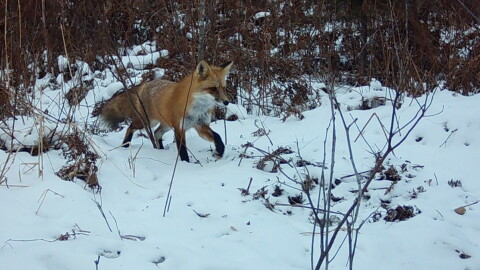 Grace Malinowski, program coordinator, discusses the Offal Wildlife Watching Project. The Community Science series is produced by Mark Jacobs.
 -
 The disease, which causes internal bleeding and sudden death, was confirmed Sept. 9, 2026. It does not affect humans.
 -
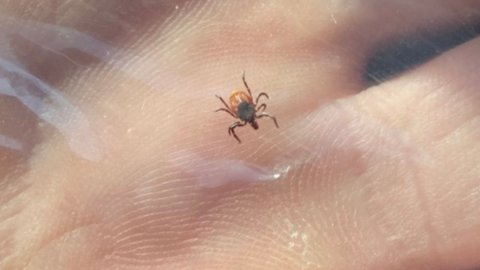 ContributedDozens of ticks as part of a study with the Marshfield Clinic Research Institute were submitted from the Bemidji area.
 -
 Christopher Smith, conservation committee chair for the Minnesota Herpetological Society, discusses how salamanders use dead and dying trees. The series is produced by Mark Jacobs.
 -
 Lorie Shaull/KAXEThe Minnesota Pollution Control Agency is surveying people's fish-eating habits to help limit contaminants in water bodies and make fish safer to eat.
 -
 Contributed/Daniel DewaldCisco and other cold water fish died by the thousands in the large, shallow lake as water temperatures soared to an average of 77 degrees in late July and early August 2026.


