



Long Lake Conservation Center near Palisade
This report is brought to you by Cambria and Justice and the students from Underwood Elementary School.
Little Falls Middle School
"This is Brianna and Peyton reporting from Little Falls Middle School."
"This is our phenology report for the week of November 30th."
"Prior to the snow we had sightings of a Woolly Bear caterpillar and Sowbugs, and a classmate still found violets blooming in her yard. We did see small groups of Robins hanging around Little Falls. Mr Kaddatz had a Opossum snooping around his yard and under his bird feeder after sundown, and had a hard time getting it to leave, as he didn’t want his dog messing with it. "
"Winter arrived as we received 7+ inches of snow on the 25th, and the snow and colder weather have completely changed our environment. One fun change with the new snow is the ability to see all the different animal tracks around our homes. The most common are Cottontail rabbits, Squirrels, Mice, and Voles. Those same Deer Mice and Meadow Voles have been appearing in our house more frequently this past week. The bird feeders have had a constant activity with groups of Chickadees, Nuthatches, Downy Woodpeckers, and Juncos being the largest visitors."
"There was a large group of Cedar Waxwings that arrived on Thanksgiving day There was a sighting of a Short Tailed Shrew. It was originally thought to be a Vole, but a closer look at pictures helped identify it."
"An easy sighting this time of year are the fruits of the Sumac. We learned that you can make a drink similar to lemonade from it."
"One observation that raised some questions was this…. All fall there have been pairs or family groups of Cardinals coming to Mr Kaddatz’s feeder. This past week, there has only been a single female. Do they split up in winter? Is this a young bird? Did something happen to the male it was with? "
"That is our report for this week, until next week, keep exploring, keep discovering, and keep connecting with the great outdoors."
New ways to communicate with us
Julie was listening to our new Season Watch pod and sent us a voice memo via Speak Pipe.
What have you seen out there? Let us know: email us at comments@kaxe.org or text us at 218-326-1234.
For more phenology, subscribe to our Season Watch Newsletter and podcast or visit the Season Watch Facebook page.
Funding for this project was provided by the Minnesota Environment and Natural Resources Trust Fund as recommended by the Legislative-Citizen Commission on Minnesota Resources (LCCMR).
-
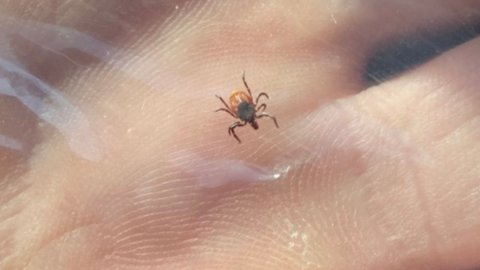 ContributedDozens of ticks as part of a study with the Marshfield Clinic Research Institute were submitted from the Bemidji area.
 -
 Christopher Smith, conservation committee chair for the Minnesota Herpetological Society, discusses how salamanders use dead and dying trees. The series is produced by Mark Jacobs.
 -
 Lorie Shaull/KAXEThe Minnesota Pollution Control Agency is surveying people's fish-eating habits to help limit contaminants in water bodies and make fish safer to eat.
 -
 Contributed/Daniel DewaldCisco and other cold water fish died by the thousands in the large, shallow lake as water temperatures soared to an average of 77 degrees in late July and early August 2026.
 -
 Contributed/Adobe Stock via Minnesota News ConnectionPublic health experts said states can better prepare for future illness outbreaks by keeping a sharp eye on climate change.
 -
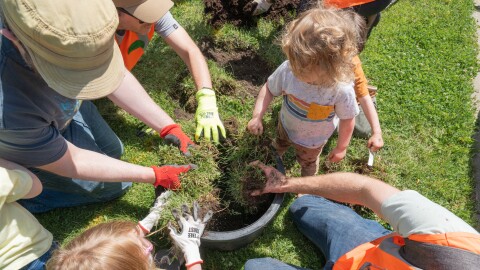 Contributed/Deborah Rose / Minnesota Department of Natural ResourcesThirty-three communities received nearly $5 million in funding, including Virginia, Hill City and other Northern Minnesota cities. A new DNR grant closes Sept. 14, 2026.


