


Minnesota's primary election is Tuesday, Aug. 11, and nonpartisan civic engagement leaders said they remain appalled by the influence of outside funds flowing into federal races here. The leaders see a future where state laws could tamp down on so-called "dark money."
Watchdogs said this year's midterms are another example of political action committees spending big-time cash on races without having to immediately disclose their underlying sources, including corporations.
Mary Hartnett, executive director of the group Clean Elections Minnesota, said past and recent U.S. Supreme Court rulings make it hard to pull the cover off of the activity.
"It's one of the biggest issues that we have in this country. I think it's just been a steady beat and it just continues to get worse," Hartnett contended.
Election tracking sources reported upwards of $20 million has been spent by outside groups on the U.S. Senate race in Minnesota. The ads themselves often include accusations of an opponent leaning too much on outside support.
Hartnett praised Hawaii for adopting a new law redefining corporate powers, essentially limiting their political spending clout. Hartnett and other supporters are making a similar push in Minnesota amid questions if the laws will lead to costly court battles.
The Minnesota bill was introduced this past spring but did not gain much traction. Supporters like Hartnett hope it will see new life next session and overcome any arguments about limiting free speech. Hartnett contends the policies do not do limit speech, stressing they are an antidote to corporations drowning out political discourse, fueling discontent from voters.
-
 Plus: Aitkin's 68-year-old water tower is demolished; Demuth, Klobuchar will debate in the Brainerd lakes area; and we're partnered with ICTV to host school board forums.
 -
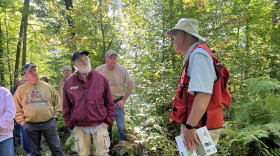 Retired DNR forester Gary Anderson gave a walking tour of his forest property as part of a Cass Soil and Water Conservation District habitat management event.
 -
 Minnesota James Beard Award-winning author and chef Amy Thielen along with KAXE Director of Content and Ham Radio sidekick Heidi Holtan divulge their mistakes in the garden and the kitchen this fall.
 -
 MusicMusicians Steve Hirsh and Nathan Hanson perform on the drums and saxophone in concert 7 p.m. Sept. 25, 2026, at Headwaters School of Music and Arts in Bemidji.
 -
 Co-hosts Heidi Holtan and Charlie Mitchell converse about mushrooms, angry squirrels, and go off on tangents.Send us a voice memo through Speak Pipe!


