


ST. PAUL — Lawmakers deliberated the merits of a bill that would add protections to wild rice during a Senate committee meeting Tuesday, March 10.
The bill’s author, Sen. Mary Kunesh, DFL-New Brighton, said the amendment adds one sentence to the chapter recognizing wild rice as Minnesota’s state grain: “It is the policy of this state to recognize the inherent right of uncultivated wild rice to exist and thrive in Minnesota.”
The bill also adds the Dakota word for wild rice, psiŋ, alongside a double-vowel edit of the Ojibwe word for wild rice, manoomin. Manoomin translates to “the good berry,” and it holds spiritual significance as part of the Ojibwe people’s origin story, who are said to have navigated to the Great Lakes region in search of the food that grows on the water.

Legislative staffers passed around a sample of wild rice, blueberries and honey to Senate committee members.
Testifiers included Leanna Goose and Annie Humphrey from the Leech Lake Band of Ojibwe and Emma Needham from the Red Lake Nation, advocating on behalf of the uncultivated wild rice beds that are left in the state — the rice that grows naturally in Minnesota’s rivers and lakes.
“All we’re asking is that the wild rice beds and the water that surround [them] are protected,” Humphrey said. “We’re only trying to keep what’s left.”
A news release from the climate justice and Indigenous rights group Rise & Repair Alliance noted natural stands of wild rice are considered an indicator for healthy waterways due to its sensitivities to pollution. Advocates reported Minnesota has about one-third of the wild rice beds that flourished in the state a century ago.

“Uncultivated wild rice is in danger in Minnesota, as my relatives have already shared,” Needham said. “I am your relative and you are mine, and manoomin exists for all of us to continue to exist and thrive here in Mní Sóta Makoce.”
Officials from the Minnesota Pollution Control Agency and the Department of Natural Resources appeared skeptical of how the agencies would execute protecting the inherent rights of wild rice.
“It's unclear how we would navigate the right of wild rice to exist and thrive, or what our obligation exactly would be. It's a little vague for us to understand," said Tom Johnson, the government relations director for the PCA. “Wild rice grows in boom-and-bust cycles, and it can often be unclear whether a rice bed is at a low point in its cycle or if it is in decline due to pollution.”
The bill was laid over for possible inclusion in a later omnibus package.
Other bills aimed at protecting wild rice beds introduced this session include implementing no-wake zones around wild rice beds, requiring a “risk justification” analysis on projects that could damage wild rice beds and a pesticide ban near wild rice waters.
Funding for this environmental story was provided by the Minnesota Environment and Natural Resources Trust Fund as recommended by the Legislative-Citizen Commission on Minnesota Resources (LCCMR).
-
 Plus: Minnesota's archery deer season opens Sept. 19, 2026; and health experts caution that disease-carrying ticks surge in fall.
 -
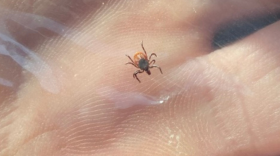 Dozens of ticks as part of a study with the Marshfield Clinic Research Institute were submitted from the Bemidji area.
 -
 Bow hunters harvested more than 30,000 deer during the 2025 archery season — an all-time high. The 2026 season runs from Sept. 19 through Dec. 31.
 -
 The mining company celebrated a $770 million federal loan and the production of its first concentrate at a blast event Sept. 17, 2026. Two days earlier, it announced the "next phase of investment" at an Itasca County Board meeting.
 -
 Prosecutors are calling for five years in prison for the former Grand Rapids state senator. His defense team is arguing for time already served, plus five years of supervision.


