


The Minnesota Department of Employment and Economic Development recently awarded nearly $7.5 million in housing infrastructure grants to communities in Greater Minnesota.
The matching grants equip communities to build infrastructure, such as new roads and sewer and water upgrades, that facilitates new housing.
The tribal nations of Leech Lake and White Earth, plus the cities of Aurora, Floodwood, Lancaster, Pine River and Tower were the northern communities receiving grants.
“This program helps address a key barrier to creating more affordable and workforce housing across Greater Minnesota,” stated Jennifer Ho, commissioner of Minnesota Housing, in a news release. “These projects will ensure hundreds of families can find and afford a home in their communities.”


DEED estimates the more than $7 million in grants will support the development of 800 housing units, with more than 100 of those planned for Northern Minnesota.
The Northern Minnesota grant projects include:
- White Earth Reservation Housing Authority: Recommended for $250,000 for demolition, grading, road and driveway reconstruction, utility upgrades, and well/septic improvements at Sunny Acres, a four-unit housing development. Capital costs of the infrastructure are estimated at $500,000. This infrastructure project will support plans to replace the four existing affordable/workforce housing units, which are in poor condition, and future expansion to add up to 10 additional affordable/workforce housing units.
- Leech Lake Band of Ojibwe Housing Authority: Recommended for $358,231 for construction of public infrastructure including grading, water, septic, dry utilities and roads. This infrastructure will support plans for construction of 30 single-family affordable/workforce homes on Tribal land.
- City of Aurora: Recommended for $250,000 for a roadway project, for which estimated capital costs total $500,000. The infrastructure will support plans for the development of 15 lots to contain 15 single family homes. Seven will be workforce, and eight will be market rate.
- City of Floodwood: Recommended for $500,000 for the development of new public infrastructure to include streets, storm sewer systems, stormwater ponds, water main installations, sidewalks and public lighting. Capital costs of the infrastructure are estimated at $5,220,000. The infrastructure will support plans for the development of 33 lots and 34 units, 24 of which will be affordable.


- City of Lancaster: Recommended for $480,000 to finance the extension of municipal water and sanitary sewer, stormwater management facilities and street construction. Capital costs of the infrastructure are estimated at $2,611,000. This public infrastructure will support plans for the development of 12 affordable/workforce units on individual lots.
- City of Pine River: Recommended for $146,050 to fund road, water and sewer infrastructure supporting plans for 10 workforce or affordable housing units on four single-family lots. This is a former library site that will be acquired and zoned for residential. Total capital costs of the project are estimated at $292,100.
- City of Tower: Recommended for $180,000 for site preparation, extension of municipal water and sewer, and public utility and road work. Total capital costs of the infrastructure are estimated at $453,863. The infrastructure improvements will serve a total of 26 planned housing units, including 12 affordable/workforce units in a mixed-use, commercial and multifamily, building.
-
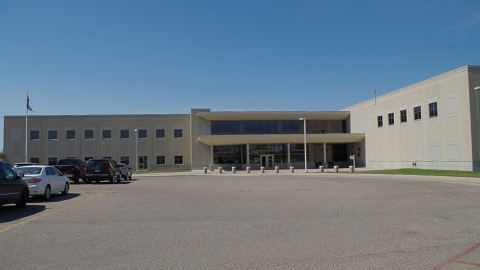 ContributedA statement of probable cause charges an officer at the Northwest Regional Correctional Center in Crookston with two counts of felony sexual assault.
 -
 Contributed/Courtesy Photo via Minnesota ReformerRepublican Ron Schutz owns more than $1.74 million of individual stocks, including in companies being sued by Minnesota.
 -
 Essentia Health announces merger; Detroit Lake school board introduces 'viewpoint neutrality' policyPlus: Lost hunters rescued near Hibbing.
 -
 Lorie Shaull/KAXEThe Detroit Lakes School Board rescinded its July 2026 action that prompted an ACLU lawsuit as it prepares to amend its policy on non-school materials.


